


Cheapest Ways to Swap Cryptocurrency in 2026
October 2, 2026 ·
8 min read

Swapping crypto cheaply in 2026 is less about finding the smallest visible fee and more about finding the best final amount after gas, liquidity, slippage, routing, bridge costs, and security risk. A swap that looks cheap at first can become expensive if it uses a poor route, thin liquidity, unsafe contracts, or high withdrawal fees.
This guide explains the cheapest ways to swap cryptocurrency in 2026, when to use each method, and how FoxWallet helps users review multi-chain and cross-chain swaps inside a non-custodial wallet. This article is for educational purposes only and is not financial advice. Swap fees, gas fees, liquidity, slippage, and route availability change frequently.
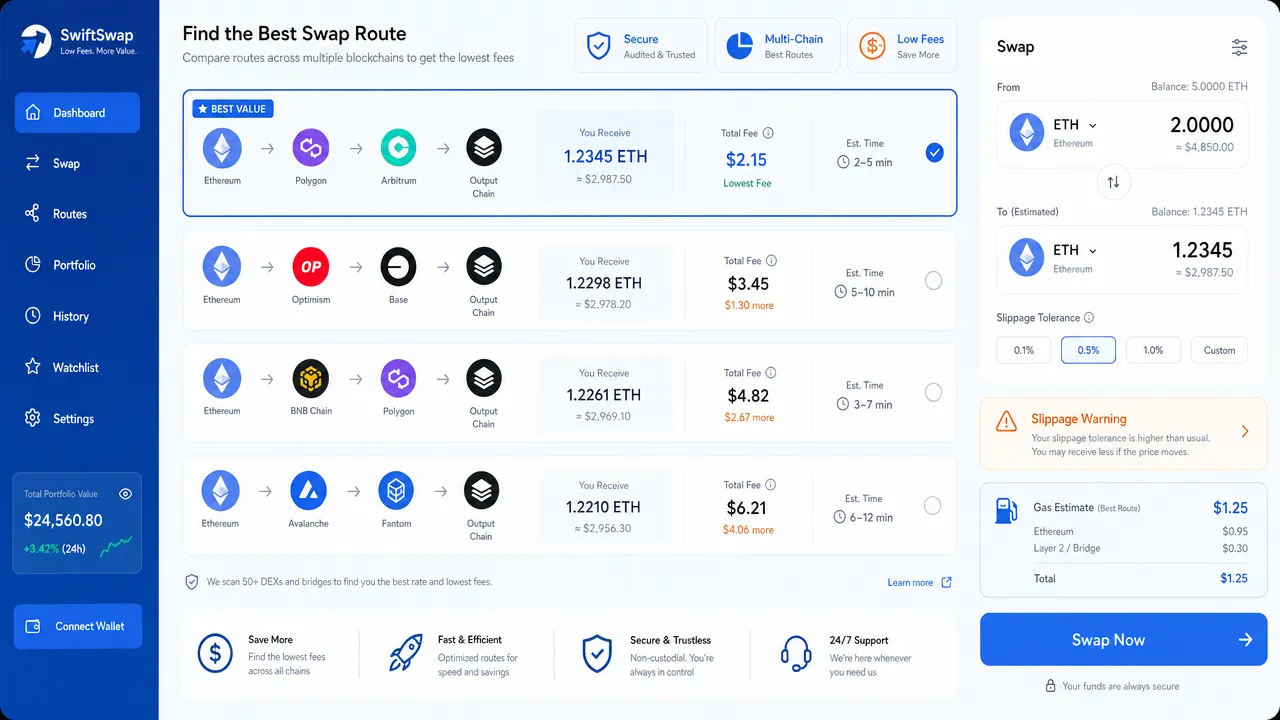
The cheapest route should be measured by net received amount, not just the smallest line item. A route with slightly higher gas may still be better if it has deeper liquidity and lower slippage.
 For users managing assets across multiple chains, cost visibility becomes even more important. FoxWallet is designed as a multi-chain decentralized wallet where users keep control of their assets while reviewing transaction details before signing. You can also learn more about broader asset visibility in FoxWallet's guide to secure multi-chain wallet management.
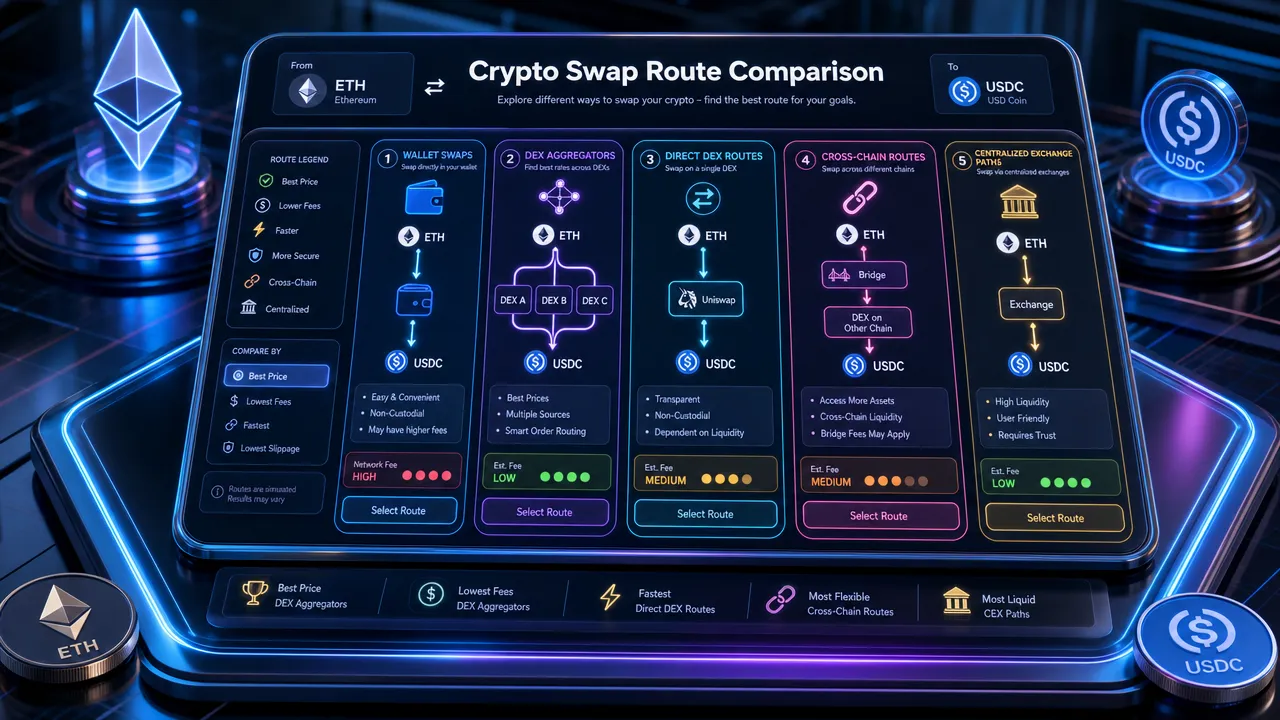 For example, a small stablecoin swap on a low-cost Layer 2 may be cheapest through a built-in wallet swap or DEX aggregator. A large same-chain swap may benefit from aggregation because route splitting can reduce price impact. A cross-chain swap may be cheaper and simpler through a cross-chain aggregator than manually bridging and then swapping.
For users who want to compare more than one route, an aggregator can be another option. Swapzone brings together offers from multiple crypto providers across 4,000+ assets, with details such as rates, estimated receive amounts, processing times, and supported assets available for comparison. Users can review the available options and then choose a third-party provider to complete a crypto swap. Provider research can also be part of the comparison process, with information such as transaction speed, rate accuracy, refund policies, KYC/AML requirements, support, and community feedback. For example, users can look at FixedFloat reviews alongside the available offer details.
For example, a small stablecoin swap on a low-cost Layer 2 may be cheapest through a built-in wallet swap or DEX aggregator. A large same-chain swap may benefit from aggregation because route splitting can reduce price impact. A cross-chain swap may be cheaper and simpler through a cross-chain aggregator than manually bridging and then swapping.
For users who want to compare more than one route, an aggregator can be another option. Swapzone brings together offers from multiple crypto providers across 4,000+ assets, with details such as rates, estimated receive amounts, processing times, and supported assets available for comparison. Users can review the available options and then choose a third-party provider to complete a crypto swap. Provider research can also be part of the comparison process, with information such as transaction speed, rate accuracy, refund policies, KYC/AML requirements, support, and community feedback. For example, users can look at FixedFloat reviews alongside the available offer details.
Built-in wallet swaps are often best for users who want fewer redirects and a clearer signing flow. DEX aggregators are useful for active users who want route comparison. Direct DEX swaps can be efficient for deep liquidity pairs, but they do not always compare all routes. Centralized exchange conversions may look inexpensive, but withdrawal fees, spreads, custody trade-offs, and regional restrictions can change the final cost.
In 2026, the strongest strategy is comparison. Check the quote, minimum received, network, slippage, and route before signing.
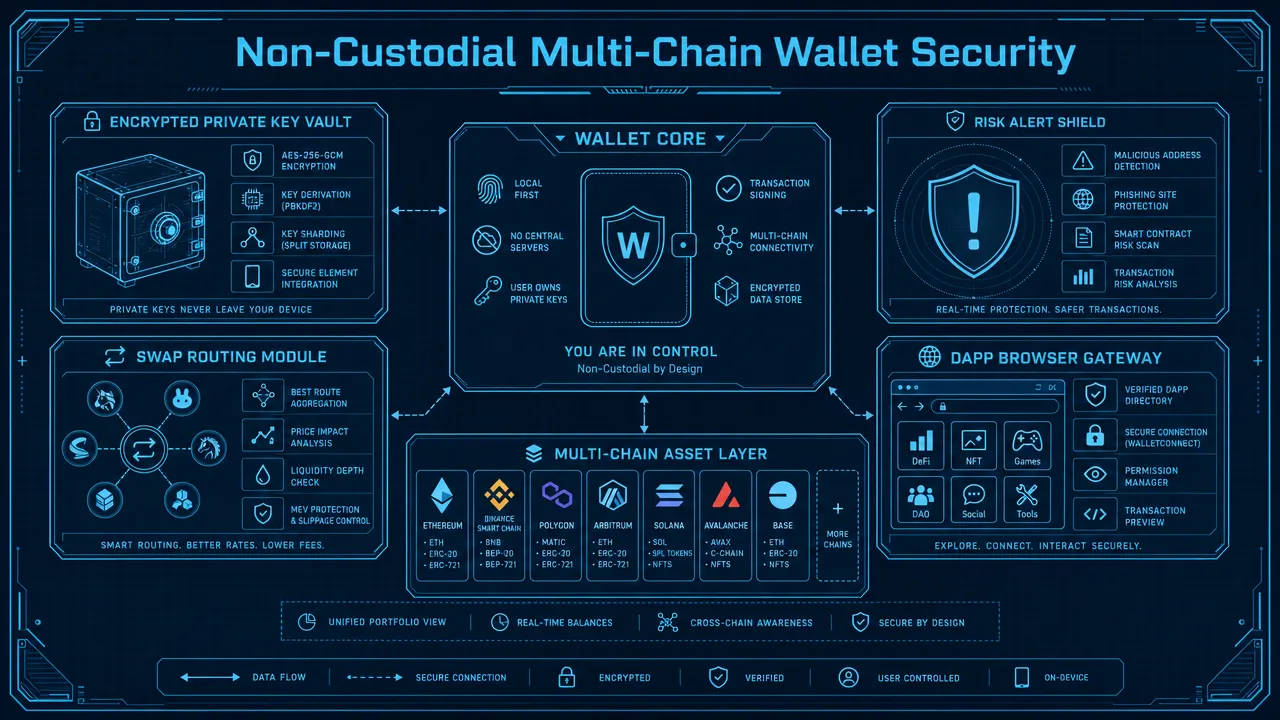 Security matters because the cheapest-looking route is not always the safest. A risky bridge, suspicious approval, or fake DEX link can cost far more than a higher gas fee. FoxWallet's security-first design, including risk alerts and phishing protection, helps users review transaction risk before confirming. You can explore related protection concepts in FoxWallet's article on wallet security features in 2026.
How to swap crypto with low fees in 2026: Understand the full cost
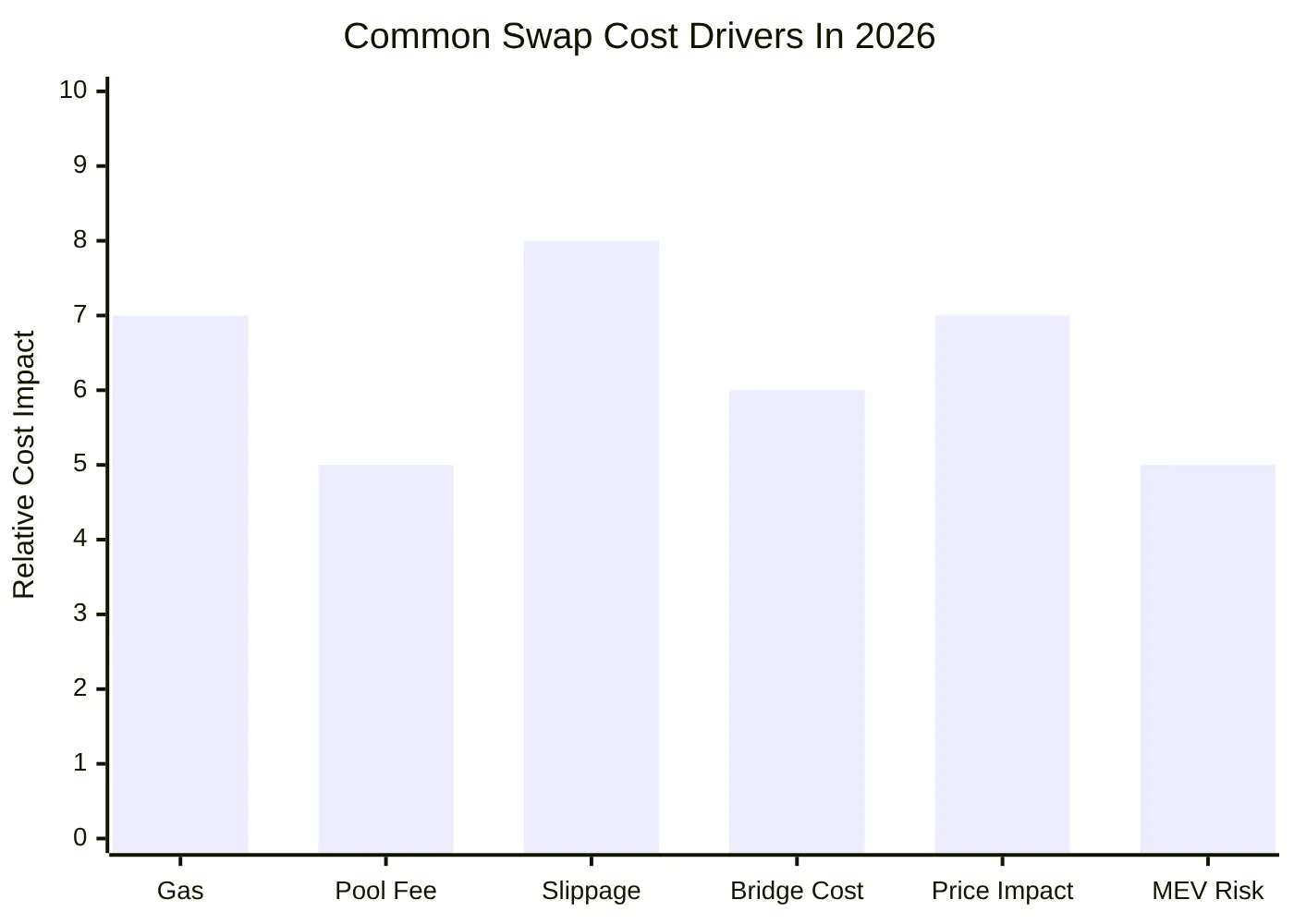
A low-fee crypto swap is not simply the route with the lowest network fee. The real cost is the difference between what you send and what you finally receive, after every visible and hidden cost is included. According to Ethereum gas documentation, gas fees depend on network demand and transaction complexity. DEX swaps may also include pool fees, as explained in Uniswap fee documentation. Cross-chain swaps can add bridge fees, destination-chain gas, routing costs, and execution delays.| Cost component | What it means | Why it matters |
|---|---|---|
| Network gas | Fee paid to process the transaction | Changes quickly during congestion |
| DEX or pool fee | Fee charged by the liquidity pool | Varies by protocol and pair |
| Wallet or provider fee | Fee added by a wallet, aggregator, or provider | May be explicit or included in the quote |
| Slippage | Difference between quoted and executed price | Higher in volatile or low-liquidity markets |
| Price impact | Your trade moves the market price | More important for large trades |
| Bridge fee | Cost of moving value across chains | Applies to cross-chain swaps |
| MEV exposure | Loss from transaction reordering or sandwich behavior | Can be hidden from the fee preview |
For users managing assets across multiple chains, cost visibility becomes even more important. FoxWallet is designed as a multi-chain decentralized wallet where users keep control of their assets while reviewing transaction details before signing. You can also learn more about broader asset visibility in FoxWallet's guide to secure multi-chain wallet management.
How to swap crypto with low fees in 2026: Choose the right swap method
There is no single cheapest method for every trade. The best method depends on whether you are swapping on the same chain, moving assets across chains, trading a liquid pair, or converting a large amount.
For example, a small stablecoin swap on a low-cost Layer 2 may be cheapest through a built-in wallet swap or DEX aggregator. A large same-chain swap may benefit from aggregation because route splitting can reduce price impact. A cross-chain swap may be cheaper and simpler through a cross-chain aggregator than manually bridging and then swapping.
For users who want to compare more than one route, an aggregator can be another option. Swapzone brings together offers from multiple crypto providers across 4,000+ assets, with details such as rates, estimated receive amounts, processing times, and supported assets available for comparison. Users can review the available options and then choose a third-party provider to complete a crypto swap. Provider research can also be part of the comparison process, with information such as transaction speed, rate accuracy, refund policies, KYC/AML requirements, support, and community feedback. For example, users can look at FixedFloat reviews alongside the available offer details.
| Scenario | Usually efficient method | Reason |
|---|---|---|
| Small same-chain swap | Built-in wallet swap or DEX aggregator | Convenience and route comparison |
| Large same-chain swap | DEX aggregator | Better chance of reducing price impact |
| Highly liquid common pair | Direct DEX or aggregator comparison | Direct pool may already be efficient |
| Cross-chain swap | Cross-chain swap aggregator | Combines bridge and swap routing |
| Funds already on a CEX | CEX trade, then withdraw only if needed | Avoids unnecessary on-chain steps |
| Unknown or illiquid token | Avoid or test small | High slippage and contract risk |
How to swap crypto with low fees in 2026 using FoxWallet
FoxWallet is a non-custodial multi-chain wallet built for users who want self-custody, multi-chain asset management, and wallet-native swap access. FoxWallet does not control blockchain gas fees, DEX fees, bridge fees, market volatility, or third-party protocol behavior. Instead, it helps users reduce operational complexity and review important details before they sign. FoxWallet supports locally encrypted storage of mnemonic phrases and private keys, meaning users retain control over their assets. It also offers a unified view for managing assets across chains, helping reduce the mistakes that can happen when users jump between many wallets, bridges, and DApps. For swap-focused users, FoxWallet's built-in multi-chain swap experience can help with:- Accessing swap routes from inside one wallet.
- Managing same-chain and cross-chain asset movement.
- Reviewing estimated output and transaction context before signing.
- Reducing repeated external redirects.
- Checking risk alerts and smart contract recognition prompts.
- Using mobile and browser extension workflows depending on the situation.
Security matters because the cheapest-looking route is not always the safest. A risky bridge, suspicious approval, or fake DEX link can cost far more than a higher gas fee. FoxWallet's security-first design, including risk alerts and phishing protection, helps users review transaction risk before confirming. You can explore related protection concepts in FoxWallet's article on wallet security features in 2026.
How to swap crypto with low fees in 2026: Avoid hidden costs
Hidden swap costs usually come from poor timing, poor routing, high slippage, thin liquidity, unsafe approvals, or cross-chain complexity. Before confirming any transaction, slow down and inspect the full quote. Use this practical checklist:- Confirm the source chain and destination chain.
- Check whether the token pair has enough liquidity.
- Compare the expected output across available routes.
- Review gas fees before signing.
- Check slippage tolerance and minimum received.
- Watch for high price impact on larger trades.
- For cross-chain swaps, review bridge fees and destination gas.
- Avoid unknown bridges, fake DEX links, and suspicious contracts.
- Read every approval request.
- Try a small test swap if you are uncertain.
How to swap crypto with low fees in 2026: Final checklist and FAQs
The cheapest way to swap crypto in 2026 is the safest route that gives you the best final received amount after gas, fees, slippage, price impact, and cross-chain costs. For many users, that means comparing wallet swaps, DEX aggregators, direct DEX routes, and cross-chain routes before signing. FoxWallet is a strong fit for users who want to manage assets across chains, keep self-custody, and review swap details in one wallet experience. Download FoxWallet to compare your route, review transaction context, and manage multi-chain assets with self-custody.| User type | Low-fee strategy |
|---|---|
| Beginner | Use a trusted wallet, review the quote, avoid unknown links |
| Active DeFi user | Compare wallet routes and aggregators before signing |
| Cross-chain user | Check bridge fees, destination gas, and route warnings |
| Large trade user | Watch price impact and consider route aggregation |
| Security-focused user | Never choose a route only because it looks cheapest |