


Open-source AI wallet standards are reshaping Web3

The rise of AI and agent-driven wallets is pushing Web3 into a new phase. Instead of treating wallets as simple signing tools, new standards are turning them into programmable control layers where software agents can act within strict guardrails. That shift is why open-source AI wallet standards, policy engines, agentic management, and spending limits are becoming central topics across the industry.
Recent announcements point to a clear trend. MoonPay introduced an open standard for agent wallets with built-in policy controls. Coinbase is advancing agentic wallet tooling around x402 and AgentKit. Community projects such as ClawVault are adding momentum with developer grants for rules-based, multi-chain agent wallets. Together, these developments suggest that the next major competition in wallets may not be only about chain support or swapping UX, but about who defines the safest and most usable policy layer for autonomous actions.
For a security-first, non-custodial wallet like FoxWallet, this matters because the wallet is the natural place to enforce rules while preserving user control. In other words, the future of AI and agent-driven wallets will likely depend on whether autonomy can be layered onto self-custody without weakening security.
Why AI and agent-driven wallets need open-source AI wallet standards
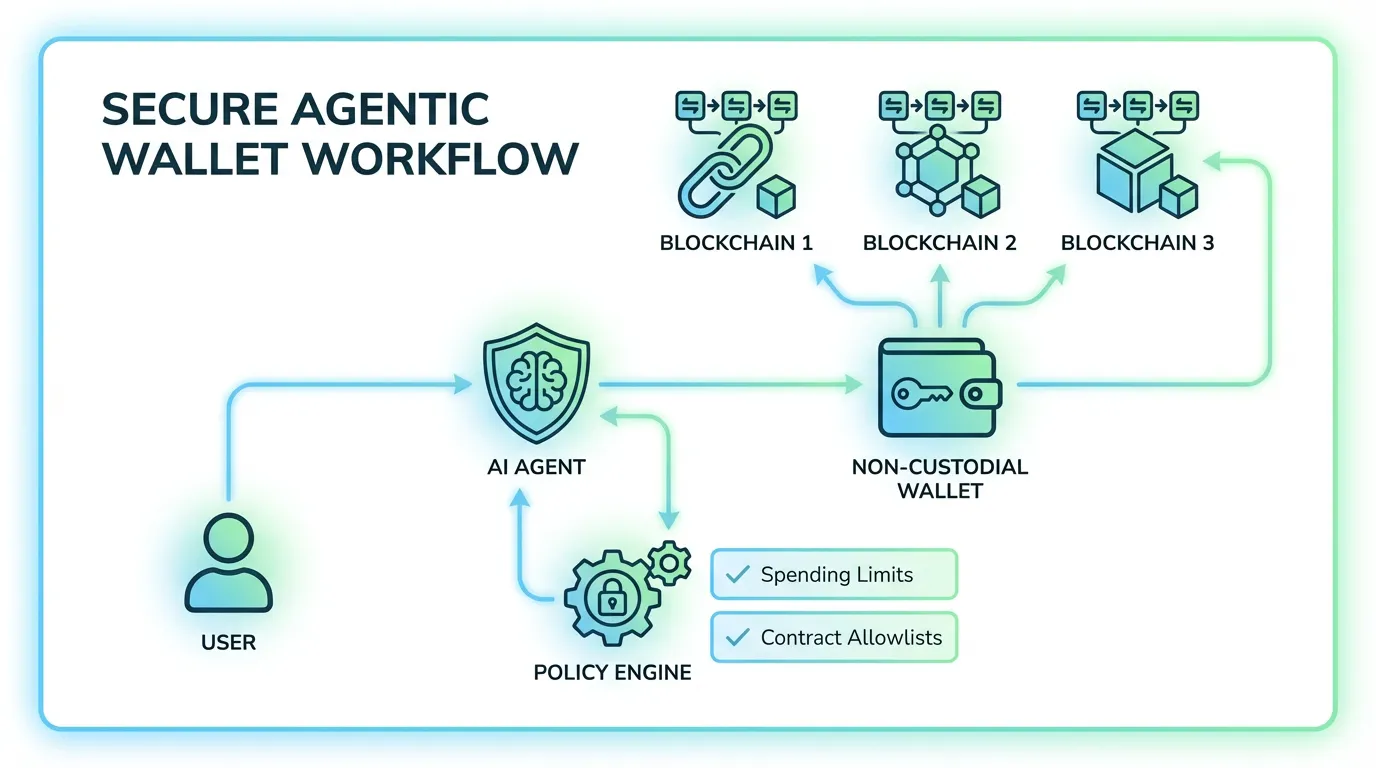
At the core of AI and agent-driven wallets is a simple but powerful idea: agents should not have unrestricted access to private keys. They should request actions, while the wallet evaluates those actions against predefined rules before any signing happens. That is the basic promise behind open-source AI wallet standards.
According to MoonPay's announcement and coverage from MoonPay, FF News, and The Paypers, the Open Wallet Standard is designed to support multi-chain operations for agents while enforcing policy checks such as spending limits, chain restrictions, and contract allowlists.
This matters because older automation models often required trusting bots with broad permissions. In contrast, AI and agent-driven wallets built on open standards aim to preserve non-custodial principles. The user still controls the wallet, the keys stay protected, and the agent operates inside a policy box.
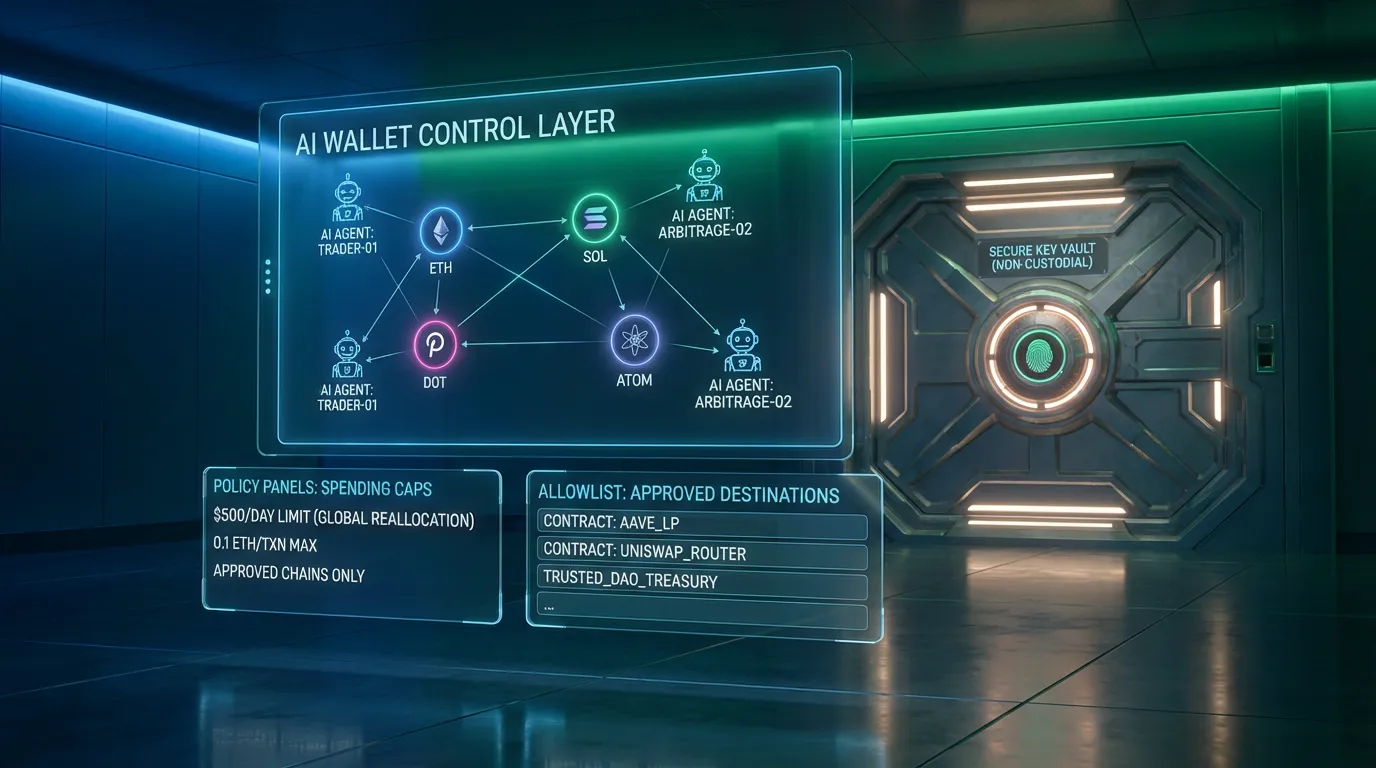
For FoxWallet users, this architecture is especially relevant because the platform already emphasizes local private key encryption, self-custody, and multi-chain asset management. Those are the exact foundations needed before agentic management can be safely introduced.
A helpful way to think about it is this: traditional wallets are mostly user-driven, while AI and agent-driven wallets are policy-driven. The user sets the boundaries, and the wallet enforces them automatically.
How AI and agent-driven wallets use policy engines and spending limits
The most important component in AI and agent-driven wallets is the policy engine. A policy engine acts like a programmable firewall between an agent request and the signing process. Before any transaction is approved, the system can evaluate rules such as spending limits, approved contracts, approved chains, and escalation thresholds.
Based on the research report, common policy controls include:
| Policy control | What it does | Why it matters |
|---|---|---|
| Spending limits | Caps how much an agent can spend per transaction or per day | Reduces the blast radius of a compromised or faulty agent |
| Allowlists | Restricts which contracts, addresses, or chains are permitted | Prevents agent interaction with unknown or risky destinations |
| Approval thresholds | Requires user confirmation above a certain amount or for new destinations | Keeps humans in the loop for higher-risk actions |
| Time and context rules | Limits actions to certain windows or market conditions | Prevents automated behavior under unsafe conditions |
In practical terms, spending limits may look like "Agent A can spend up to $100 per day" or "Only approve actions through a specific router on approved chains." This is where policy engines become more than a technical detail. They are the mechanism that makes agentic management compatible with self-custody.
FoxWallet already applies security thinking in adjacent areas. Its product positioning highlights locally encrypted storage, phishing protection, high-risk signature verification, and transparent multi-chain asset visibility on the official site. Its own educational content on cross-chain swap risks also reinforces the value of clear transaction review, risk awareness, and route transparency. Those strengths create a strong baseline for any future policy-driven wallet workflows.
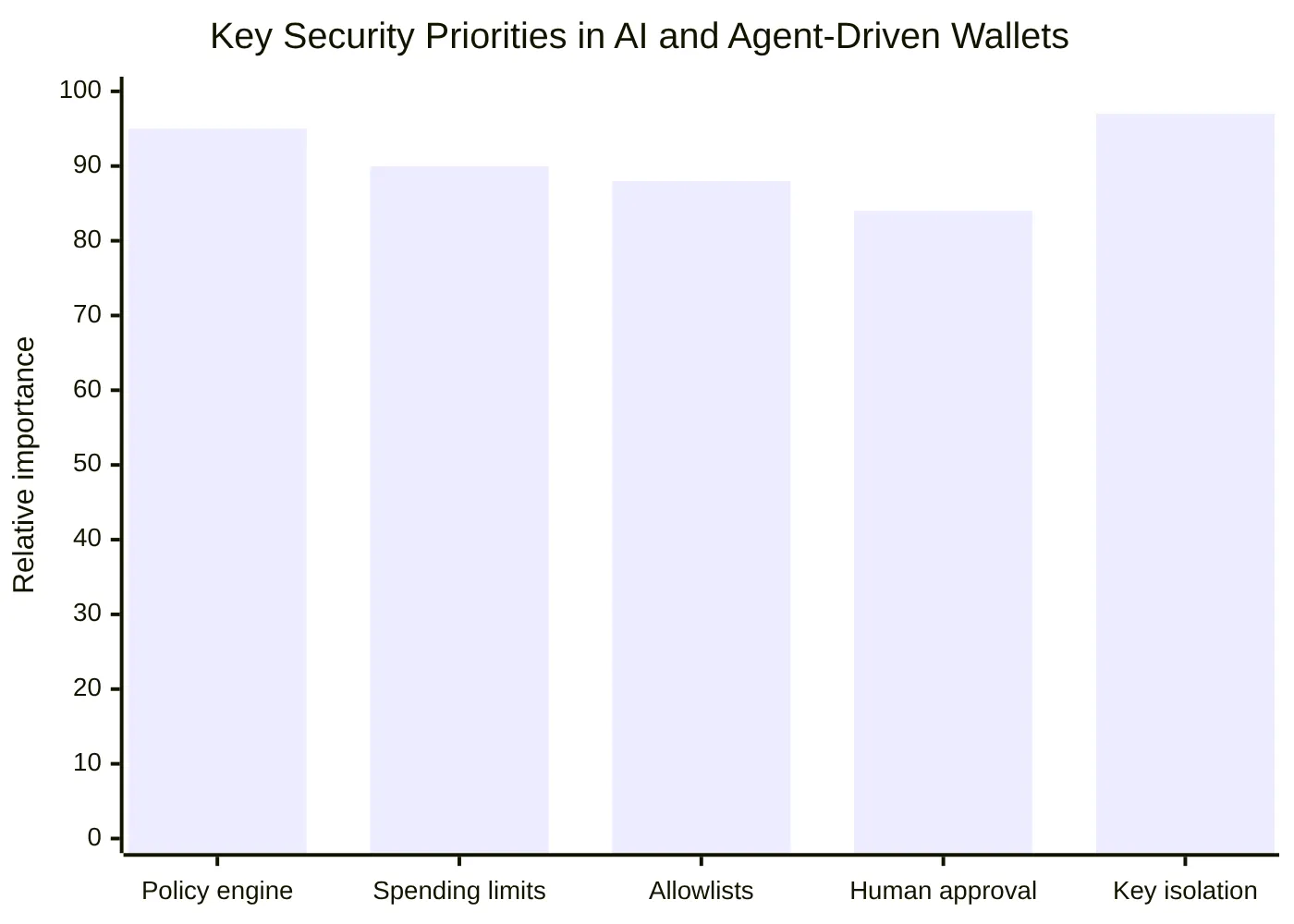
The chart above is not market-share data. It is a simple visual summary of the security priorities consistently emphasized across the research sources. The pattern is clear: policy enforcement and key isolation sit at the center of the AI wallet conversation.
Why AI and agent-driven wallets are creating policy wars in Web3
The phrase "policy wars" captures an emerging reality. As more teams launch AI and agent-driven wallets, they are also trying to define the standard for safe automation. That means competition is increasingly shifting toward policy language, execution models, and developer tooling.
MoonPay currently appears to offer the clearest open-source AI wallet standards framework, with a wallet layer built specifically for agents and policy engines. Coinbase, through coverage from The Block and other research sources in the report, is building strong momentum with agentic wallets and x402-based infrastructure. ClawVault, highlighted in social posts from ClawVault, AxiomBot, and TronWeekly, is using developer grants to encourage experimentation around rules engines and multi-chain agent wallet design.
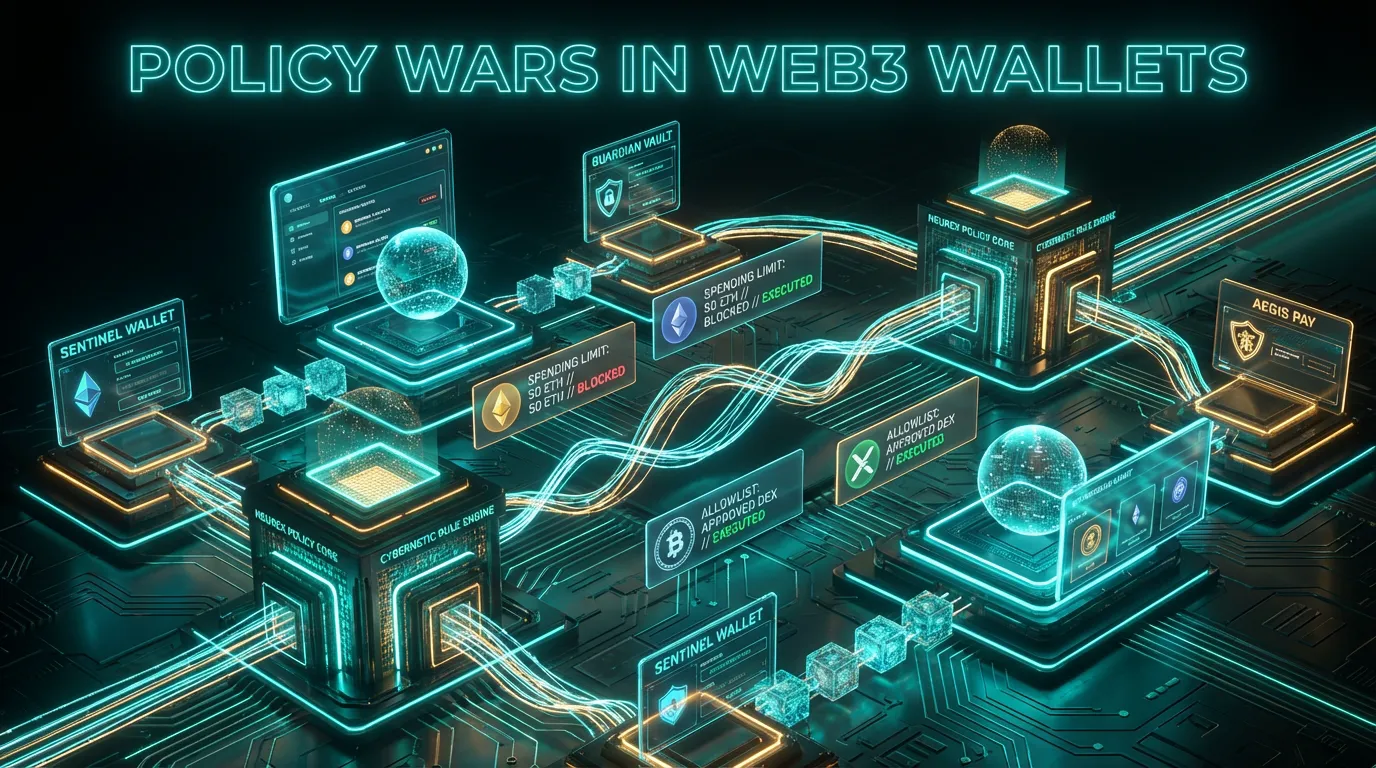
This competition is important because standards can create either portability or lock-in. If developers build around one wallet's policy model, moving to another provider may become difficult. If users cannot export or understand their policy settings, transparency suffers. Open-source AI wallet standards therefore have strategic value well beyond code reuse. They influence who controls trust, defaults, and interoperability.
From FoxWallet's perspective, that raises a practical question: how should a non-custodial, multi-chain wallet respond when the market begins standardizing around agent security rather than only wallet connectivity?
What AI and agent-driven wallets mean for FoxWallet users
For FoxWallet, the trend does not require abandoning its current strengths. In fact, the research report suggests the opposite. AI and agent-driven wallets make the wallet layer more important, not less important.
FoxWallet's positioning already aligns with several needs of the agentic era:
- Non-custodial architecture where users keep control of funds and keys.
- Multi-chain asset management across many blockchain ecosystems.
- Built-in trading and routing support designed to lower friction.
- Security features such as phishing detection, smart contract recognition, and risk alerts.
- A consistent experience across mobile and browser extension environments through the download page.
That combination matters because agentic management works best when a wallet can evaluate multi-chain activity from one control point. Rather than handing autonomy directly to an agent, a safer model is to let the wallet remain the enforcement layer.
There are also clear content and product education opportunities. FoxWallet can continue helping users understand transaction safety through resources like its official blog and related posts such as the guide to cross-chain swap risks. As AI and agent-driven wallets mature, educational content around policy engines, spending limits, and safe defaults will likely become just as important as tutorials on swaps or DeFi access.
Just as importantly, FoxWallet can frame the conversation around user sovereignty. Agentic management should not mean surrendering control. It should mean defining clear rules, using automation within those rules, and keeping security-first self-custody intact.
What comes next for AI and agent-driven wallets
The current news cycle suggests that AI and agent-driven wallets are moving from experiment to infrastructure. The immediate trend is not full autonomy without oversight. It is controlled autonomy, where open-source AI wallet standards and policy engines determine what an agent can and cannot do.
Three developments are worth watching closely:
- More formal open-source AI wallet standards that developers can integrate across ecosystems.
- More advanced policy engines with finer-grained spending limits, allowlists, and user approval logic.
- More ecosystem support, including developer grants, for agentic management tools that are multi-chain by design.
For users and builders, the takeaway is simple. The real innovation is not just that agents can transact. It is that wallets are becoming secure decision layers for autonomous execution.
For FoxWallet, this shift supports the long-term value of a secure, non-custodial, multi-chain foundation. As Web3 moves toward policy-based automation, wallets that combine self-custody, transparent asset management, and strong risk controls will be well positioned to support the next generation of agent-driven experiences.
If you want a wallet experience built around self-custody, multi-chain visibility, and security-first design, explore FoxWallet and follow the latest guides on the FoxWallet blog.
