


Best DeFi Apps 2026: Secure Access via FoxWallet

Introduction
The search for the best defi apps 2026 is really a search for two things at once: strong DeFi protocols and a safer way to access them. By 2026, DeFi is expected to be even more multi-chain, more competitive, and more dependent on secure wallet infrastructure. That means choosing the right wallet matters almost as much as choosing the right protocol.
For users who want self-custody, broad chain coverage, and direct access to DApps, FoxWallet stands out as a practical gateway. It is a fully non-custodial wallet built around local key encryption, multi-chain asset management, built-in DApp access, and native cross-chain swap support. FoxWallet also supports mobile and desktop workflows, making it suitable for beginners, advanced users, and active DeFi participants.
In this guide, we will break down the best defi apps 2026 by category, explain what makes them relevant, and show how FoxWallet helps users access them more securely.
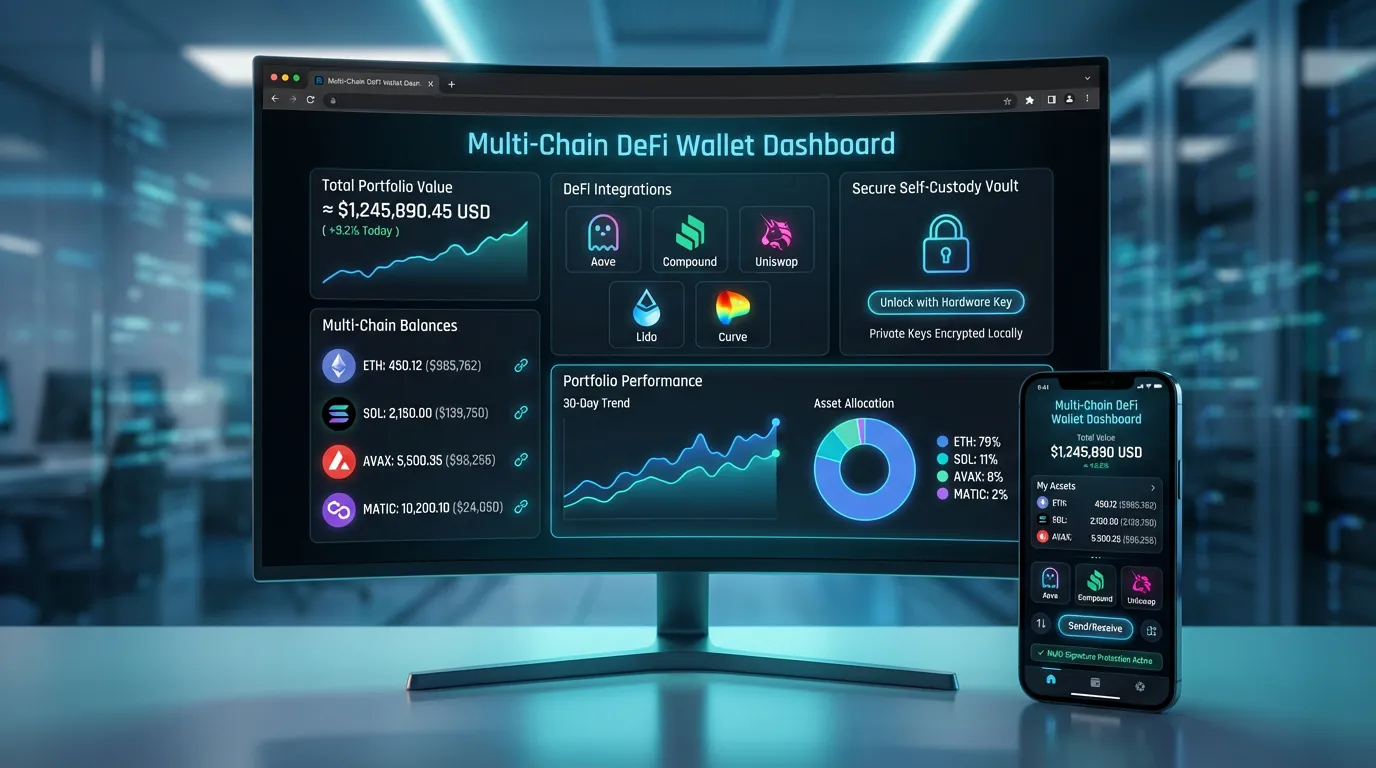
Why the best defi apps 2026 will depend on secure wallet access
The DeFi landscape heading into 2026 is shaped by several clear trends cited in the research report, including the rise of Ethereum L2s, more fragmented liquidity, stronger demand for self-custody, and increased security awareness. As protocols spread across Ethereum, Arbitrum, Optimism, Polygon, Base, Solana, and other networks, users need one place to manage assets and interact with DApps without losing visibility.
That is where FoxWallet fits naturally. According to FoxWallet's official site, the wallet supports more than 100 blockchains, offers locally encrypted private key storage, and includes security features such as phishing site blocking, high-risk signature verification, and token authorization monitoring.
These capabilities matter because the best defi apps 2026 will not exist on one chain or in one category. Users will likely move between DEXs, lending platforms, stablecoin systems, and liquid staking protocols while tracking balances across multiple networks.
Here is a simple framework for evaluating DeFi access in 2026:
| Factor | Why it matters in 2026 | How FoxWallet helps |
|---|---|---|
| Self-custody | Users want direct control of keys and funds | Non-custodial design with local encryption |
| Multi-chain visibility | Assets are spread across L1s, L2s, and app-chains | Unified asset management across many networks |
| DApp access | Top DeFi apps are reached through web interfaces and wallets | Built-in DApp browser and browser extension |
| Risk control | Phishing, malicious contracts, and risky approvals remain common | Pre-transaction alerts, phishing detection, approval monitoring |
| Efficient swapping | Capital often needs to move between chains and ecosystems | Native swap aggregation and cross-chain routing support |
For readers comparing wallets before diving deeper, FoxWallet also published its own overview of the best wallets for 2026, which reinforces its focus on multi-chain usability and long-term fee efficiency.
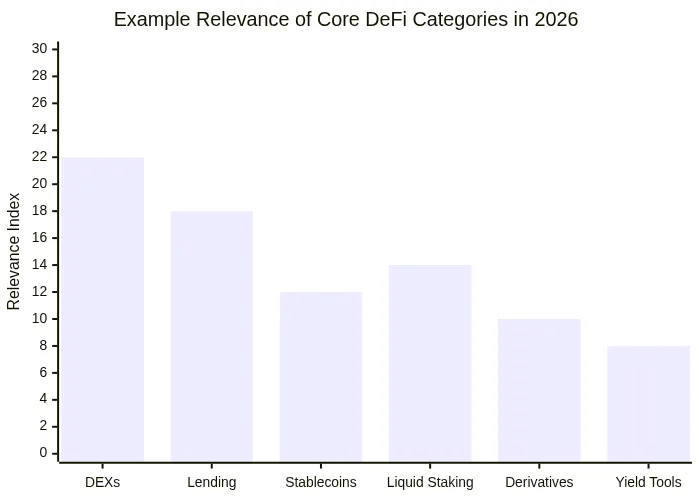
Best defi apps 2026 for trading, lending, and stablecoin usage
When people search for the best defi apps 2026, they are usually looking for proven categories first, not just individual brand names. Based on the research report, the most important categories remain DEXs, lending markets, and stablecoin platforms.
DEXs likely to lead in 2026
Uniswap remains one of the most important DeFi apps because of its deep liquidity, broad chain support, and long history in on-chain trading. It is especially relevant for spot token swaps on Ethereum and major L2s.
Curve remains critical for stablecoin and like-asset swaps, where low slippage matters most. For users moving between stable assets, Curve is still one of the strongest names in DeFi.
For more advanced traders, GMX and similar platforms offer derivatives and perpetual exposure, though they are better suited to experienced users.
Lending markets likely to matter most
Aave continues to stand out because of its strong adoption, broad deployment footprint, and mature lending features. Users can supply assets for yield or borrow against collateral across multiple chains.
Compound remains another well-known lending protocol, often favored for a more focused money market approach.
Stablecoin infrastructure remains foundational
MakerDAO and DAI continue to matter because stablecoins remain the settlement layer of DeFi. Stable assets are central to swaps, collateral, lending, and portfolio rebalancing.
The table below summarizes these core categories for the best defi apps 2026 discussion:
| Category | Leading apps | Main use case | Typical user level |
|---|---|---|---|
| DEXs | Uniswap, Curve | Token swaps, liquidity access | Beginner to advanced |
| Lending | Aave, Compound | Supply assets, borrow against collateral | Beginner to advanced |
| Stablecoins | MakerDAO, DAI ecosystem | Stable liquidity and collateral | All levels |
| Advanced trading | GMX, Synthetix ecosystem | Perpetuals, synthetic exposure | Advanced to professional |
With FoxWallet, users can open official DApps through the wallet environment, review transaction details before signing, and manage balances across networks without jumping between multiple wallet apps. That creates a smoother path into the best defi apps 2026 ecosystem.
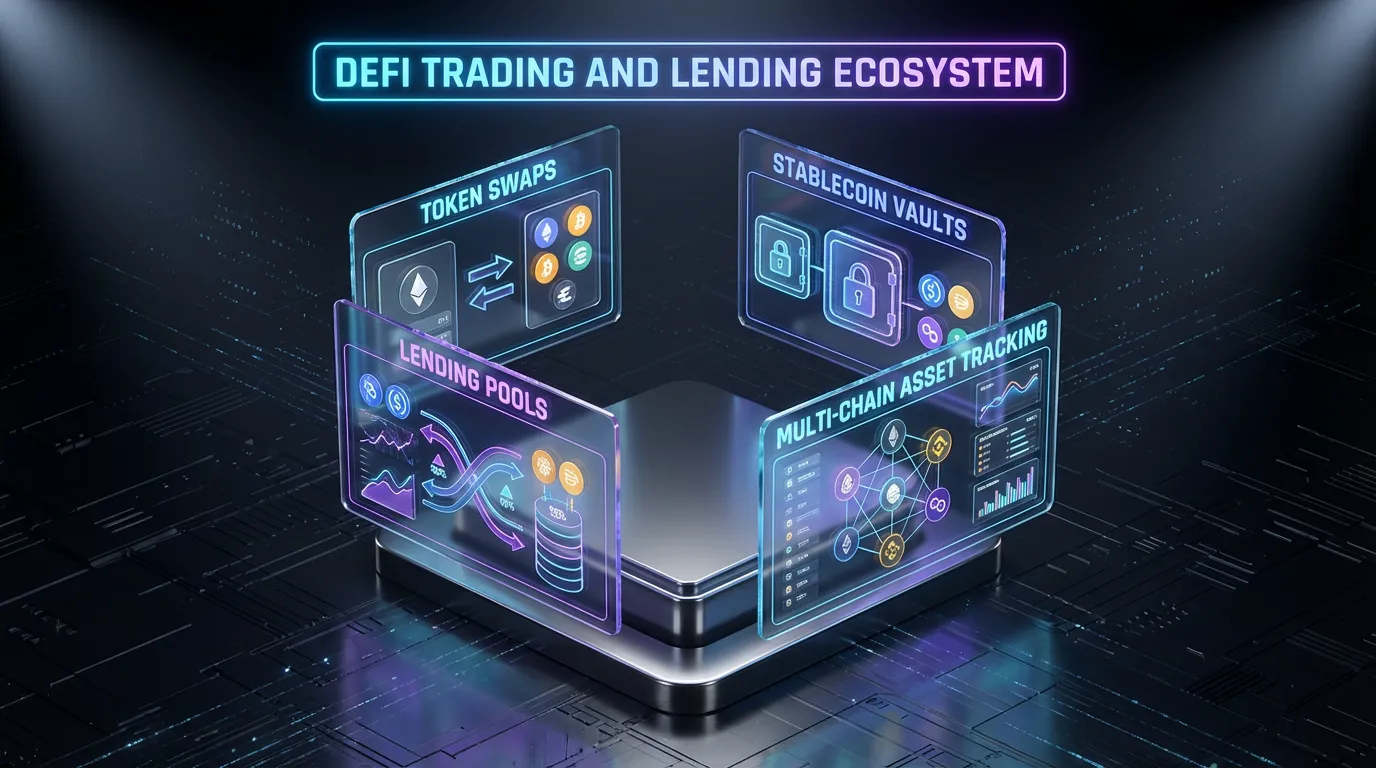
Best defi apps 2026 for liquid staking, derivatives, and cross-chain activity
As DeFi becomes more capital efficient, the best defi apps 2026 conversation also includes liquid staking, derivatives, and cross-chain liquidity tools. These are not the same thing, and they should be treated separately.
Liquid staking leaders
Lido is expected to remain one of the biggest names in liquid staking. Users can stake ETH and receive stETH, which can then be used elsewhere in DeFi. This makes Lido especially relevant for users who want staking exposure without locking up all flexibility.
EigenLayer represents a more advanced area of restaking infrastructure. It may be relevant for experienced users, but it also introduces additional complexity and risk.
Derivatives and synthetic exposure
Synthetix continues to matter for synthetic assets and derivatives infrastructure, especially through related front-ends and perps ecosystems.
GMX remains one of the better-known decentralized derivatives venues for active traders on chains like Arbitrum and Avalanche.
Cross-chain routing as infrastructure
Cross-chain activity is increasingly important because liquidity is fragmented. Protocols such as Stargate Finance help users move assets between ecosystems. But this is also an area where users face elevated operational and security risk.
FoxWallet has published a useful guide on cross-chain swap risks in 2026, highlighting route complexity, approval risks, slippage, wrapped asset risk, and the importance of reading route details carefully before signing.
That guidance aligns with FoxWallet's product positioning:
- Full self-custody with locally encrypted keys
- Unified multi-chain asset visibility
- Native multi-chain swap aggregator access
- Pre-transaction risk alerts
- Phishing and malicious link protection
This makes FoxWallet especially relevant for users accessing the best defi apps 2026 across multiple chains without losing control of security decisions.
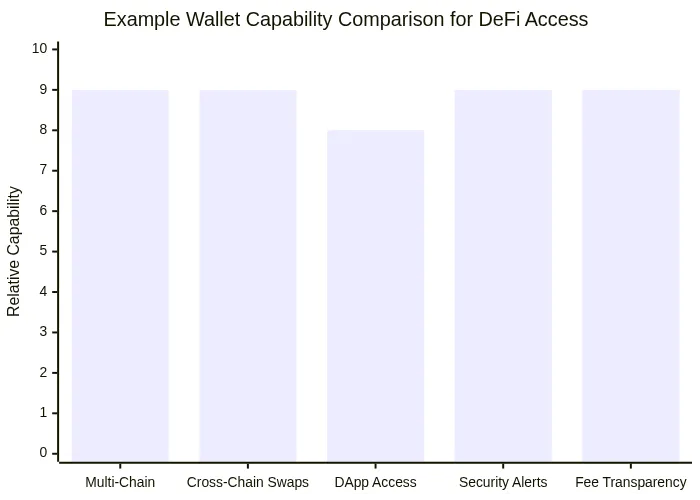
How to use the best defi apps 2026 securely with FoxWallet
Accessing the best defi apps 2026 safely is not just about protocol choice. It also depends on your workflow. A good wallet should reduce avoidable mistakes without taking control away from the user.
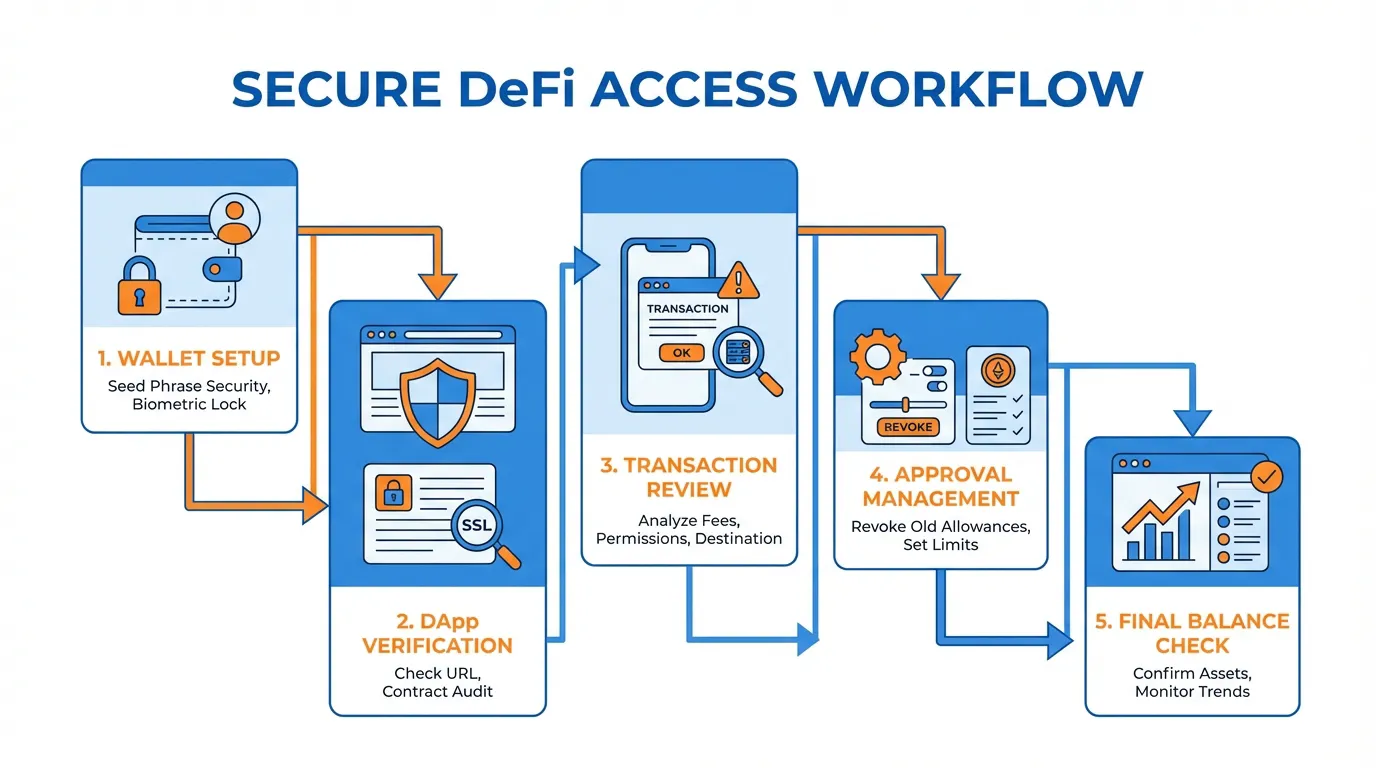
Here is a practical step-by-step approach using FoxWallet:
1. Set up self-custody correctly
Download FoxWallet and create or import your wallet. Because it is non-custodial, you remain responsible for your recovery phrase and private key backups. FoxWallet stores keys locally with encryption, which supports self-custody while reducing exposure.
If you are ready to start, use the official FoxWallet download page to access the mobile app or browser extension.
2. Start with one simple DeFi action
A beginner-friendly route is a small DEX swap or a basic lending deposit. For example:
- Connect to Uniswap through the DApp browser
- Review the token pair and chain carefully
- Check gas fees, slippage, and approvals
- Confirm only after reading the transaction prompt
3. Use multi-chain visibility before moving funds
One of the biggest causes of confusion in DeFi is forgetting which chain holds which asset. FoxWallet's unified view helps users track token balances and NFTs across supported networks, making it easier to avoid wrong-chain mistakes.
4. Treat approvals as separate security events
An approval is not the same thing as a swap or deposit. If a DApp asks for broad token permissions, slow down. FoxWallet's security posture emphasizes approval awareness and contract recognition, which is especially useful when using newer protocols.
5. Keep staking and cross-chain actions conceptually separate
This is important. Liquid staking with Lido is a staking decision. Moving assets from one chain to another is a cross-chain decision. They may both appear in advanced DeFi workflows, but they involve different risks and should not be merged mentally or operationally.
6. Use FoxWallet as your ongoing DeFi control layer
As your activity expands from swaps into lending, stablecoins, NFTs, or GameFi, the wallet becomes your main review point for balances, permissions, and signatures. That is why wallet quality matters so much in discussions about the best defi apps 2026.
The checklist below can help:
| Security step | Why it matters |
|---|---|
| Verify the official DApp | Reduces phishing risk |
| Confirm the chain and token | Prevents wrong-network errors |
| Read route details | Helps catch hidden costs and complexity |
| Review approvals | Limits future token drain risk |
| Check wallet alerts | Adds a final layer of decision support |
| Confirm final balances after execution | Ensures the transaction completed as expected |
Why FoxWallet is a smart gateway to the best defi apps 2026
The best defi apps 2026 will likely include familiar leaders such as Uniswap, Aave, MakerDAO, Lido, Synthetix, GMX, Yearn, and Stargate. What connects them is not a single chain or a single strategy, but the need for secure, flexible access.
FoxWallet is well positioned for that role because it combines:
- Fully non-custodial self-custody
- Local encryption of mnemonic phrases and private keys
- Support for 100+ blockchains
- Unified multi-chain asset management
- Native swap aggregation and cross-chain routing support
- Built-in DApp access for DeFi, NFTs, and more
- Mobile and browser extension support
- Pre-transaction alerts, phishing detection, and approval monitoring
For beginners, that means a cleaner entry point into DeFi. For advanced users, it means less friction when managing positions across chains. For professional users, it means a security-first wallet designed for frequent on-chain interaction.
If you want to explore the best defi apps 2026 without giving up control of your keys, FoxWallet offers a strong foundation. You can also review FoxWallet's perspective on best wallets for 2026 and learn safer execution habits in its guide to cross-chain swap risks in 2026.
In a DeFi market that is becoming more fragmented, more powerful, and more security-sensitive, the right wallet is no longer optional. It is part of the strategy.
