


Safest Non-Custodial ETH Wallet with Low Fees

Choosing an ETH wallet is less about picking a popular app and more about choosing a security model and a fee model you can live with. In a non-custodial wallet, you control the private keys, which reduces exchange custody risk but increases personal responsibility. And on fees, the "cheapest" option is rarely the one with the lowest headline cost, because Ethereum gas, swap service fees, and hidden spread can add up over time.
Below is a safety-and-fees-first comparison of leading non-custodial options, plus how FoxWallet is designed to meet the needs of beginners and advanced, high-frequency users.
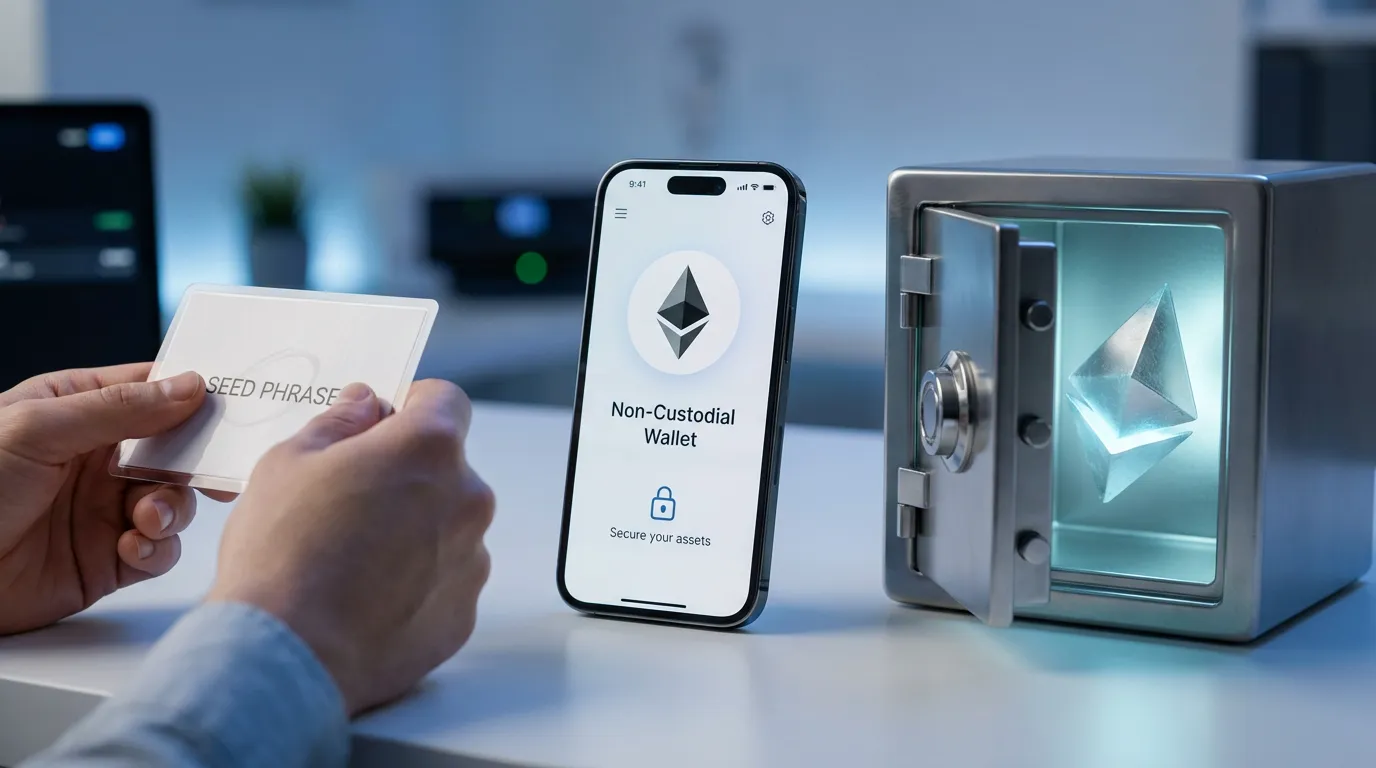
What an ETH wallet is, and why non-custodial matters
An ETH wallet is a tool that manages Ethereum addresses so you can send, receive, and interact with ETH and tokens by controlling private keys. Wallets generally fall into two buckets:
- Custodial: A provider controls the keys (common on exchanges). Convenience is high, but you inherit counterparty risk.
- Non-custodial (self-custody): You control the keys (often via a seed phrase). You gain autonomy, but there is no "password reset" if you lose your backup.
If your primary goals are safety and long-term cost control, non-custodial is usually the starting point. Many wallet guides highlight self-custody as a key reason users move away from exchange accounts, especially after high-profile platform incidents (see overviews like this non-custodial explainer from MEXC and general wallet comparisons from Money.com).
Safety checklist: what "safe" actually means for a non-custodial wallet
"Safest" is not a single feature. It is a set of safeguards that reduce common failure modes:
- Key control and backup clarity
- Do you fully control the private keys locally?
- Is the seed phrase flow clear, and does the wallet encourage secure offline storage?
- Local protection of secrets
- Local encryption of seed phrases/private keys
- Isolation or sandboxing to reduce exposure if other apps misbehave
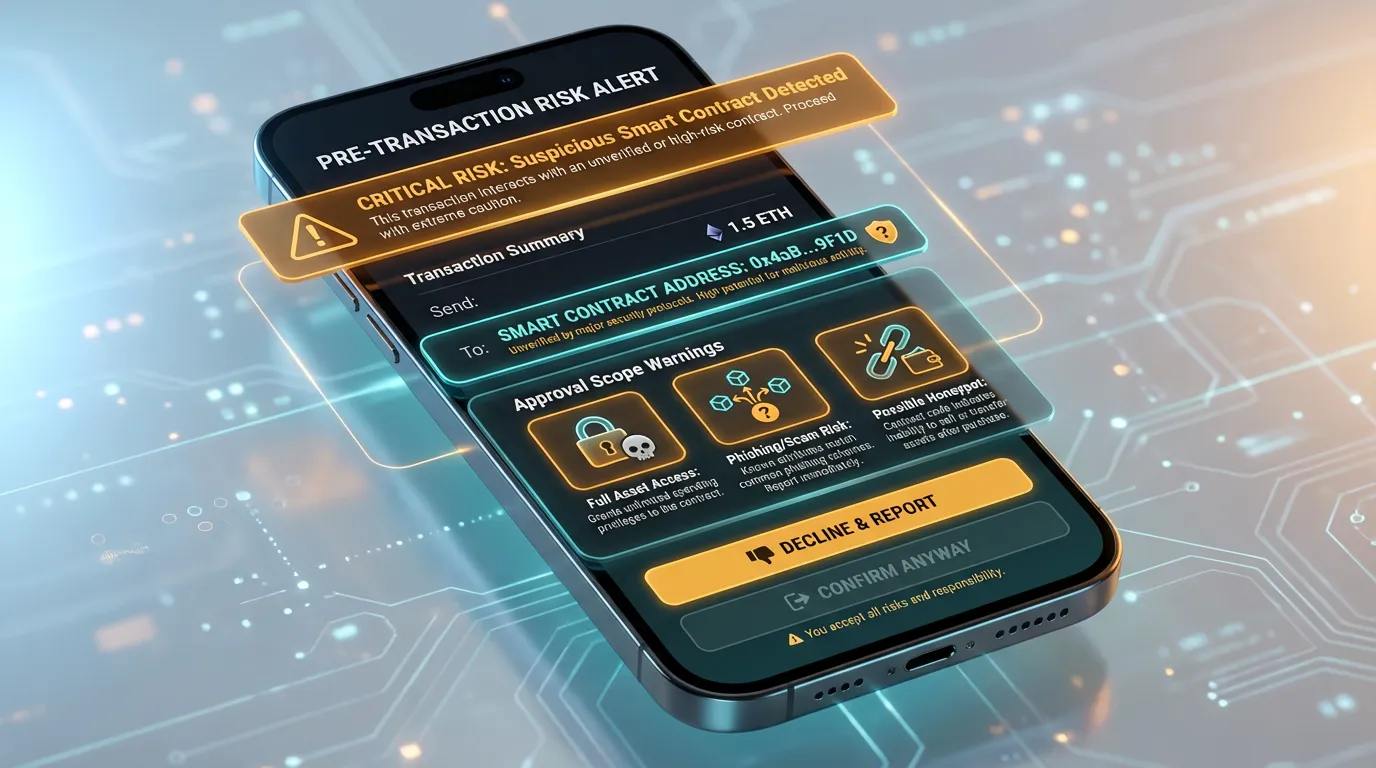
- Transaction-time risk prevention
- Pre-sign alerts for suspicious approvals
- Smart contract recognition to reduce "blind signing"
- Phishing and malicious contract checks
- Operational safety for real users
- Clear confirmations, readable previews, and fewer foot-guns for beginners
- Multi-account organization for advanced users who separate funds by purpose
FoxWallet is built around this "prevent mistakes before signing" approach, emphasizing local key encryption, secure sandbox isolation, and pre-transaction risk alerts. You can review the product's security-oriented architecture in the FoxWallet Help Center and its account structure in the multi-chain account system documentation.
Fees explained: gas vs wallet fees (and where "low fees" really comes from)
Most users discover quickly that "wallet fees" are not one thing. They typically break down into:
- Ethereum gas fees: Paid to the network. Wallets can suggest settings, but they cannot eliminate base gas.
- Swap service fees (wallet or interface fee): Some wallets charge an explicit percentage on swaps.
- Spread and routing quality: Even with low visible fees, poor routing can produce worse execution (more slippage or price impact).
- Cross-chain swap costs: Often include gas on multiple networks plus any routing/provider costs (separate from staking or earning features).
A practical way to evaluate low-fee design is to ask two questions every time you swap:
- Does the wallet add an explicit service fee on top of gas?
- Does the wallet optimize routes across liquidity sources to reduce hidden costs (spread and slippage)?
FoxWallet's positioning is explicitly cost-conscious for active users: it integrates swap aggregators and focuses on lower swap fees and reduced hidden costs over time. Public materials describe the goal and architecture, even if a fixed, universal fee schedule is not published in one place (see FoxWallet and the Help Center).
How explicit swap fees can add up (illustrative)
Key takeaway: for high-frequency users, even fractions of a percent matter. That is why "low fees" should include both transparent service-fee policy and cost-aware routing that targets better execution.
Comparison: FoxWallet vs common non-custodial alternatives (safety and fees)
The goal here is not to declare a universal "best," but to make tradeoffs obvious.
| Wallet | Custody model | Security approach (high level) | Fee model signals (high level) | Best fit |
|---|---|---|---|---|
| FoxWallet | Non-custodial (self-custody) | Local key encryption, sandbox isolation, pre-transaction risk alerts, anti-phishing focus (per FoxWallet docs) | Designed to reduce hidden costs via aggregation and routing; emphasizes lower long-term costs for frequent users (positioning) | Beginners who want guardrails, and advanced users who manage many chains and transact often |
| MetaMask | Non-custodial | Seed-based, confirmations, mature ecosystem support | Publicly documents an explicit swap service fee in its swap feature | Users prioritizing maximum DApp compatibility and established workflows |
| Trust Wallet | Non-custodial | Local key storage and anti-scam features (varies by context) | Generally positions itself as not adding a wallet-level % fee on swaps; has gas sponsorship promotions in some cases | Mobile-first users who want broad chain coverage and simple UX |
| Binance Web3 Wallet | Hybrid/seedless MPC style | MPC-style key shares; UX closely tied to Binance infrastructure | Publicly documents tiered swap service fees for certain token groups | Users who want a Binance-connected experience and seedless onboarding |
| OKX Web3 Wallet | Non-custodial | Seed-based self-custody; multi-chain tooling | Publicly documents DEX/interface fees by token group | Users who want an integrated DEX aggregator and multi-chain dashboarding |
Notes on evidence and transparency:
- Exact competitor fee percentages and tables change over time and are documented by each provider in their official materials.
- FoxWallet's public messaging emphasizes lowering swap fees and reducing hidden costs, but does not present a single fixed fee table that applies to all routes and assets. In practice, swap outcomes depend on route selection, liquidity, and network gas.
Why FoxWallet is a strong "safety + low-fee design" choice, and how to get started
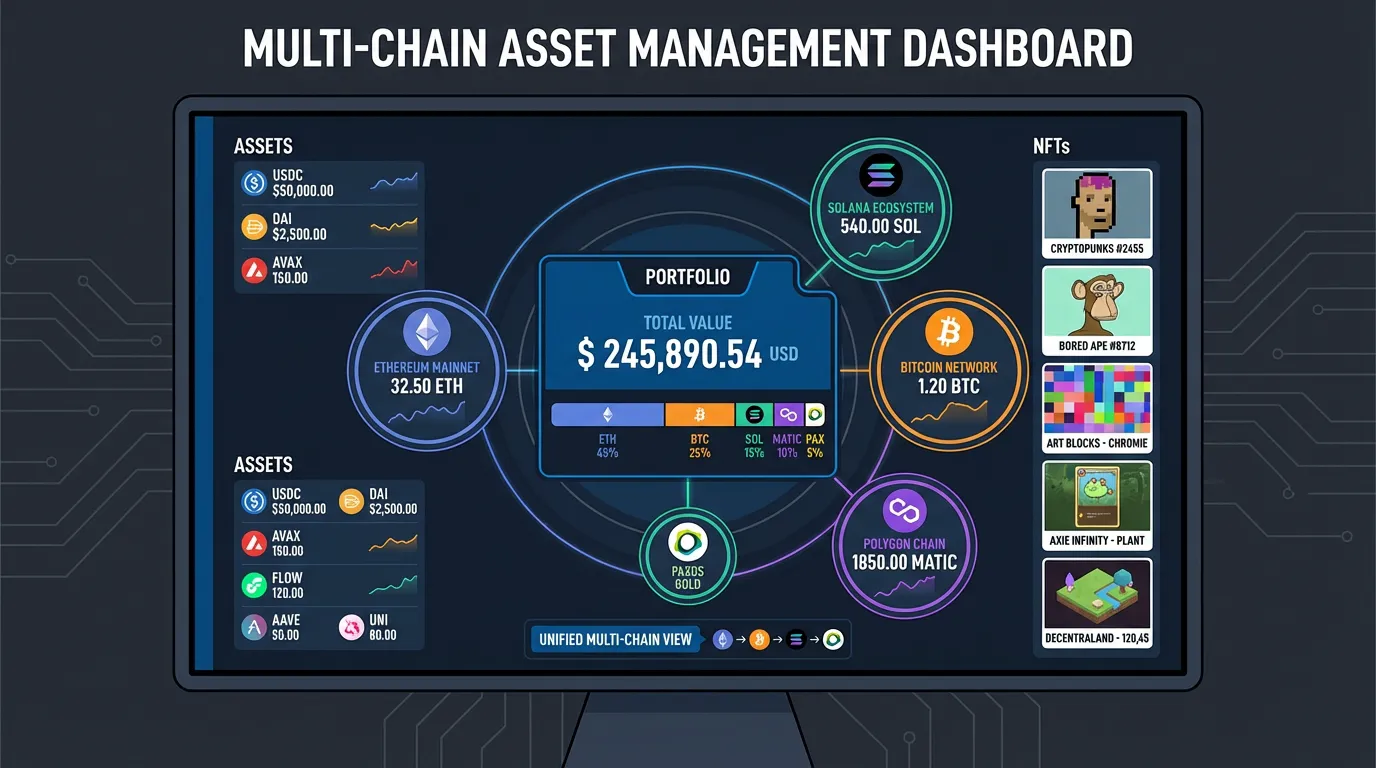
FoxWallet is built to be a unified gateway for multi-chain asset management, DeFi access via an in-wallet DApp experience, and cost-aware on-chain execution, while keeping self-custody at the core.
What to look at first inside FoxWallet
- Security-first self-custody: Your keys stay local and encrypted, with additional isolation and risk alerts before signing. Start with the FoxWallet Help Center for the core model.
- Multi-chain organization: If you manage multiple wallets or want separation for safety, FoxWallet supports multi-wallet and multi-seed organization (see Account System).
- Built-in DApp connectivity: For users who interact with DeFi and Web3 apps, FoxWallet provides integration pathways documented in its Developer documentation.
Get FoxWallet (official downloads)
To avoid fake apps and phishing clones, always use official sources. FoxWallet provides official download links and references in its documentation and store listings:
Quick start checklist (non-custodial basics)
- Install FoxWallet from an official source, then create a new wallet.
- Back up your seed phrase offline (never paste it into sites, forms, or "support" chats).
- Send a small test amount of ETH first.
- Before connecting to any DApp, read the transaction preview carefully and watch for risk alerts.
- For ongoing hygiene, periodically review and reduce unnecessary token approvals.
CTA: If you want a non-custodial wallet designed around proactive risk warnings and long-term cost efficiency across multiple chains, install FoxWallet and start with a small test transaction to learn the flow safely.