


Upgrade Enterprise Payment Infrastructure

What "enterprise payment infrastructure" really means in Web3
When people talk about enterprise payment infrastructure, they usually mean the systems that let organizations move money securely and efficiently at scale. In traditional finance, that includes gateways, processors, settlement, reconciliation, and fraud controls. In Web3, the center of gravity changes. The wallet becomes a core part of the infrastructure because it controls transaction signing, asset visibility, access to on-chain applications, and the movement of funds across multiple networks.
That shift matters. If digital asset operations are spread across chains, wallets, and DApps, then upgrading enterprise payment infrastructure is no longer just about adding another payment rail. It is about improving the operational layer that teams and advanced users rely on every day: key control, transaction review, multi-chain asset management, and safer execution.
For that reason, the most useful way to think about enterprise payment infrastructure in a Web3 setting is not as a fiat payment processor replacement. It is as wallet-centered infrastructure for digital asset operations. This is where FoxWallet has a credible role to play as a secure, non-custodial, multi-chain wallet designed for users who need control, visibility, and lower-friction on-chain workflows. You can explore the core product on FoxWallet.
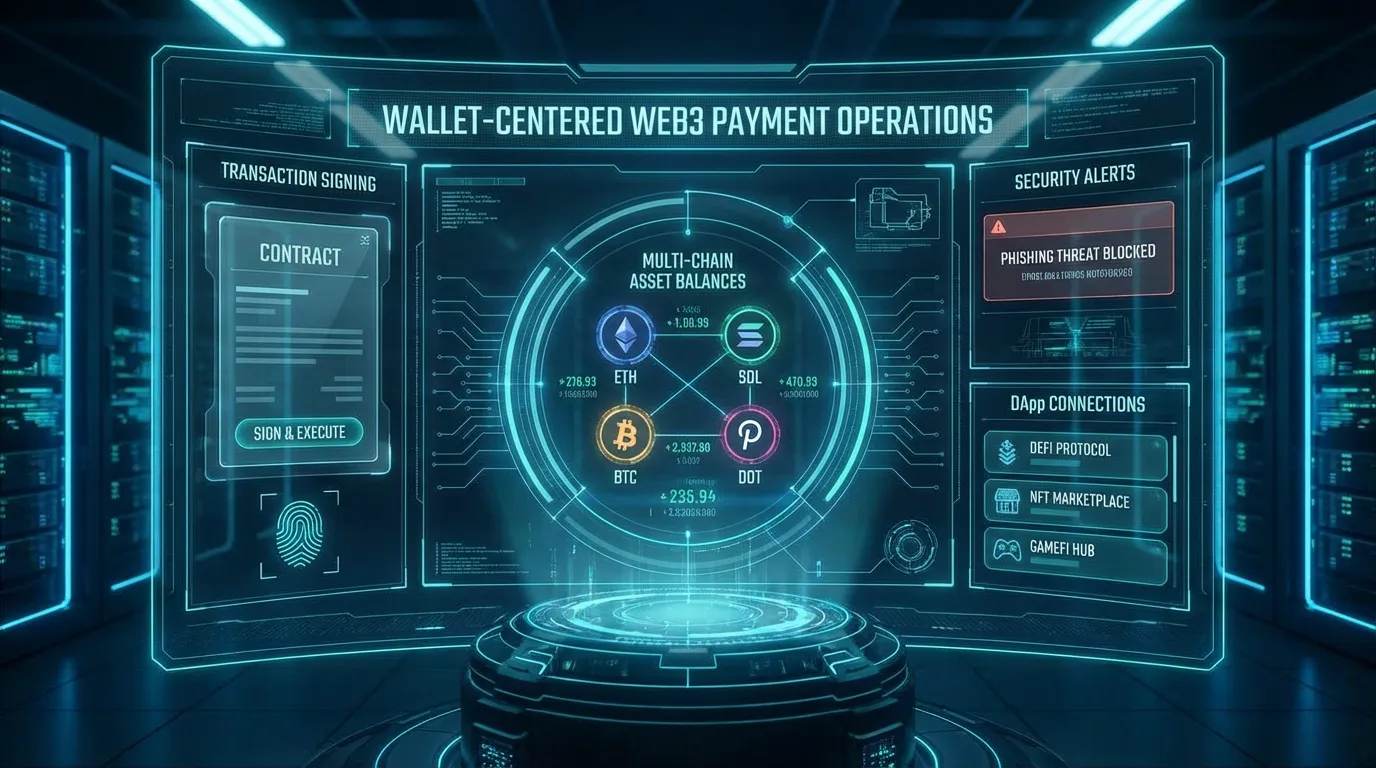
Why enterprise payment infrastructure now starts with the wallet layer
In Web3, a wallet is not just a storage tool. It is the authorization layer for moving assets, the interface for reviewing approvals, and often the access point for DeFi and DApps. That makes it a foundational part of enterprise payment infrastructure for digital assets.
This is especially true in multi-chain environments. Liquidity, users, and applications are fragmented across different networks, so operations become harder when asset visibility is incomplete or transaction flows require constant switching between disconnected tools. A modern wallet helps reduce that fragmentation by giving users a unified place to see balances, review activity, and interact with multiple ecosystems.
FoxWallet is built around that exact reality. As a non-custodial wallet, it keeps users in control of their private keys and assets. It also supports local encryption for mnemonic phrases and private keys, giving users direct ownership rather than handing authorization to a third party. For anyone evaluating enterprise payment infrastructure in a digital asset context, that difference is fundamental: whoever controls the keys controls payment authorization.
A practical way to compare traditional and Web3 infrastructure is below.
| Infrastructure function | Traditional finance view | Web3 view |
|---|---|---|
| Authorization | Bank or processor approval | Wallet signing and user-controlled authorization |
| Visibility | Bank accounts and ERP records | Multi-chain balances, tokens, NFTs, and on-chain status |
| Execution | Payment rails and processors | On-chain transactions, swaps, and DApp interactions |
| Risk control | Fraud tools and payment screening | Phishing protection, contract recognition, signature review |
| Access layer | Merchant or treasury platform | Wallet app, browser extension, and DApp browser |
For readers who want a closer look at FoxWallet's security and multi-chain positioning, the FoxWallet homepage is the most direct reference point.
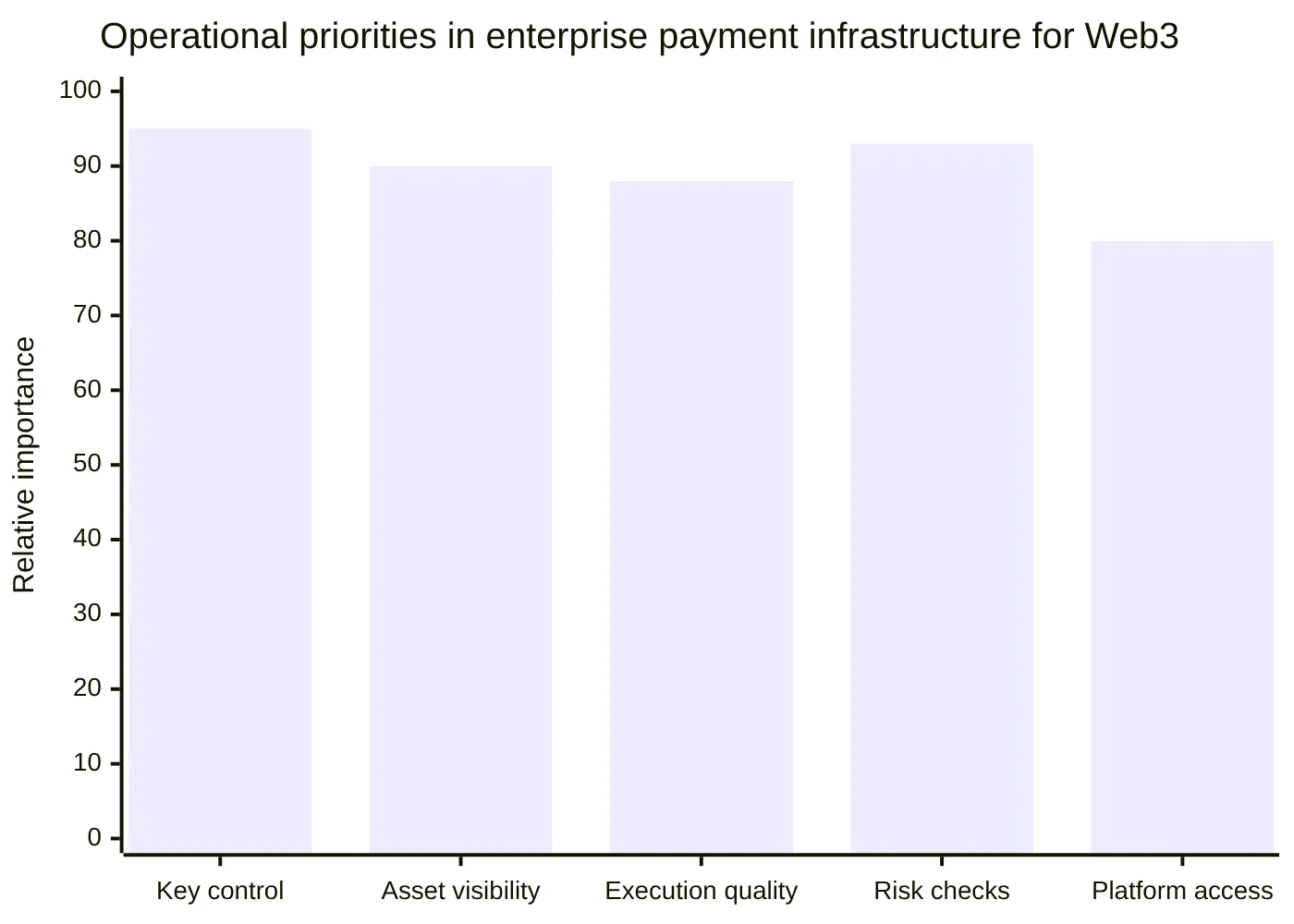
How enterprise payment infrastructure breaks down in multi-chain operations
The biggest weakness in digital asset operations is not always transaction speed. Often, it is fragmentation. Funds sit on different chains. Teams use different wallets. Users jump between browser tabs, bridges, swap interfaces, and block explorers just to complete a single workflow. That is not efficient infrastructure.
This is where enterprise payment infrastructure needs to evolve. In a Web3 context, better infrastructure should reduce operational complexity in four ways.
First, it should improve asset visibility. Users need a unified view across networks instead of guessing where funds landed after a transfer or swap. FoxWallet's multi-chain asset management is designed for one-stop visibility across different blockchains, including automatic asset and NFT detection and real-time on-chain synchronization.
Second, it should improve execution quality. On-chain operations often involve route selection, fee tradeoffs, and liquidity differences across networks. FoxWallet includes built-in cross-chain swap aggregators that help users access cross-chain asset exchanges and better routing. Importantly, this should be understood as transaction usability and liquidity access, not staking.
Third, it should improve security at the moment of action. The highest-risk point in Web3 is often the approval or signature step. FoxWallet emphasizes pre-transaction risk alerts, malicious contract protection, smart contract recognition, and phishing defense. That makes security part of enterprise payment infrastructure rather than an afterthought.
Fourth, it should support operations across platforms. Real workflows do not happen only on mobile or only on desktop. FoxWallet supports both mobile apps and a browser extension, which helps users maintain continuity across trading, asset management, and DApp interactions. If you want to start using those environments directly, the FoxWallet download page is the relevant destination.
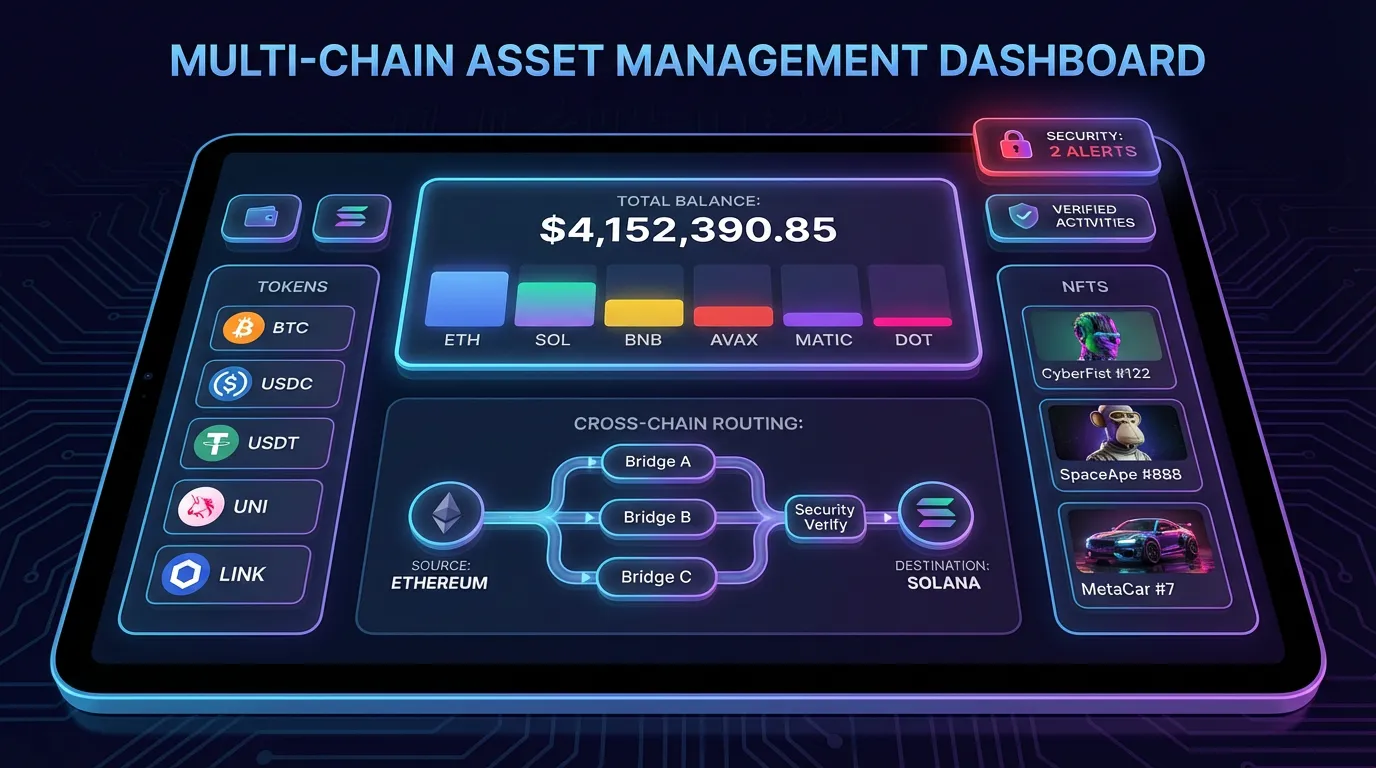
What better enterprise payment infrastructure should include for Web3 teams and advanced users
Not every wallet qualifies as meaningful enterprise payment infrastructure for Web3 operations. To support serious digital asset activity, the wallet layer should combine self-custody, visibility, risk controls, and practical usability.
Here is what matters most:
| Capability in enterprise payment infrastructure | Why it matters in Web3 | How FoxWallet aligns |
|---|---|---|
| Non-custodial control | Preserves direct control over asset authorization | Users retain control of private keys and funds |
| Multi-chain asset management | Reduces operational blind spots across networks | Unified cross-chain asset view and real-time sync |
| Built-in transaction routing | Lowers friction when moving between ecosystems | Integrated cross-chain swap aggregators |
| DApp and DeFi connectivity | Expands on-chain workflows without tool sprawl | Built-in DApp browser and ecosystem access |
| Mobile and extension support | Enables continuity across work environments | Available on mobile and browser extension |
| Security architecture | Helps reduce signing, phishing, and contract risks | Local encryption, risk alerts, contract recognition |
This combination is where FoxWallet stands out. Its product direction is not about pretending to be a traditional enterprise processor. It is about improving the infrastructure that actually powers digital asset activity. That includes self-custody for control, multi-chain design for visibility, and security-first transaction workflows for safer execution.
FoxWallet has also published useful educational material that supports this perspective. Its article on cross-chain swap risks is especially relevant because it explains route complexity, fee layers, slippage, liquidity fragmentation, and why users need to review transactions carefully. That kind of guidance is exactly what good enterprise payment infrastructure should encourage: informed action rather than blind convenience.
How FoxWallet helps upgrade enterprise payment infrastructure without overpromising
The strongest argument for FoxWallet is not that it replaces every part of enterprise finance infrastructure. It does not. Instead, FoxWallet helps upgrade the wallet-centered layer of enterprise payment infrastructure for Web3: the part that governs asset control, transaction authorization, multi-chain management, and access to on-chain opportunities.
That matters for several types of users. Beginners benefit from a cleaner interface and guided onboarding. Advanced users benefit from multi-chain and cross-chain workflows. Professional users benefit from a setup that supports frequent on-chain activity, deeper asset management, and broader ecosystem participation. Across all of those use cases, the wallet remains the operational center.
FoxWallet's positioning is especially compelling for people who want the benefits of self-custody without sacrificing usability. Local private key encryption, sandbox-style isolation, phishing protection, and pre-transaction warnings all support a security-first architecture. At the same time, the wallet's built-in DApp browser, cross-chain swap functionality, and unified asset management help reduce unnecessary complexity.
The result is a practical upgrade path for enterprise payment infrastructure in Web3. Start by improving the layer that users interact with every day. Improve key control. Improve transaction review. Improve cross-network visibility. Improve execution across mobile and desktop. That is the infrastructure shift that makes digital asset operations more resilient.
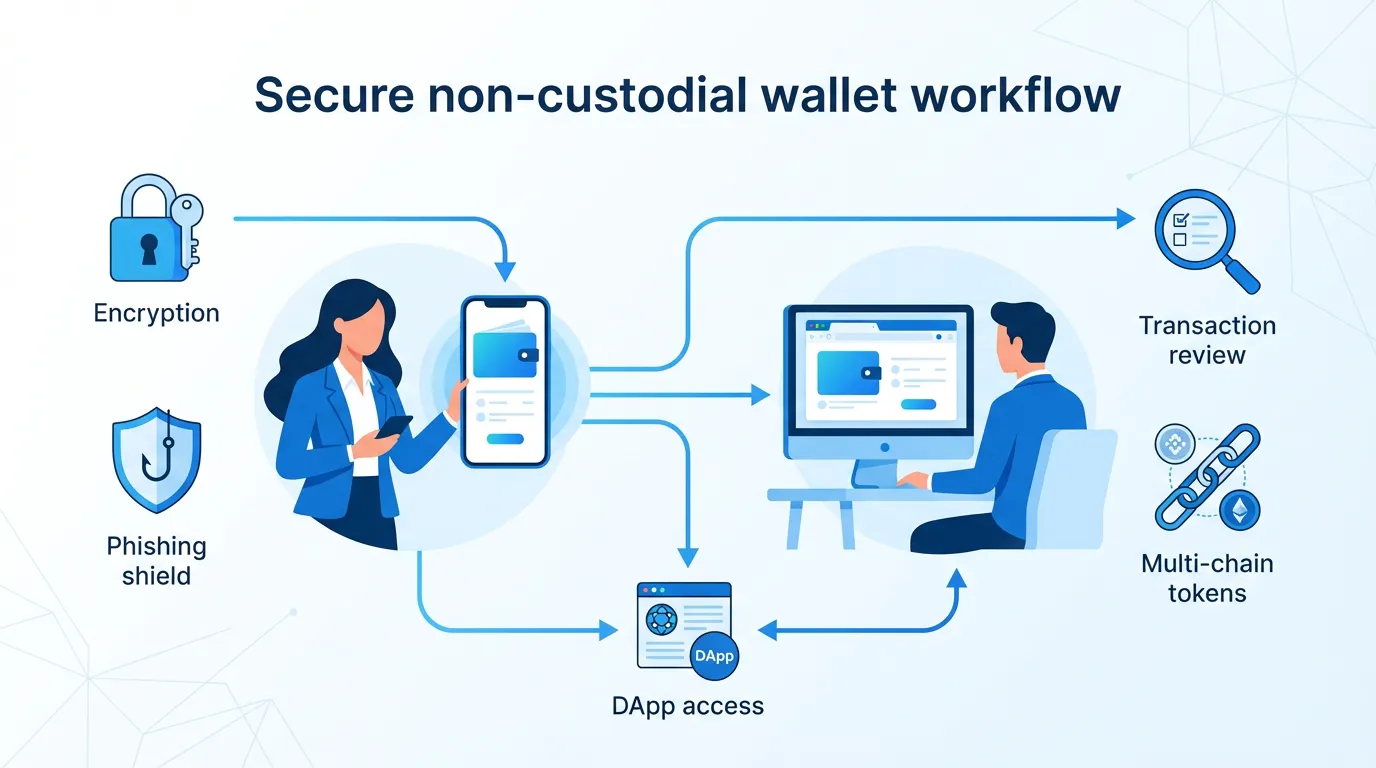
If your goal is to upgrade enterprise payment infrastructure for digital assets, a secure wallet architecture is one of the smartest places to start. FoxWallet offers a non-custodial, multi-chain foundation for managing assets, accessing DApps, and navigating cross-network operations with stronger visibility and risk awareness. To get started on your preferred device, visit the FoxWallet download page and review the team's guidance on cross-chain transaction risks.