


Why are AI wallets becoming essential in 2026?

AI integration in wallets is shifting wallets from tools to control layers
In 2026, the real story behind AI Integration in Wallets is not that crypto wallets suddenly became "smart." It is that wallets are being pushed into a new role: policy-enforcement layers for machine-driven finance.
As AI agents begin to interact with APIs, DApps, and on-chain services more frequently, wallets can no longer function as passive storage and signing tools alone. They need to help govern autonomous transactions, apply user-defined limits, and keep non-custodial control intact. That shift is why AI agent wallets are becoming essential.
The strongest infrastructure signal so far is the launch of the x402 Foundation by the Linux Foundation. The initiative gives open governance to the x402 protocol, which is designed to embed payments directly into internet requests so apps, APIs, and AI agents can transact more natively. While some public commentary around future AI transaction volume remains an emerging signal, the broader direction is clear: wallets are becoming part of internet payment infrastructure.
FoxWallet's perspective already aligns with this transition. In our article on open-source AI wallet standards reshaping Web3, it's clear that the wallet is not a bot with a balance, but a programmable control layer where permissions, spend caps, and risk checks matter.
A practical way to understand the trend is this: AI is increasing transaction speed, but users still need boundaries.

That is the future of agentic finance in one diagram. AI does more, but the wallet decides what is allowed.
The rise of policy-based execution is also why a security-first, non-custodial wallet matters more than ever. FoxWallet's multi-chain decentralized wallet architecture already emphasizes local private key encryption, user-controlled assets, DApp connectivity, and pre-transaction risk alerts, which are the kinds of foundations AI-linked wallet activity will require.
Why AI Integration in Wallets now includes AI agent wallets and autonomous transactions
The demand for AI Integration in Wallets is being driven by a simple mismatch: Web3 is increasingly programmable, but most wallet workflows are still designed around constant manual review.
That model breaks down when software needs to make repeated low-value payments, monitor conditions across multiple chains, or interact with DeFi and DApps at machine speed. This is where AI agent wallets enter the picture. They allow software to initiate bounded actions without giving up full custody or unrestricted private-key control.
The most important phrase here is "bounded actions." The best evidence does not point to unlimited automation. It points to controlled autonomy.
AI agent wallets are gaining momentum because they can reduce friction in areas like:
- API usage payments
- repetitive DeFi actions
- route selection and execution
- machine-to-machine service payments
- intent-based wallet interactions
This is also why autonomous transactions are getting more attention. They are not only about convenience. They are about making machine-native internet payments economically workable.
The table below shows the difference between older wallet assumptions and the new AI-linked model.
| Wallet model | Traditional wallet behavior | AI-linked wallet behavior |
|---|---|---|
| Execution style | Mostly manual signing | Policy-bounded automation |
| Payment frequency | Human-paced | High-frequency, low-value possible |
| Core role | Storage and transaction approval | Control layer for permissions and risk |
| User oversight | Approval each time | Escalation when limits are exceeded |
| Best fit | Occasional direct usage | Agentic finance and automated workflows |
For users, this shift means the wallet interface matters less than the control system behind it. A wallet needs to understand what the agent is trying to do, whether it should be allowed, and when a human needs to step in.
FoxWallet is well positioned in that conversation because it already offers the basics that autonomous transactions depend on: non-custodial asset control, unified multi-chain asset management, built-in DApp access, and strong mobile plus browser extension coverage. Its secure and fast multi-chain management approach is especially relevant in a future where AI-driven activity will not stay on a single network.
How AI Integration in Wallets depends on x402 foundation and machine-native payments
The x402 foundation matters because it gives the AI-wallet conversation real infrastructure behind the hype.
According to the Linux Foundation announcement, x402 is meant to support payments embedded directly into web interactions. In practical terms, that means an API call, service request, or app interaction could include payment logic as part of the request flow. That is a major step toward autonomous transactions at internet scale.
For wallet providers, this changes the design brief. A wallet is no longer just something a person opens to send tokens. It may become the payment endpoint for software acting on the user's behalf.
That has several implications:
- AI agent wallets need programmable permissions.
- Autonomous transactions need audit trails and visibility.
- Machine-native payments need spend caps and cost controls.
- Agentic finance needs multi-chain flexibility.
- Non-custodial design still needs to remain intact.
A useful way to visualize the 2026 shift is by looking at which capabilities are becoming most essential.
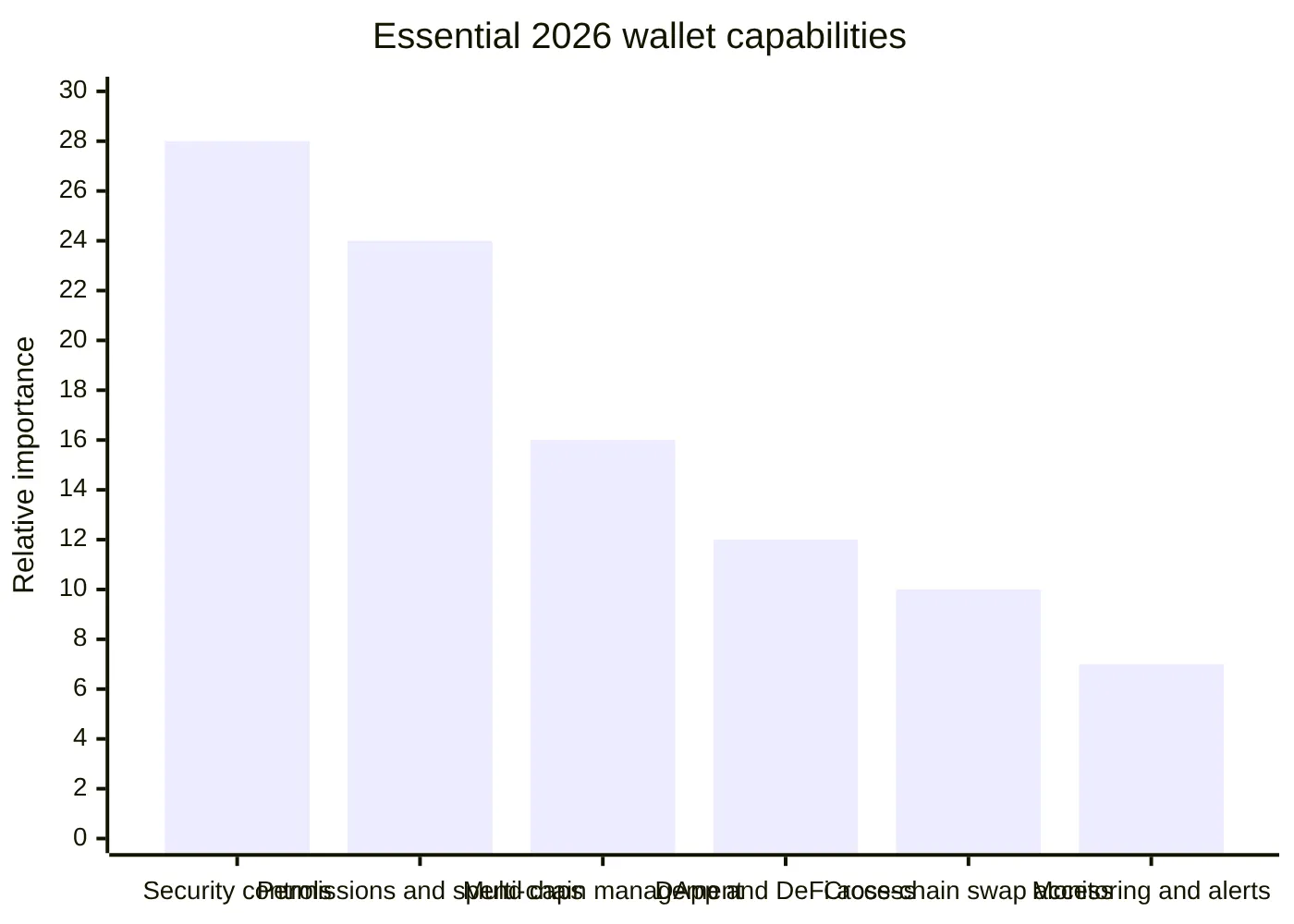
That chart reflects the central market lesson: the biggest upgrade is not cosmetic AI assistance. It is the combination of self-custody, programmable control, and safe execution.
This is exactly where FoxWallet speaks credibly. Rather than overclaiming unverified native AI autonomy, it emphasizes readiness. As a non-custodial wallet setup guide and its broader product positioning make clear, user control remains the foundation. That matters even more as x402-style payment rails push wallets deeper into agentic finance.
Why AI Integration in Wallets needs spend caps and risk controls
If AI Integration in Wallets expands what software can do, then risk controls determine whether users will trust it.
The strongest pattern across current research is not unrestricted delegation. It is policy-bounded automation, supported by features like allowlists, time windows, gas limits, approval thresholds, and spend caps. The often-cited claim that Vitalik Buterin suggested a daily cap such as $100 for AI-connected wallets was not independently verified in the source set, so it should be treated cautiously. But the reasoning behind spend caps is solid.
Spend caps matter because they:
- reduce exposure from a compromised agent
- limit damage from prompt errors or faulty execution
- preserve trust in non-custodial systems
- keep small-scale automation practical without opening unlimited downside
That makes spend caps one of the most important features in AI agent wallets, even before full autonomous transactions become mainstream.
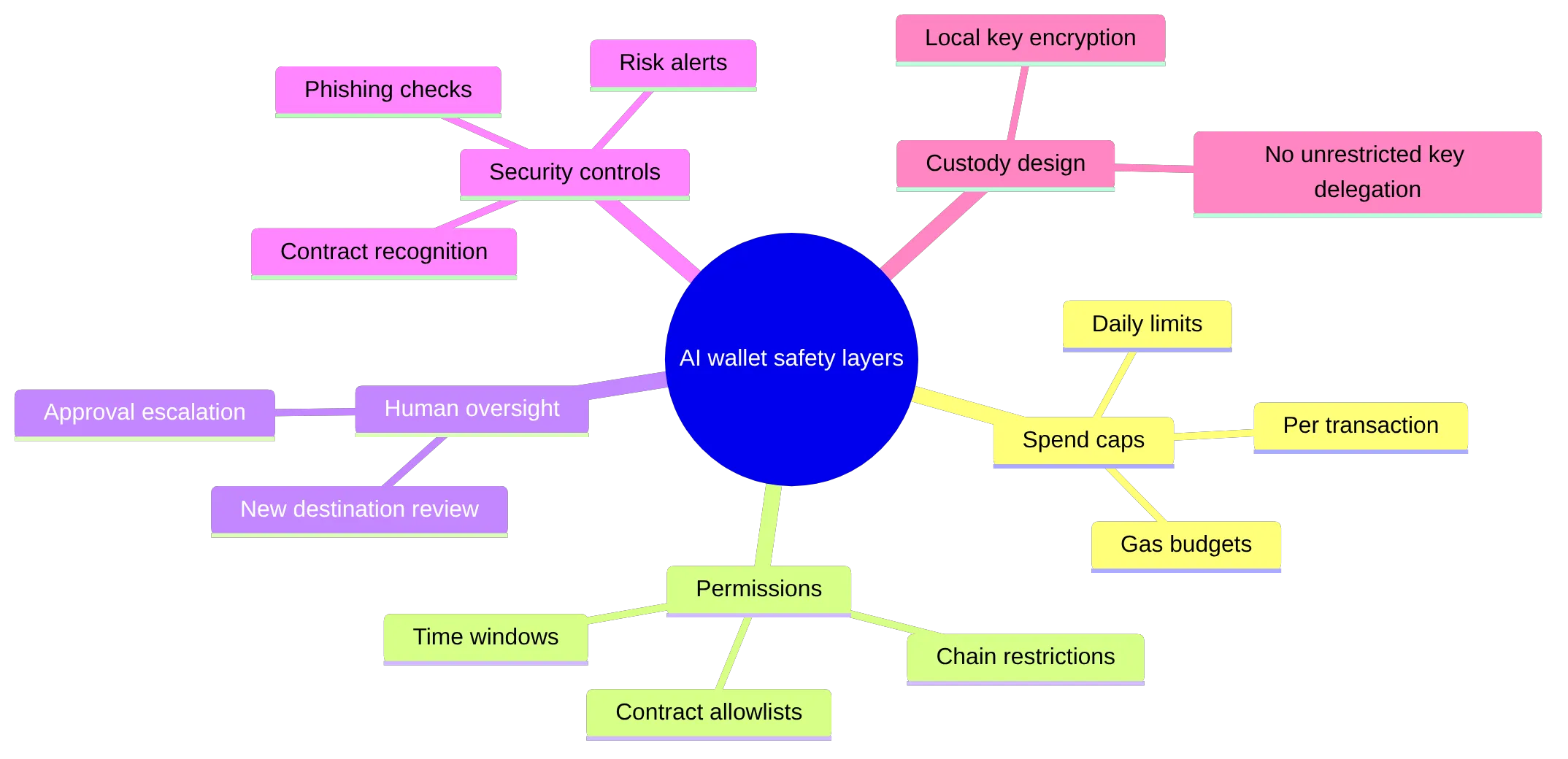
FoxWallet's current architecture already aligns with this safety-first direction. Based on the provided business information and supporting research, FoxWallet emphasizes local encryption, secure sandbox isolation, pre-transaction alerts, phishing protection, and smart contract recognition. Those are not optional extras in the age of agentic finance. They are baseline requirements.
Users who want to understand the security side more deeply can also explore FoxWallet's guidance on wallet security features in 2026 and common Web3 wallet usage traps.
The takeaway is simple: in 2026, a wallet without meaningful guardrails is not AI-ready.
Why AI Integration in Wallets makes multi-chain, cross-chain, and DeFi access more essential
AI Integration in Wallets also raises the bar for execution. If agents are going to act within user-defined permissions, they need a wallet environment that can actually reach where activity happens.
That means support for multi-chain asset management, deep DApp access, and efficient cross-chain swaps are becoming more important, not less. Agentic finance will not live on one chain, and it will not rely on fragmented wallet experiences.
FoxWallet's strengths fit that reality well. Its multi-chain decentralized wallet is built for one-stop asset management across blockchains, with automatic asset and NFT detection, unified visibility, and real-time on-chain synchronization. For execution, it offers built-in cross-chain swap aggregation designed to help users find better routes, lower hidden costs, and reduce slippage. It also includes a built-in DApp browser for easier access to DeFi, NFTs, lending, GameFi, and broader Web3 activity.
The chart below summarizes how those capabilities line up with the AI-wallet future.
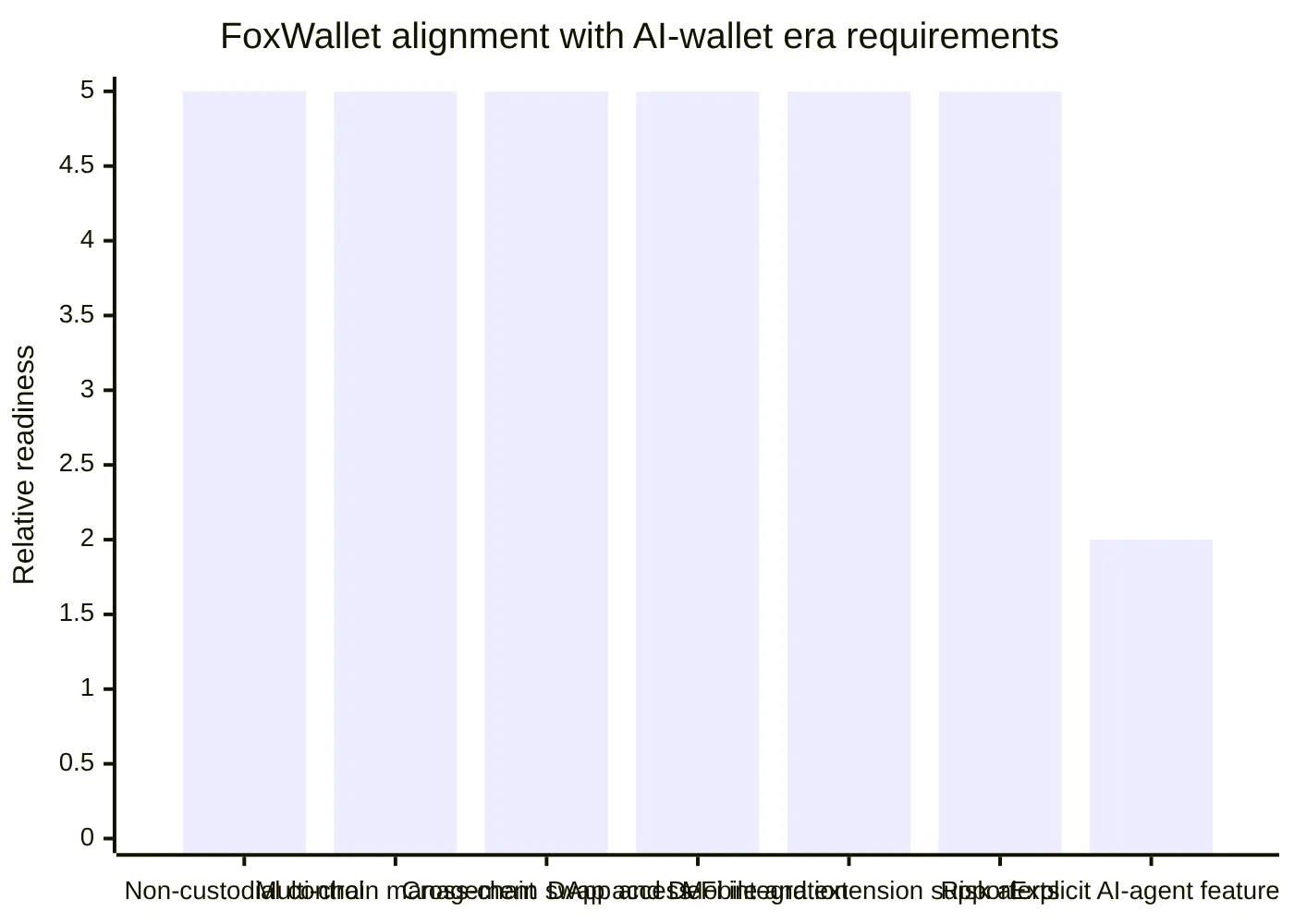
The lower score for explicit AI-agent features is intentional. It keeps the positioning honest. FoxWallet should not claim shipped autonomous AI agent wallets unless independently verified. But it can confidently present itself as a strong foundation for that future.
That is the more persuasive argument anyway. In 2026, users do not just need AI agent wallets. They need AI agent wallets that are secure, non-custodial, multi-chain, and usable across mobile and desktop environments.
For readers exploring the operational side of this transition, FoxWallet also has useful resources on cross-chain swap risks in 2026, decentralized swap safety, and mastering Web3 asset management.
In that sense, the question is no longer whether AI Integration in Wallets will matter. It already does. The real question is which wallets can support autonomous transactions without sacrificing user control. That is why AI wallets are becoming essential in 2026, and why a security-first, non-custodial, multi-chain wallet like FoxWallet is well suited to the next phase of agentic finance.
Sources
- Linux Foundation x402 Foundation
- Linux Foundation announcement on the x402 Foundation
- PR Newswire coverage of the x402 Foundation launch
- Techstrong AI on x402 and agentic AI payments
- Brian Armstrong X post
- CoinMarketCap X post
- FoxWallet: Open-source AI wallet standards are reshaping Web3
- FoxWallet: Secure, fast multi-chain management
- FoxWallet: Top security features keeping your crypto safe in 2026
- FoxWallet: How to get a secure crypto wallet step by step
- FoxWallet: Cross-chain swap risks in 2026
- FoxWallet: Is decentralized swap safe in 2026?
- FoxWallet: Mastering Web3 assets with FoxWallet in 2026
- FoxWallet: Common Web3 wallet traps