


How DEX aggregators help you find better swap prices

Why DeFi and Staking Wallet Growth makes DEX aggregators more important
As wallets evolve from simple storage tools into full Web3 operating hubs, pricing quality matters more than ever. This is one reason the broader story of DeFi and Staking Wallet Growth is closely tied to in-wallet execution. Users no longer want to open several tabs, compare pools manually, estimate slippage on their own, and then hope they picked the best route.
Instead, they expect modern non-custodial wallets to help with discovery, execution, and safety in one place.
According to the research provided, DeFi wallet adoption continues to rise, with cited market context pointing to 198 million DeFi wallet users globally in 2026 and 92 million staking-enabled DeFi wallets. Those exact figures should be read with attribution and caution because methodologies vary across sources, but the direction is consistent: users want wallets that do more than hold assets. They want routing quality, stronger visibility, and a smoother DeFi workflow.
For FoxWallet, that trend fits naturally with its role as a multi-chain decentralized wallet built around self-custody, integrated DeFi access, and swap routing inside the wallet experience. If you want a broader look at that foundation, see FoxWallet: Secure & Fast Multi-Chain Management.
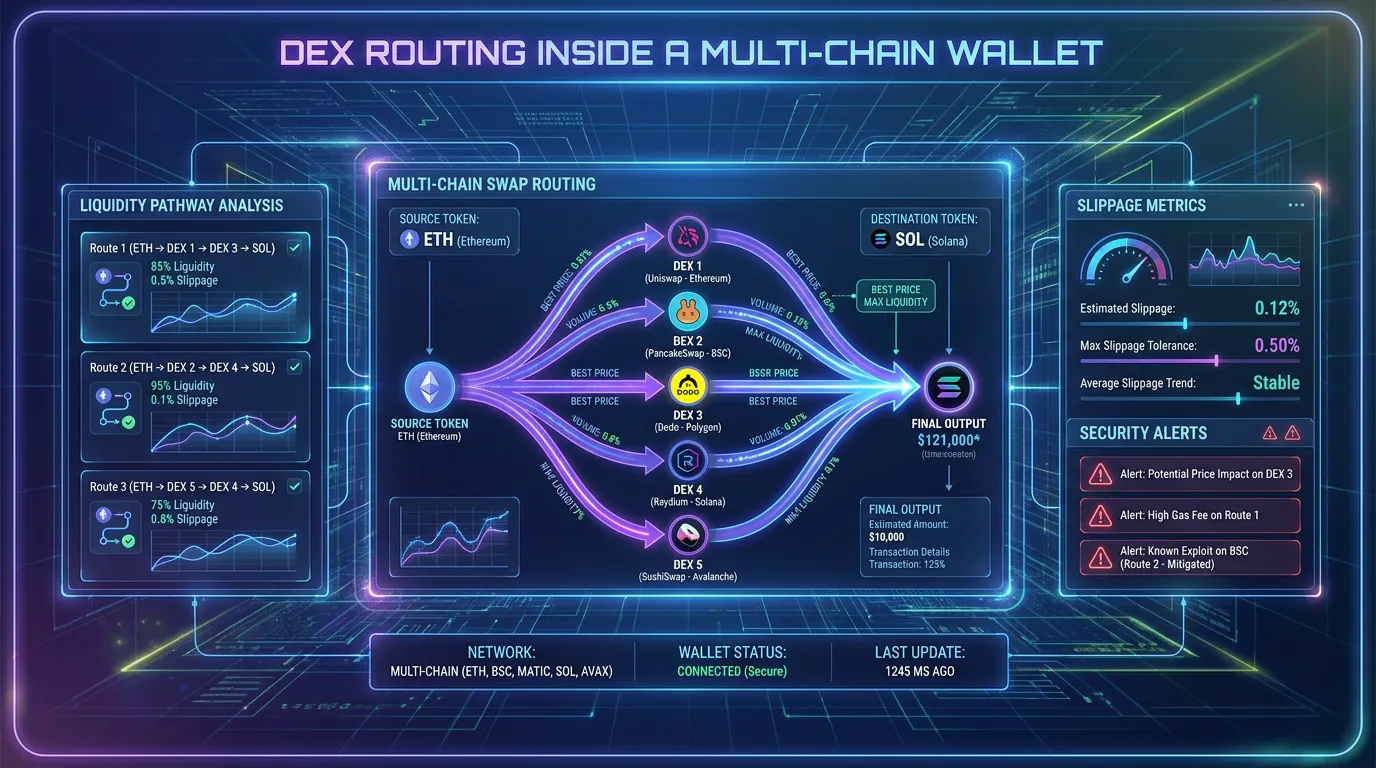
A simple way to think about it is this: better swap pricing is not just a trader feature anymore. It is a wallet feature. And that wallet feature supports retention, trust, and usability across the wider trend of DeFi and Staking Wallet Growth.
How DeFi and Staking Wallet Growth connects to DEX aggregators
DEX aggregators help users find better swap outcomes by checking multiple liquidity sources, comparing routes in real time, and selecting the path that may deliver a better net result. That net result is important because the best quoted rate is not always the best final outcome after gas, slippage, and route efficiency are considered.
In plain English, a DEX aggregator does the homework for you. Instead of asking one exchange for a price, it checks many. In some cases, it may even split the order across venues to reduce price impact.
This matters because liquidity is fragmented. A token pair might have deeper liquidity in one pool, lower fees on another platform, and a stronger multi-hop route somewhere else. Without aggregation, users must compare those options manually. With aggregation built into a wallet, the process becomes much easier.
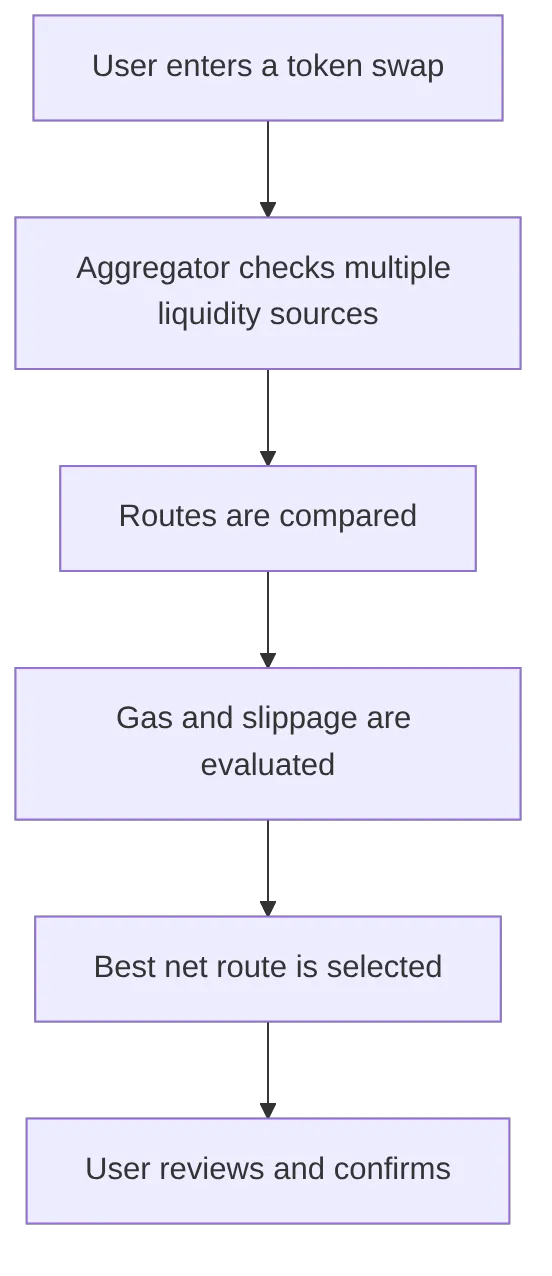
For the broader story of DeFi and Staking Wallet Growth, this reduces friction at exactly the point where many users get stuck: execution. A wallet can have strong security and a clean interface, but if swap outcomes are consistently poor, advanced users will leave.
That is why integrated routing is increasingly part of the value proposition for serious non-custodial wallets.
How DeFi and Staking Wallet Growth benefits from non-custodial wallets with better execution
The rise of non-custodial wallets is about more than self-custody alone. Yes, users want control of private keys and assets, but they also want that control without sacrificing convenience.
A modern wallet needs to help users do three things well:
| Wallet need | Why it matters | How DEX aggregators help |
|---|---|---|
| Self-custody | Users want direct control over assets | Lets users trade without relying on a centralized intermediary |
| Multi-chain management | Users hold assets across several networks | Makes route discovery more practical inside one interface |
| Better execution | Hidden costs hurt long-term performance | Compares routes, reduces slippage, and improves price discovery |
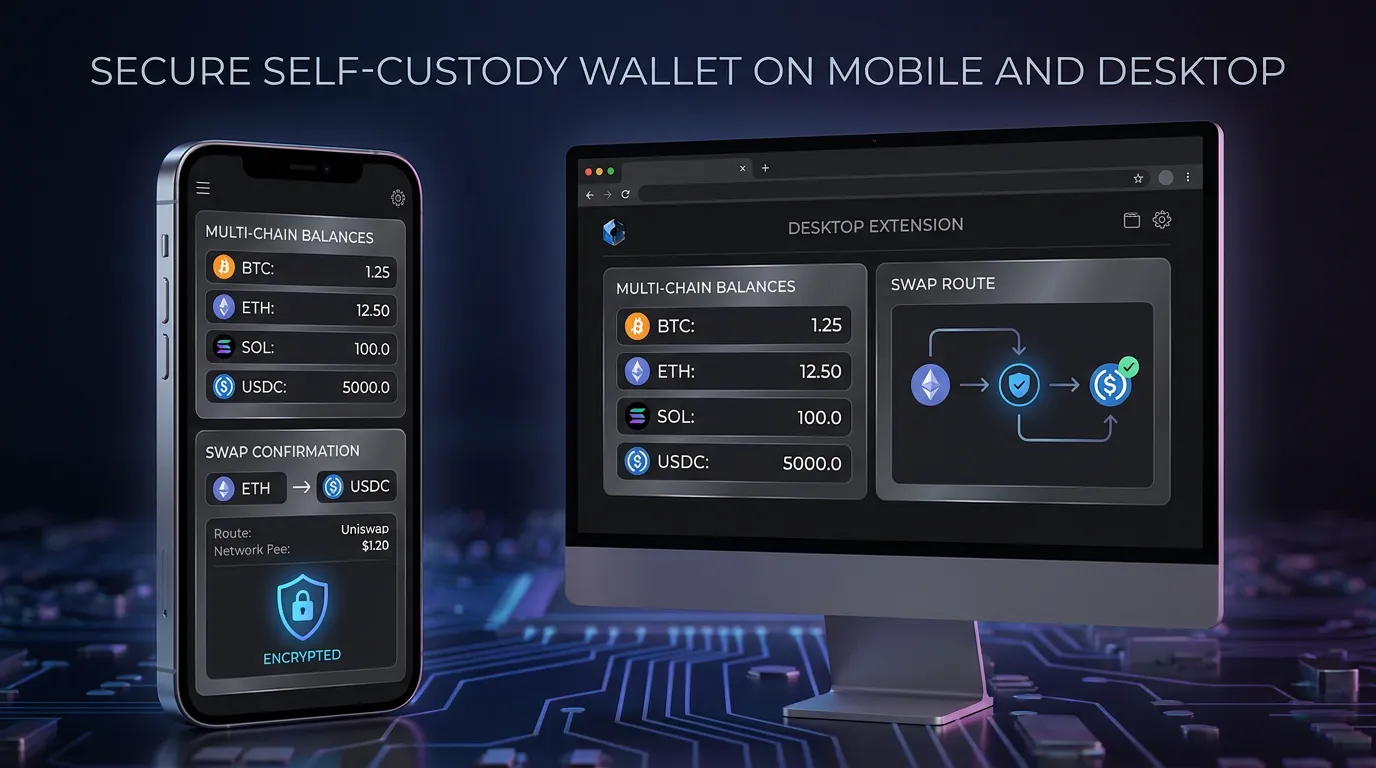
This is where FoxWallet has a credible angle. As a non-custodial multi-chain wallet, it emphasizes local key encryption, unified asset visibility, built-in swap aggregation, and secure DeFi access across mobile and browser extension. That aligns with what users increasingly expect from wallets in the current phase of DeFi and Staking Wallet Growth.
If you want to explore FoxWallet's DeFi-oriented wallet experience further, read Unlock the Best DeFi Apps 2026 With FoxWallet.
Just as importantly, FoxWallet's positioning supports a practical user benefit: fewer manual steps. Users do not need to bounce between multiple tools just to compare rates and access on-chain opportunities. That lower-friction workflow is especially valuable for active users making repeated swaps.
How DeFi and Staking Wallet Growth is shaped by On-Chain Analytics and Smart Money Tracking
As the wallet market matures, execution alone is no longer the entire story. The next layer is decision support. This is where On-Chain Analytics and Smart Money Tracking enter the conversation around DeFi and Staking Wallet Growth.
The research report shows that the market increasingly views top wallets as DeFi command centers. That means users are looking for more than storage and swaps. They are also looking for:
- better portfolio visibility
- more context before signing a transaction
- clearer risk signals
- tools that help interpret market behavior
On-Chain Analytics can help users understand wallet activity, token flows, and broader ecosystem signals. Smart Money Tracking can help more advanced users follow notable on-chain behavior and identify where experienced participants are concentrating attention.
These features are especially relevant for sophisticated users, but they also reinforce a larger trend: wallets are becoming operational dashboards, not just vaults.
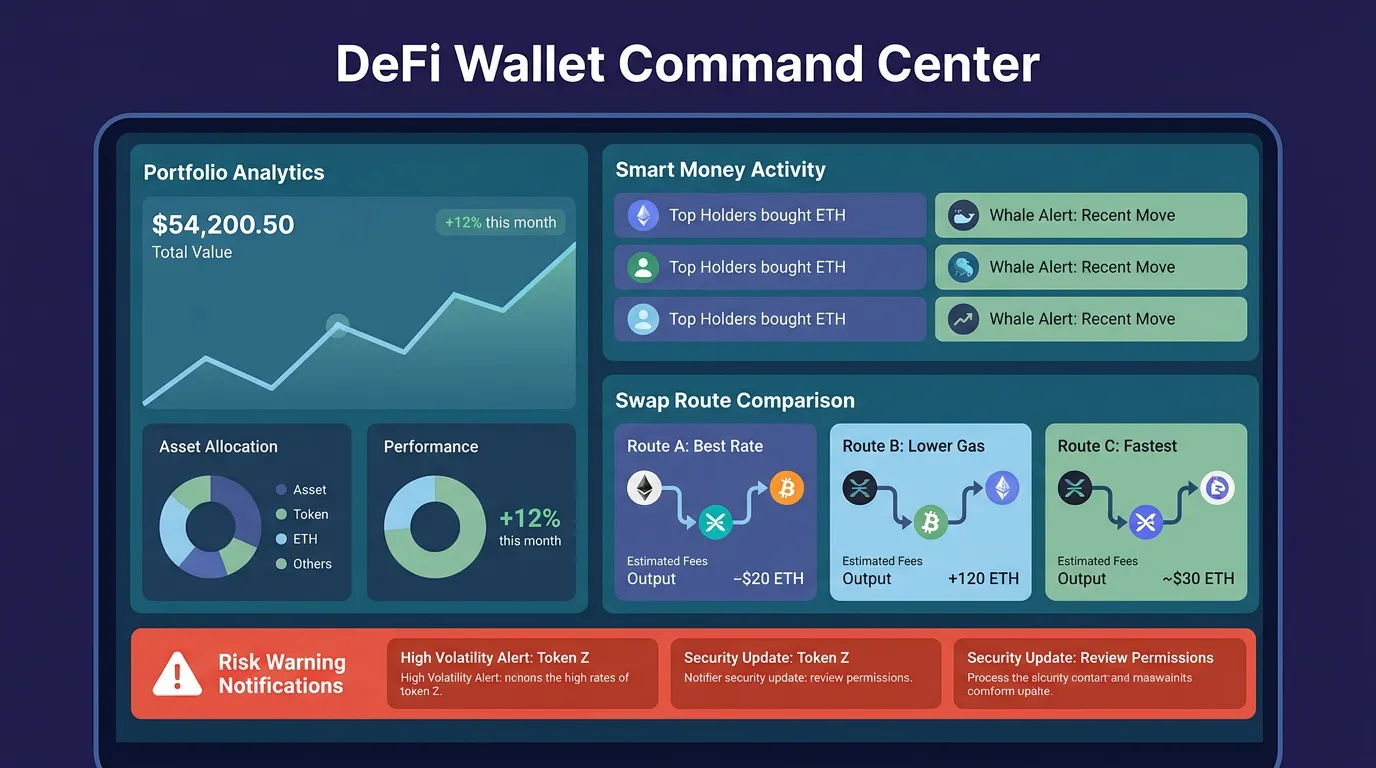
For FoxWallet, the strategic takeaway is clear even without overclaiming feature parity with every market example. The direction of travel in DeFi and Staking Wallet Growth favors wallets that combine self-custody, execution quality, asset management, and safety into one experience. FoxWallet already fits the foundation of that model through multi-chain asset management, integrated swaps, DeFi access, and security-first architecture.
If you want another view of how FoxWallet is framed in the market, see The 5 Best Crypto Wallets of 2026.
What DeFi and Staking Wallet Growth means for choosing a wallet today
If you are evaluating wallets based on this market shift, do not focus only on the headline quote for a single swap. Look at the complete experience.
Here is what matters most:
| Feature | What to look for |
|---|---|
| DEX aggregators | Real-time route comparison across liquidity sources |
| non-custodial wallets | Full user control of keys and assets |
| Multi-chain asset view | One place to monitor balances across networks |
| Security controls | Phishing protection, smart contract recognition, risk alerts |
| On-Chain Analytics | Better visibility into activity and position context |
| Smart Money Tracking | Additional market intelligence for advanced users |
A good wallet should help you review route details, reduce hidden costs, and stay in control at every step. It should also support the way people actually use crypto now: across multiple chains, with DeFi participation, and with higher expectations for transparency.
FoxWallet is well positioned for that environment because it combines self-custody, multi-chain asset management, built-in swap aggregation, and secure DApp access across mobile and desktop workflows. For users who want a wallet that does more than simply store assets, that matters.
To learn more about FoxWallet's multi-chain security approach, visit Secure Multi-Chain BTC Wallet: FoxWallet.
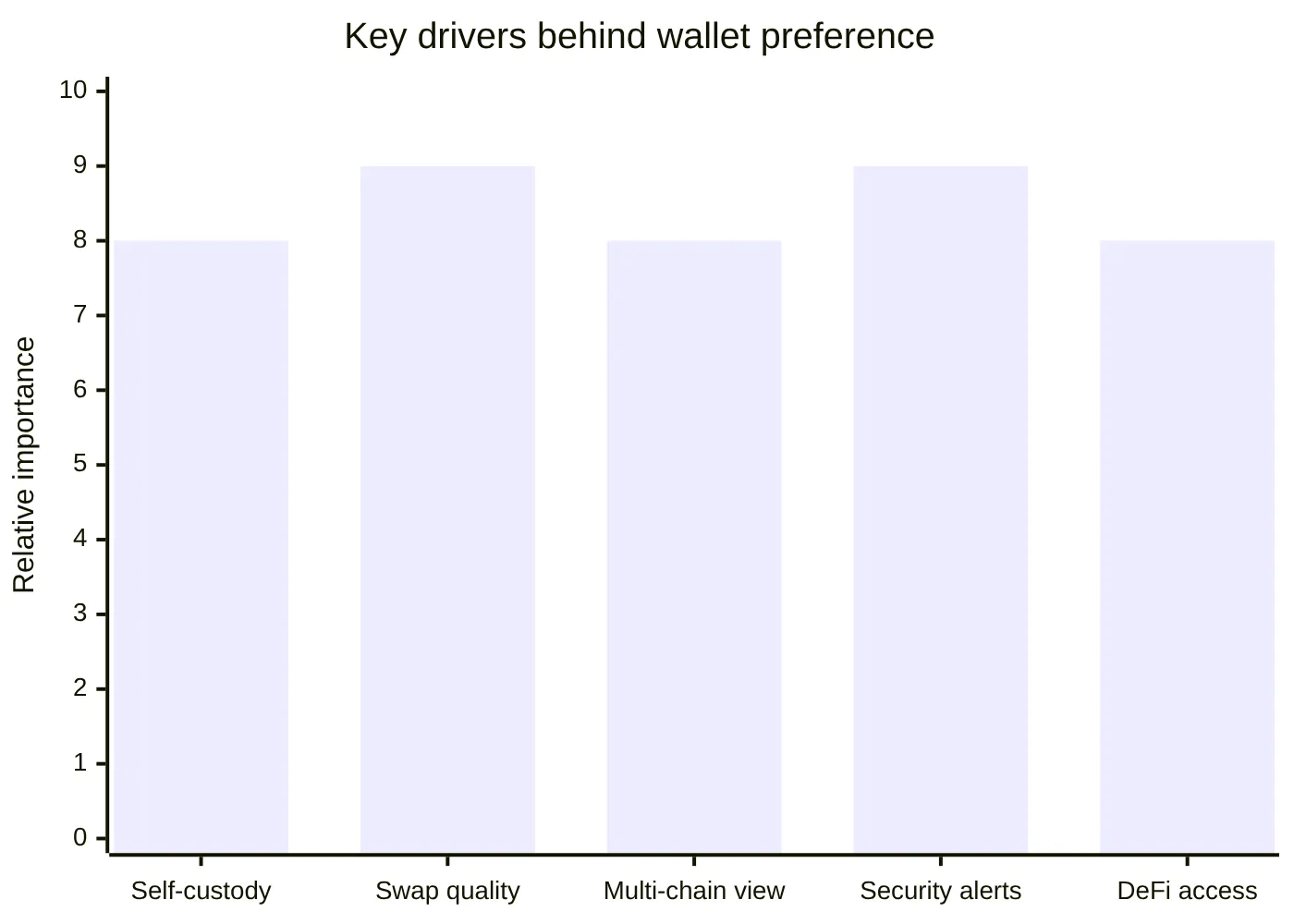
In short, DEX aggregators help users find better swap prices by reducing the manual work of comparing fragmented liquidity. And in the bigger picture of DeFi and Staking Wallet Growth, that capability is becoming one of the clearest signs that a wallet is built for modern on-chain use.
If your goal is to trade more efficiently without giving up control, a wallet with integrated aggregation, strong security, and a unified DeFi workflow is no longer optional. It is increasingly the standard.
