


Unlock the Best DeFi Apps 2026 With FoxWallet

Best DeFi Apps 2026: What Matters Most and How FoxWallet Helps
Decentralized finance is moving into a more mature phase. The best defi apps 2026 users will rely on are not just the ones with the biggest hype cycles. They are the apps that combine liquidity, strong security, practical utility, mobile-friendly access, and multi-chain reach.
That matters because DeFi in 2026 is no longer concentrated on a single chain or a single category. Users are splitting activity across Ethereum, major L2s, Solana, BNB Chain, Avalanche, and emerging Bitcoin DeFi ecosystems. At the same time, stablecoins, lending markets, decentralized exchanges, liquid staking, derivatives, and real-world asset products are becoming more interconnected.
This is exactly why wallet choice matters. A wallet is not just where assets sit. It is the operating layer for discovering, connecting to, and managing the best defi apps 2026 users want to access. As a security-first, non-custodial, multi-chain wallet, FoxWallet is designed for that role. It gives users full control of their private keys, a unified asset view across chains, built-in DeFi and DApp access, native cross-chain swap support, and mobile plus browser extension coverage.
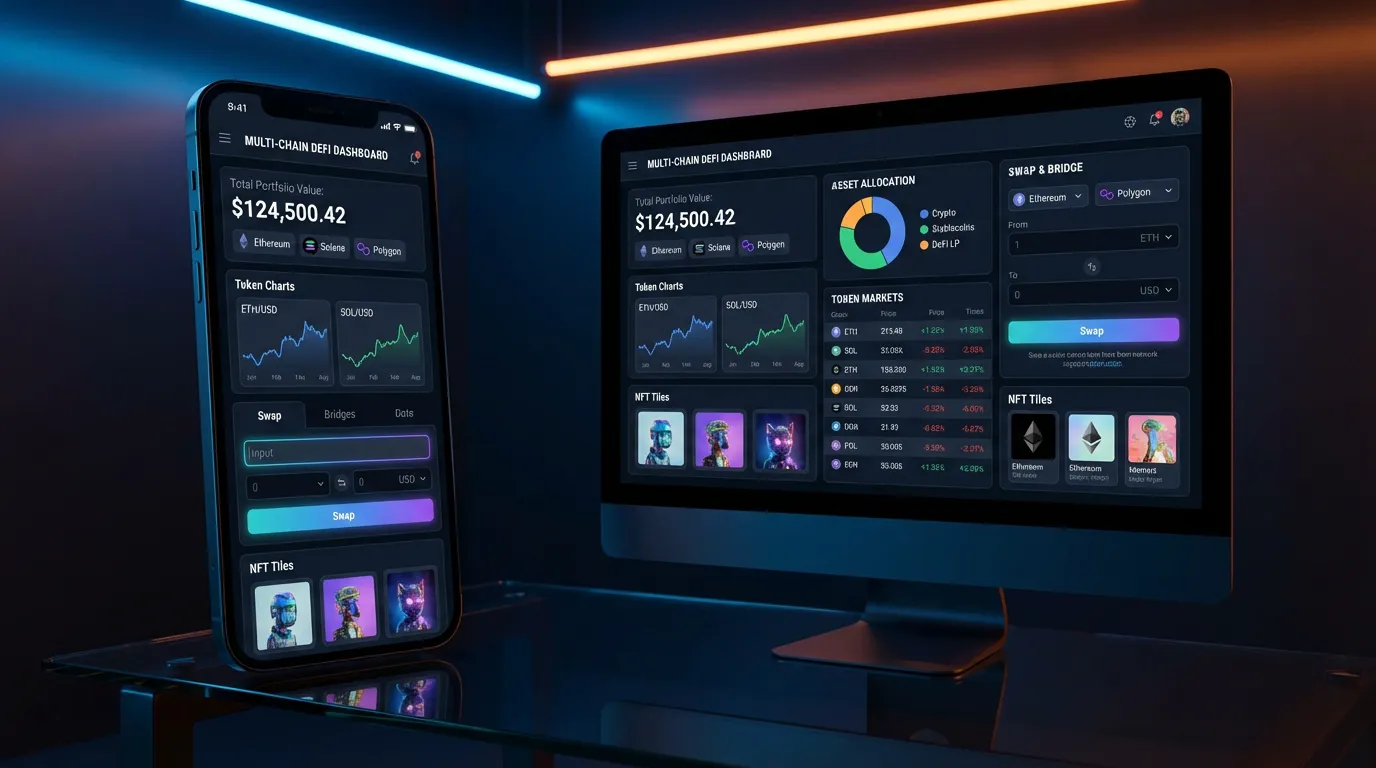
Before looking at specific protocols, it helps to understand what the DeFi market is becoming.
Why the best defi apps 2026 are defined by multi-chain utility, security, and real value
Industry research points to a larger and more diversified market heading into 2026. According to reports summarized in the research set, the global DeFi market was estimated at roughly $26.94 billion in 2025 and projected around $37.27 billion in 2026, with much larger long-term upside if adoption continues. At the protocol level, total value locked remains concentrated in major names such as Lido, Aave, Maker-aligned platforms, EigenLayer, and leading DEX ecosystems.
Just as important, DeFi is now clearly multi-chain.
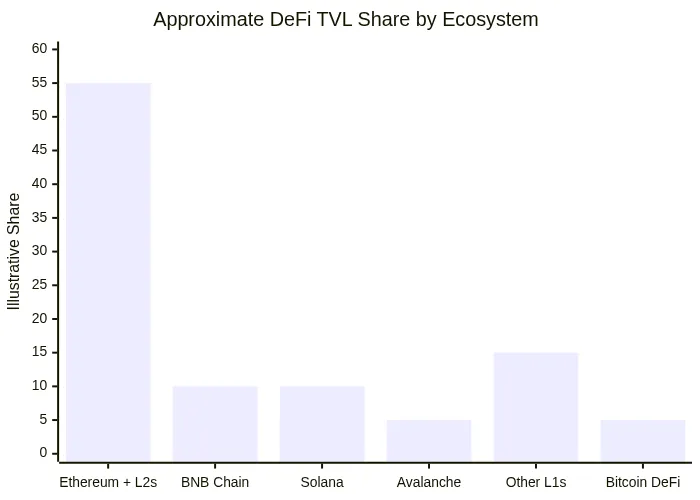
Ethereum remains the core hub, but users increasingly interact with Ethereum L2s for lower fees and faster execution. Solana continues to attract DEX activity. BNB Chain and Avalanche maintain active ecosystems. Bitcoin-linked DeFi is also becoming more relevant through tokenization and BTC-backed strategies.
Here is a simplified view of DeFi TVL distribution heading toward 2026.
The market is also shifting from pure speculation toward utility-focused themes:
| 2026 DeFi trend | Why it matters |
|---|---|
| L2 dominance | Lower fees and better execution for active users |
| Stablecoin growth | Core settlement layer for trading, lending, and payments |
| RWA adoption | More products backed by treasuries, credit, and off-chain assets |
| Real yield | More focus on fees and cash-flow-backed returns |
| Better risk tooling | Stronger demand for transaction simulation, alerts, and approval monitoring |
| Wallet-integrated UX | Users want fewer steps and safer access from mobile and desktop |
For users trying to find the best defi apps 2026 has to offer, this means one thing: the winning apps are not isolated tools. They are part of a broader multi-chain workflow, and they need a wallet that can keep up.
FoxWallet fits that need because it is fully non-custodial, supports local encryption of mnemonic phrases and private keys, offers real-time on-chain asset visibility, and provides a unified experience across mobile and browser extension environments. If you want to explore the product directly, the FoxWallet download page is the main place to start.
Best defi apps 2026 by category: the protocols most users should know
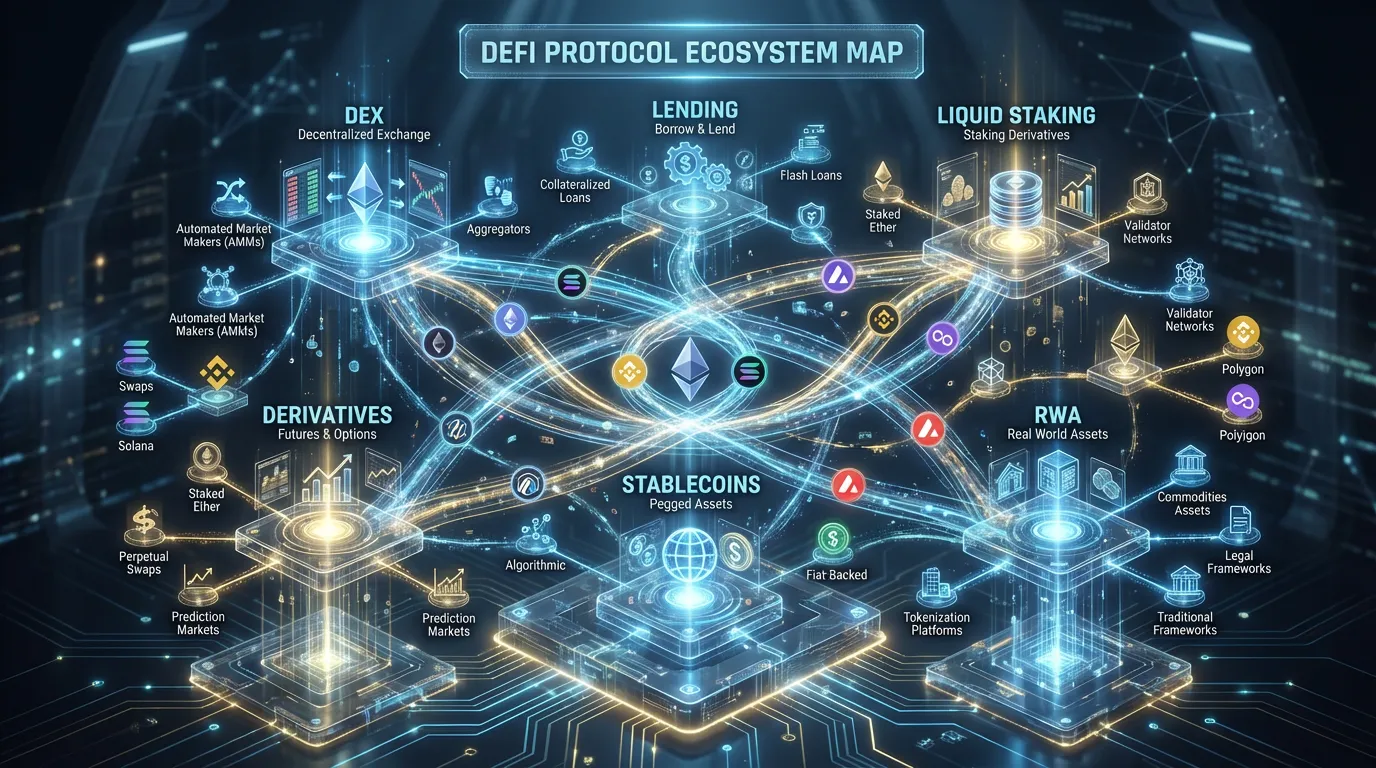
The easiest way to evaluate the best defi apps 2026 landscape is by category. Different users need different tools, but a few segments consistently matter most.
1. Decentralized exchanges
DEXs remain the entry point for many DeFi users. These apps enable on-chain token swaps without giving up custody.
Leading examples in the research report include Uniswap, PancakeSwap, Jupiter, Orca, and Raydium. Uniswap remains central in Ethereum and L2 ecosystems, while Solana-native trading often revolves around tools such as Jupiter and Orca.
Why they matter in 2026:
- Self-custodial token trading.
- Better route aggregation.
- Stronger integration into wallet interfaces.
- Important foundation for the rest of DeFi.
2. Lending and borrowing markets
Lending protocols let users supply assets to earn interest or borrow against collateral. Aave remains the standout name here, with Spark and Compound also serving core roles.
Why they matter in 2026:
- Stablecoin liquidity remains essential.
- Advanced users use these apps for capital efficiency.
- Institutions and professional traders increasingly care about on-chain credit markets.
3. Liquid staking
Liquid staking continues to matter because it lets users earn staking yield while keeping a liquid asset they can still use elsewhere in DeFi. Lido and Rocket Pool remain key examples.
This category should be thought of separately from cross-chain activity. One is about staking design and liquidity representation. The other is about moving value across ecosystems.
4. Derivatives and perpetuals
On-chain derivatives are one of the highest-fee DeFi categories. GMX and dYdX remain important examples for users seeking leveraged exposure or hedging tools.
Why they matter in 2026:
- Better capital efficiency.
- CEX-like functionality in decentralized environments.
- Increasing relevance for experienced traders.
5. Yield and stablecoin infrastructure
Protocols like Curve, Convex, Pendle, and MakerDAO-aligned systems matter because they support stablecoin liquidity, tokenized yield, and broader strategy construction. These may not always be the first apps beginners try, but they are deeply embedded in how DeFi works.
The table below summarizes key categories and representative apps from the research report.
| Category | What it does | Representative apps |
|---|---|---|
| DEX | Token swaps and liquidity | Uniswap, PancakeSwap, Jupiter, Orca, Raydium |
| Lending | Supply assets or borrow against collateral | Aave, Spark, Compound |
| Liquid staking | Stake while retaining liquid token exposure | Lido, Rocket Pool |
| Derivatives | Perpetuals, hedging, leveraged trading | GMX, dYdX |
| Yield platforms | Optimize or trade yield | Curve, Convex, Beefy, Pendle |
| Stablecoin infrastructure | Stable assets and collateral systems | MakerDAO, DAI-related ecosystems |
| RWA platforms | Tokenized off-chain assets | Emerging treasury and credit platforms |
How to choose the best defi apps 2026 for your goals
Not every "top" protocol is the right choice for every user. A practical approach is to match apps to purpose, risk tolerance, and complexity.
Here is a useful framework.
| User goal | Best DeFi category to start with | What to watch carefully |
|---|---|---|
| Swap tokens efficiently | DEX | Slippage, fake tokens, network selection |
| Earn on idle assets | Lending markets | Collateral quality, liquidation rules |
| Keep staked exposure liquid | Liquid staking | Validator concentration, smart contract risk |
| Trade actively | Derivatives | Leverage risk, funding rates, liquidation thresholds |
| Seek advanced yield strategies | Yield protocols | Strategy complexity, underlying asset risk |
| Hold stable on-chain value | Stablecoin ecosystems | Peg design, collateral quality |
A few practical lessons from the research report stand out:
- Strong liquidity matters more than flashy APYs.
- Security history matters more than novelty.
- Wallet UX matters because most users interact through wallets, not command-line tools or direct contract calls.
- Route transparency matters, especially when moving assets across ecosystems.
- The best defi apps 2026 users trust will usually be those with battle-tested infrastructure and large user bases.
This is where FoxWallet adds value beyond simple storage. With FoxWallet, users can manage assets across multiple chains in one interface, access DeFi protocols through a built-in DApp browser, and use integrated swap routing designed to reduce friction and hidden costs. The wallet also helps users monitor assets and NFTs across networks automatically, which is especially useful when a portfolio spans several ecosystems.
For readers who want a broader wallet comparison context, FoxWallet also has a related guide on best wallets 2026.
Why FoxWallet helps unlock the best defi apps 2026 more safely
DeFi access in 2026 is not only about finding opportunities. It is also about reducing avoidable mistakes.
Many of the biggest user-level risks still come from:
- Phishing sites.
- Malicious smart contracts.
- Unclear transaction approvals.
- Hidden costs in multi-step swap routes.
- Fragmented asset management across chains.
FoxWallet is built to address these problems directly.
Non-custodial control
FoxWallet is fully non-custodial. Users keep control of private keys and assets, while mnemonic phrases and keys are stored with local encryption. That means the wallet is aligned with a core DeFi principle: self-custody.
Multi-chain asset management
FoxWallet supports a broad multi-chain environment and gives users a unified cross-chain asset view. Instead of constantly switching wallets or checking separate chain-specific apps, users can see balances and token holdings together in one place. This is especially useful for anyone using Ethereum, L2s, Solana, Bitcoin-linked assets, and other major ecosystems at the same time.
Built-in DeFi and DApp access
The built-in DApp browser helps users reach top DeFi protocols without unnecessary friction. This matters because every extra redirect or copied URL increases the chance of error.
Native cross-chain swaps
For users reallocating capital between ecosystems, FoxWallet includes integrated cross-chain swap routing. That helps reduce the complexity of manually combining bridges and DEX steps. It also aims to optimize for pricing and liquidity while lowering slippage and hidden workflow costs.
Because cross-chain operations remain one of the highest-risk areas of DeFi, FoxWallet's educational content is also relevant here. Its guide to cross-chain swap risks in 2026 explains why route transparency, contract awareness, and careful signing matter.
Security architecture and risk protection
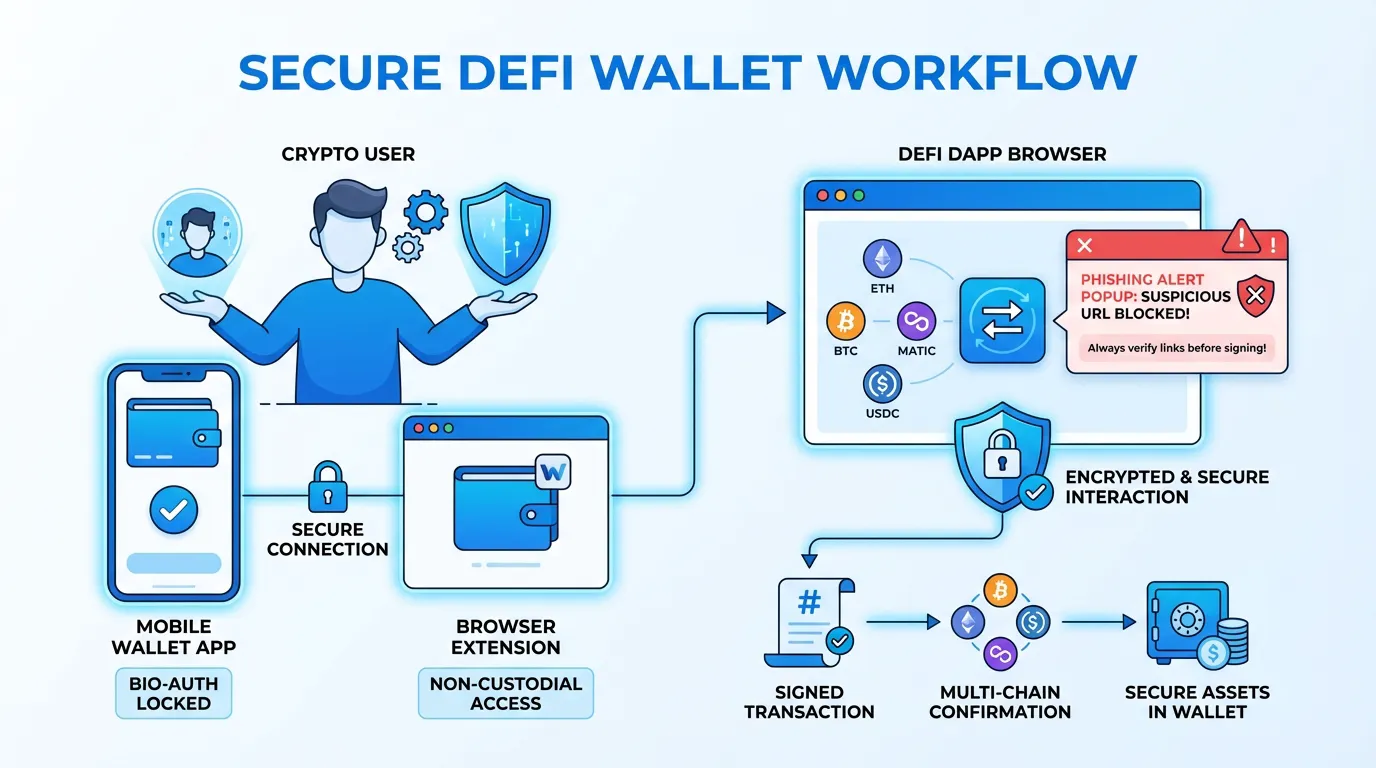
FoxWallet emphasizes:
- Local private key encryption.
- Secure sandbox isolation.
- Pre-transaction risk alerts.
- Smart contract recognition.
- Protection against malicious contracts and phishing links.
- Token authorization monitoring.
These features are useful for beginners, but they are just as important for experienced users making frequent DeFi transactions.
Here is a simple view of how FoxWallet supports DeFi access.

Best defi apps 2026 for beginners, active users, and power users
One useful way to think about the best defi apps 2026 landscape is by user type.
Beginners
Beginners usually need:
- A simple wallet setup.
- Clear token visibility.
- Straightforward swaps.
- Safe access to a few established DeFi apps.
For this group, the best starting points are usually DEXs and major lending apps with strong liquidity and established reputations. FoxWallet helps by reducing friction through guided wallet access, unified asset management, and a cleaner path to trusted DApps.
Intermediate users
Intermediate users often want:
- Multi-chain portfolio management.
- Active spot trading.
- Stablecoin deployment into lending markets.
- More efficient movement between ecosystems.
For this group, FoxWallet's built-in cross-chain swap support and multi-chain asset view are especially valuable. It can reduce the operational burden that comes with managing a spread-out portfolio.
Advanced and professional users
Power users care about:
- Fast and repeatable browser extension workflows.
- Better cost efficiency across many transactions.
- Derivatives, advanced yield structures, and collateral management.
- More robust security controls around approvals and signatures.
This is where FoxWallet's combination of extension support, DeFi-native design, and security-first architecture becomes important. High-frequency users are particularly sensitive to hidden costs and fragmented tools, so a wallet built around multi-chain and cross-chain usage can provide meaningful long-term advantages.
Final take: FoxWallet is a strong gateway to the best defi apps 2026
The best defi apps 2026 users will choose are likely to share a few common traits: deep liquidity, proven resilience, mobile-friendly design, and broad integration across chains and wallet environments. DEXs, lending markets, liquid staking protocols, derivatives platforms, stablecoin systems, and RWA-focused apps will all play central roles.
But the more DeFi expands, the more the wallet becomes the real control center.
That is why FoxWallet stands out. It combines:
- Non-custodial self-custody.
- Security-first architecture.
- Multi-chain asset management.
- Built-in DApp access.
- Native cross-chain swap routing.
- Mobile and browser extension support.
- Usability for beginners, active users, and professionals.
If you want a practical way to explore the best defi apps 2026 ecosystem without sacrificing control or security, FoxWallet is a strong place to begin. You can get started through the official download page, review more educational resources on the FoxWallet blog, and learn key operational safety tips in the cross-chain swap risks guide.
