


A USDT wallet saves money on fast crypto transfers

USDT is simple in concept: one of the most widely used stablecoins for crypto transfers, trading, payments, and DeFi activity. But sending it cheaply and quickly is not always simple. The same USDT can exist on different networks, and each network has its own fees, speed, gas token, and compatibility rules.
That is why choosing the right USDT wallet matters. A wallet cannot remove blockchain fees or guarantee the lowest cost, but it can help you avoid expensive mistakes, choose a supported lower-fee network, manage USDT across chains, and review transaction risks before you send.
FoxWallet is built for this exact multi-chain reality: a decentralized, non-custodial wallet that helps users manage assets across supported chains with local key control, unified balances, built-in cross-chain swap support, DApp access, and security alerts.
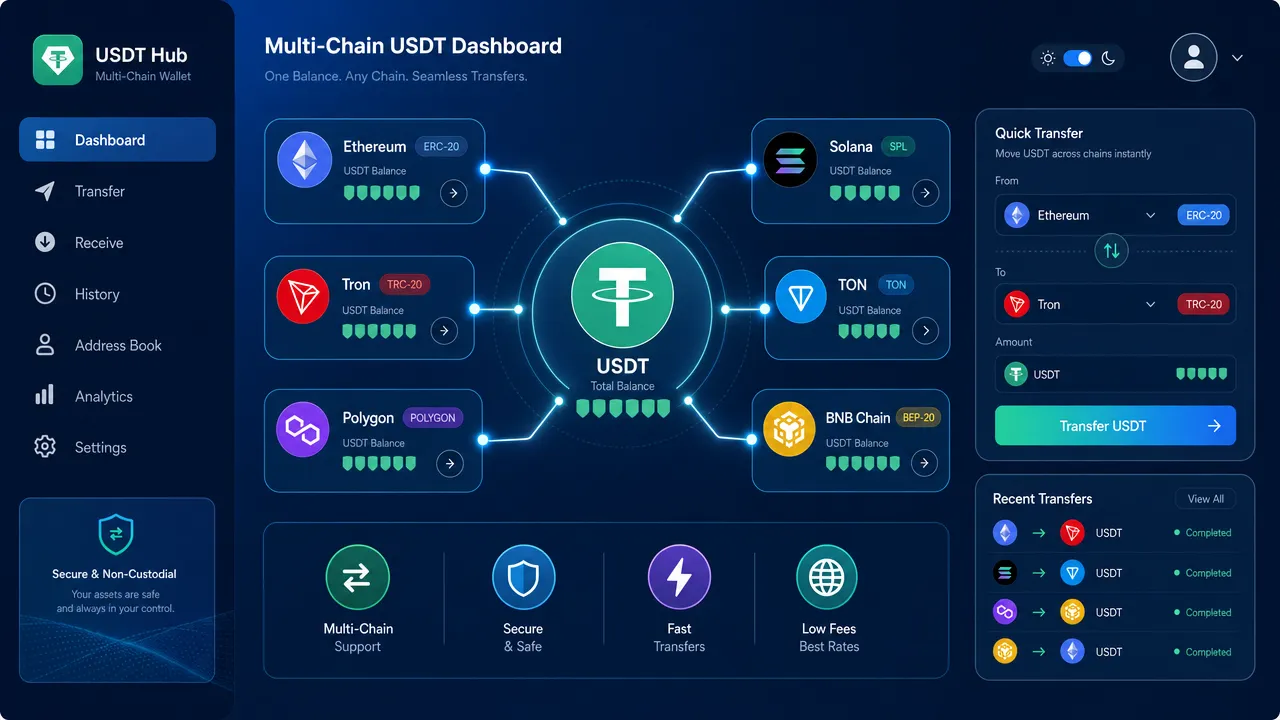
What a USDT wallet does for multi-chain transfers
A USDT wallet lets you receive, store, send, and manage Tether USDt on supported blockchain networks. The important detail is "supported blockchain networks." USDT is not limited to one chain. Tether lists multiple supported protocols, including Ethereum, Tron, Solana, Avalanche, TON, Aptos, and others on its official supported protocols page.
That means a good USDT wallet should do more than show one balance. It should help you identify:
- Which chain your USDT is on.
- Whether the receiving wallet or platform supports the same network.
- Which native gas token you need, such as ETH, TRX, BNB, SOL, AVAX, TON, or APT.
- Whether a transaction involves a simple transfer, a swap, or a cross-chain route.
- Whether a DApp or smart contract may create extra risk.
FoxWallet is non-custodial, which means users retain control over their private keys and assets. FoxWallet does not hold user funds. Private keys and mnemonic phrases are stored locally with encryption, so self-custody remains in the hands of the user. This is powerful, but it also means users must protect their recovery phrase. Ledger explains why a recovery phrase must be kept secure: anyone who has access to it may be able to access the wallet.
For a broader look at choosing a wallet for TRC20, ERC20, and other networks, FoxWallet also provides a related guide to wallet options for multiple USDT networks.
Why a USDT wallet affects fees and speed
A USDT wallet does not set blockchain fees. Fees are determined by the network, current congestion, route design, and sometimes third-party platforms. However, the wallet experience can strongly affect how much users actually spend.
For example, ERC-20 USDT on Ethereum may have strong DeFi and exchange compatibility, but gas can rise during busy periods. Live Ethereum gas conditions can be checked through Etherscan gas tracker. Other networks, such as Tron, Polygon, Solana, TON, BNB Chain, and some Ethereum Layer 2 networks, are commonly used for lower-cost transfers when both sender and receiver support them.
Here are the most common cost layers users should understand:
| Cost factor | What it means | Can a USDT wallet help? |
|---|---|---|
| Network gas fee | Fee paid to use the blockchain | Yes, by showing network context and helping users choose supported options, but not by eliminating gas |
| Exchange withdrawal fee | Fee charged by a centralized platform | No direct control, but users can compare network choices before withdrawing |
| Swap fee | Fee from a DEX, aggregator, or liquidity source | Yes, by helping route swaps more efficiently |
| Cross-chain routing fee | Cost related to bridges, routers, or liquidity networks | Yes, by showing route details, but risks still exist |
| Slippage | Difference between quoted and executed price | Yes, by displaying route and minimum received details |
| Failed transaction cost | Gas spent on failed execution | Yes, through better prompts, gas checks, and risk alerts |
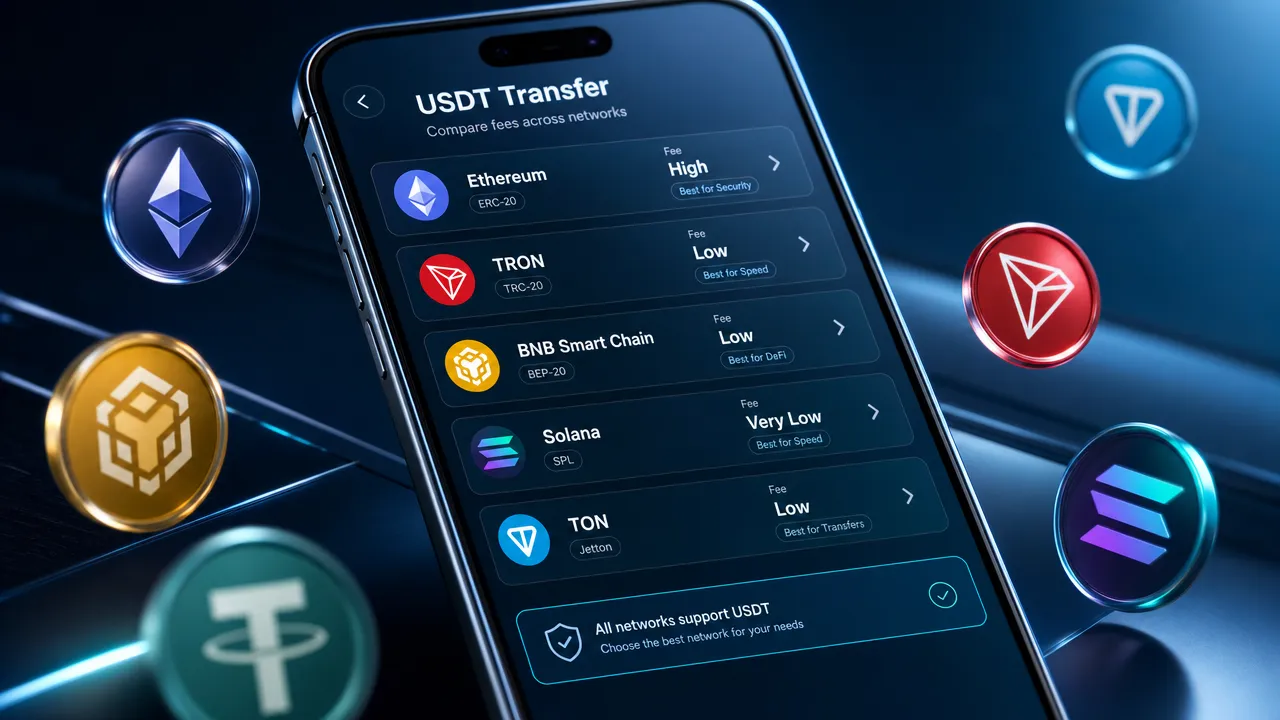
The key point is that cost savings usually come from better decisions, not magic. A user who always sends USDT on a high-fee chain for small payments may overpay. A user who selects a network the receiver does not support may create a recovery problem. A user who forgets the required gas token may be unable to complete a transfer.
FoxWallet helps by giving users a unified multi-chain asset view, automatic asset detection, and transaction context before confirmation. For more practical ways to reduce avoidable costs, see FoxWallet's guide to lowering USDT transfer expenses.
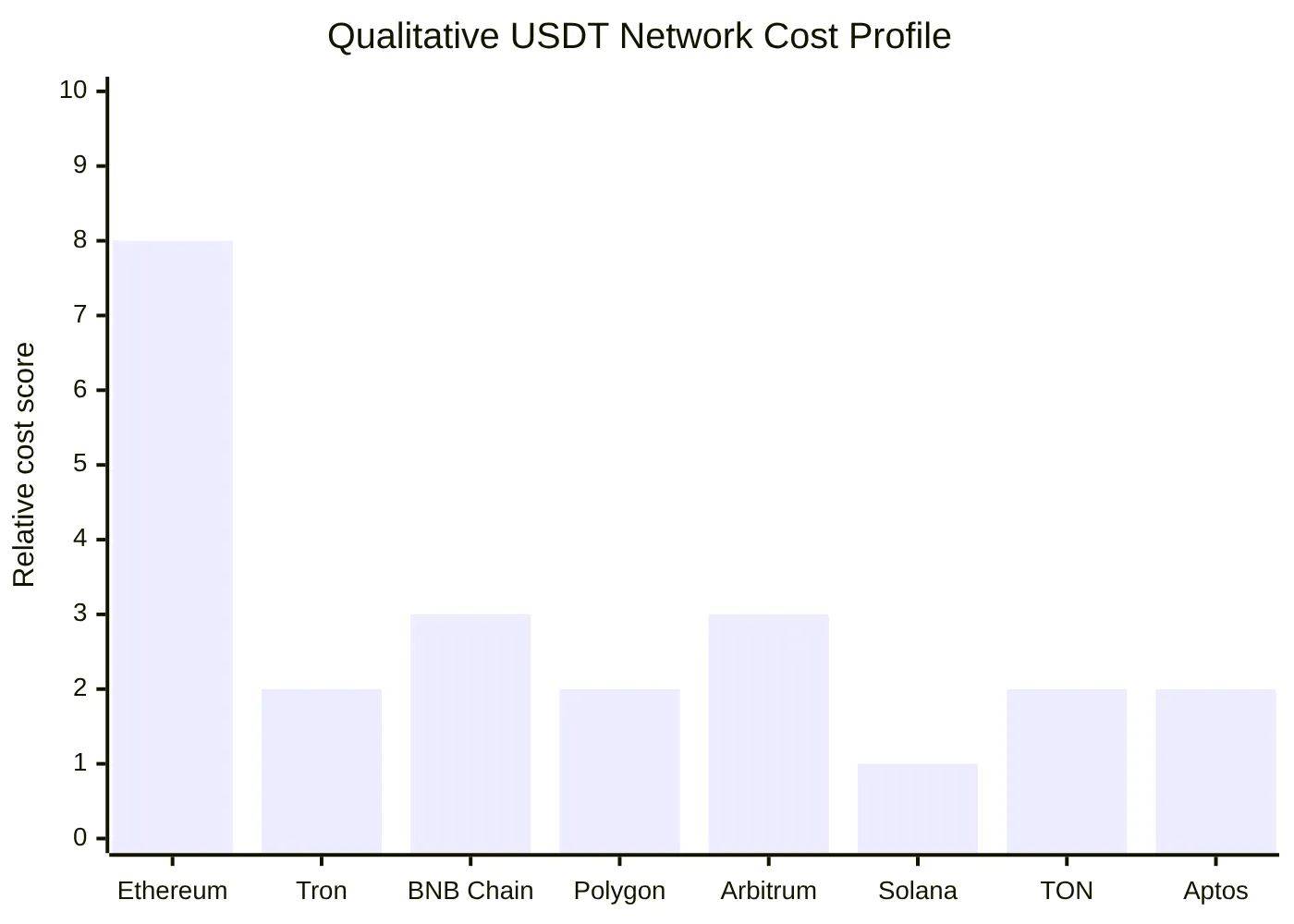
This chart is a qualitative illustration, not live fee data. Actual fees change by network conditions, route, and platform policy. Always check current network details before sending.
How a USDT wallet helps avoid costly mistakes
The biggest savings often come from avoiding errors. A wrong-network USDT transfer can be far more expensive than a normal gas fee. If the recipient does not support the network you used, funds may be inaccessible or require difficult recovery steps. In some cases, recovery may not be possible.
A security-first USDT wallet should help users slow down at the right moment. Before sending, check these points:
| Before sending USDT | Why it matters |
|---|---|
| Confirm the exact network | ERC-20, TRC-20, BEP-20, Polygon, Solana, TON, and other versions are not automatically interchangeable |
| Confirm the recipient supports that network | A valid-looking address does not always mean the destination platform supports the asset on that chain |
| Keep the right gas token | USDT transfers require native gas or network resources depending on the chain |
| Send a small test transaction for new routes | This can reduce risk when using a new wallet, address, or platform |
| Review approvals and contract prompts | Malicious approvals can put assets at risk |
| Avoid suspicious links | Phishing sites may imitate wallets, DApps, or exchanges |
FoxWallet includes risk protection features such as pre-transaction alerts, smart contract recognition, and phishing protection. These safeguards are especially important for stablecoin users because USDT is often moved frequently and used across exchanges, DApps, and on-chain trading paths.
Cross-chain swaps can also be useful when your USDT is on one chain but needed on another. Still, cross-chain routes may involve third-party protocols such as bridges, routers, relayers, or liquidity networks. Chainalysis has documented how bridge-related exploits have historically been a major crypto security concern in its report on cross-chain bridge hacks. That does not mean users should avoid every cross-chain route, but it does mean they should review route details carefully.
FoxWallet's article on cross-chain swap risk awareness is a useful companion when evaluating routes, fees, and security assumptions.
Why FoxWallet is a USDT wallet for self-custody users
FoxWallet is designed for users who want more than a single-chain stablecoin balance. It is a multi-chain decentralized wallet for beginners, advanced users, and high-frequency on-chain users who need secure control and practical asset visibility.
Key FoxWallet advantages include:
- Full user control: FoxWallet is non-custodial, so users control their private keys and assets.
- Local encrypted storage: Mnemonic phrases and private keys are stored locally with encryption.
- Unified multi-chain asset management: Users can view assets and token balances across supported chains in one place.
- Automatic asset and NFT detection: The wallet helps reduce manual tracking across networks.
- Built-in cross-chain swap support: Users can reposition assets when needed without unnecessary app switching.
- On-chain trading access: Integrated routing helps users compare available liquidity and pricing.
- DApp browser: Users can access Web3 applications from within the wallet environment.
- Mobile and browser extension support: FoxWallet supports iOS, Android, and desktop Web3 use through a browser extension.
- Security alerts: Risk prompts, contract recognition, and phishing protection help users review actions before approval.
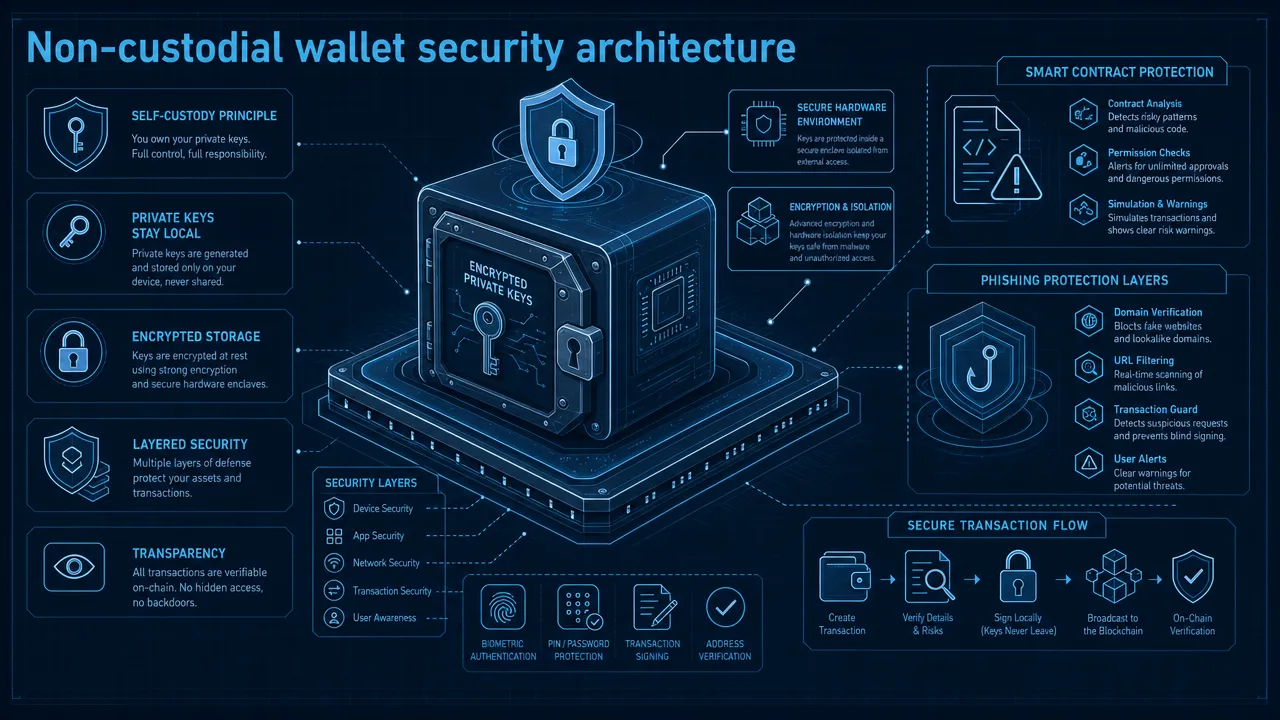
For beginners, this means a cleaner path to understanding which chain their USDT is on and how to send it safely. For advanced users, it means better multi-chain visibility, cross-chain operations when needed, and deeper Web3 access through DApps. For professional or high-frequency users, small fee reductions and fewer operational mistakes can compound over time.
FoxWallet's view of multi-chain complexity is explored further in its article on the real technical bottlenecks behind multi-chain wallets. If you use decentralized swaps, the safety principles in this decentralized swap safety guide can also help you review approvals and routes more carefully.
USDT wallet safety checklist before every transfer
Before you send USDT, use this quick checklist:
- Check the chain label. Make sure you know whether the USDT is on Ethereum, Tron, BNB Chain, Polygon, Solana, TON, Aptos, Avalanche, or another supported network.
- Confirm recipient support. The receiving wallet, exchange, or DApp must support the exact same network.
- Verify the address. Copy carefully, check the first and last characters, and avoid addresses from untrusted messages or links.
- Keep gas ready. You may need ETH, TRX, BNB, SOL, TON, AVAX, APT, or another native token depending on the chain.
- Review fees and route details. For swaps or cross-chain movements, check gas, routing fees, slippage, and the destination asset.
- Avoid unnecessary cross-chain moves. If both sides support the same low-fee network, a simple transfer may be cheaper than a swap route.
- Watch for risk alerts. Do not ignore warnings about suspicious contracts, phishing links, or unusual approvals.
- Protect your recovery phrase. Store it offline and never share it with anyone, including support impersonators.
- Test new routes. For a new address or unfamiliar network, consider a small test transfer first.
- Track confirmation. Use the wallet and trusted explorers to verify the transaction status.
A USDT wallet saves money by making these steps easier and more visible. It helps users choose supported lower-fee networks, avoid wrong-chain transfers, reduce unnecessary routing, and protect assets from preventable security errors. It does not make blockchain fees disappear, and it should never be treated as a guarantee of the lowest cost.
For users who want fast stablecoin transfers with self-custody, multi-chain management, DApp access, and security-first transaction review, FoxWallet is built to be a practical USDT wallet for everyday and advanced Web3 use.
Download FoxWallet to manage USDT across supported chains with full self-custody, clearer network visibility, and safer multi-chain control.