


Crude oil pricing transparency: The application prospects of blockchain technology in the energy market


Oil prices influence almost every layer of the global economy, yet the process behind crude pricing is still less transparent than many market participants would like. Benchmarks such as Brent, WTI, and Dubai are essential reference points, but the path from physical cargo deals and OTC transactions to published prices remains fragmented. In my view, that gap is exactly why blockchain deserves serious attention in the energy market.
The discussion is not really about replacing the oil market overnight. It is about whether better infrastructure can make Oil Prices more auditable, traceable, and efficient. Based on current market structure and existing pilots, the most realistic answer is yes, but only through gradual, hybrid adoption rather than a dramatic all-on-chain shift.
Why Oil Prices Still Suffer From Transparency Gaps
Oil Prices are formed through a blend of exchange-traded futures, physical spot trades, term contracts, OTC derivatives, and assessments from price reporting agencies. That makes the system functional, but not fully visible.
Several weak points stand out:
- OTC trading still limits public visibility into a meaningful part of the market.
- Price assessments often depend on reported bids, offers, and deals rather than a universally auditable record.
- Physical supply data, including inventories and shipping flows, can be delayed, incomplete, or politically sensitive.
- Geopolitical decisions by producers and regulators can move Oil Prices before the market has full clarity.
The result is an uneven information landscape. Large trading houses often operate with better market intelligence, while smaller participants, regulators, and end users face more uncertainty.
Here is a simple comparison of today's oil pricing structure and a blockchain-enhanced model:
| Area | Current Oil Market | Blockchain-Enhanced Possibility |
|---|---|---|
| Trade reporting | Fragmented, often bilateral | Shared, timestamped records |
| Benchmark inputs | Partly self-reported | Verifiable transaction feeds |
| Supply chain visibility | Limited and delayed | Traceable event logging |
| Settlement | Reconciliation-heavy | Programmable settlement |
| Auditability | Partial | Stronger historical trail |
This does not mean existing benchmarks disappear. It means their data foundation could become stronger.
How Blockchain Could Improve Oil Prices Discovery
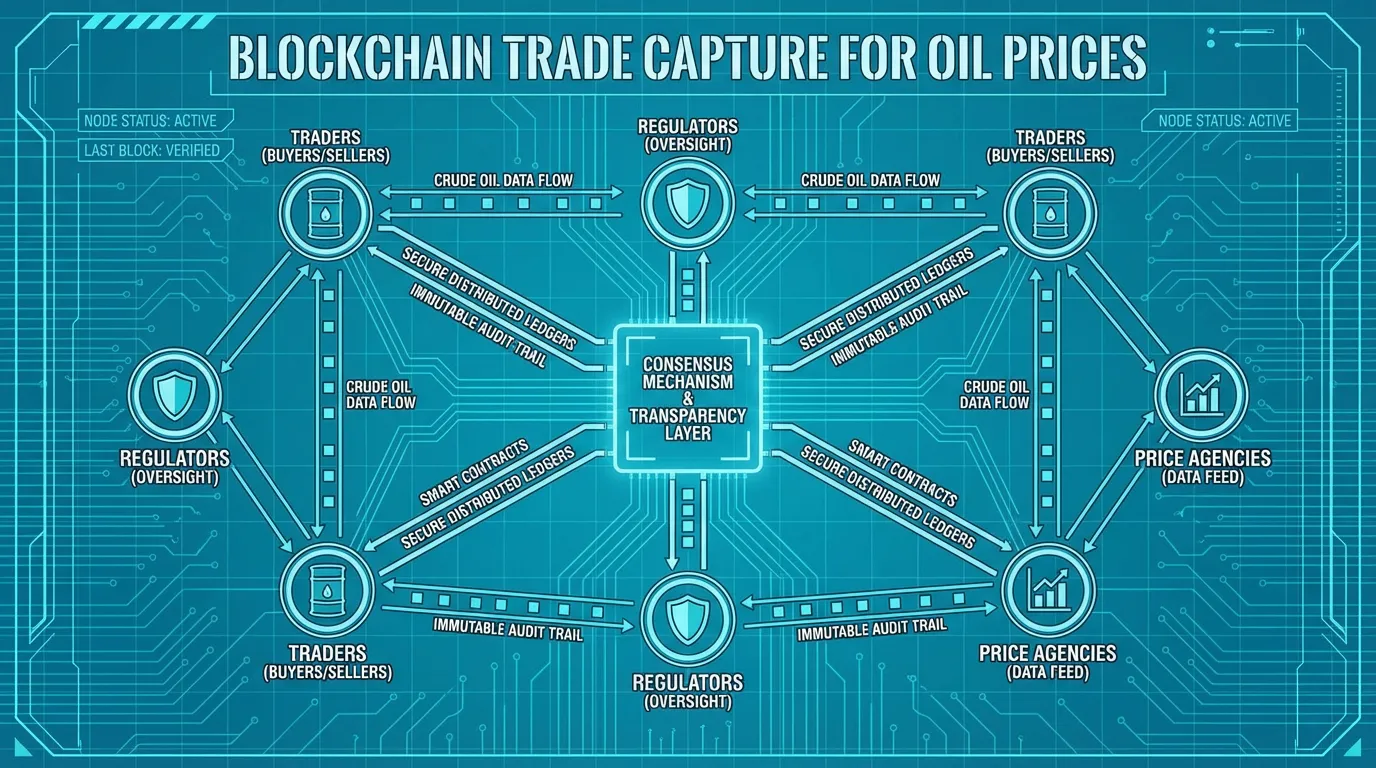
The strongest use case is not speculative token hype. It is on-chain trade capture and post-trade documentation, especially through permissioned or consortium blockchain systems.
Projects like Vakt and komgo already show that commodity markets are willing to use blockchain where it reduces paperwork, reconciliation friction, and financing complexity. In oil, the same approach could improve how trade data feeds into benchmark formation.

If more trades were recorded in immutable, timestamped systems, PRAs and regulators could work from a broader and more auditable dataset. That would not eliminate discretion entirely, but it could reduce manipulation concerns and improve confidence in Oil Prices.
Another promising area is settlement. Smart contracts can support delivery-versus-payment logic, collateral tracking, and automated compliance checks. In a market as operationally dense as crude oil, even marginal gains in trust and efficiency matter.
Why Tokenized Assets Could Reshape Oil Prices Exposure
The next phase is not tokenizing every barrel of crude. It is more likely to involve tokenized oil-linked interests such as storage receipts, royalties, receivables, and structured products.
That matters because tokenization changes how exposure to Oil Prices can be packaged, transferred, and financed. Instead of only relying on traditional market rails, energy-linked assets could move through programmable digital infrastructure.
Potential tokenized formats include:
- Storage claims tied to specific inventory positions.
- Royalty interests linked to production revenues.
- Commodity-linked structured instruments.
- Carbon and ESG-linked assets connected to energy flows.
This is where public and permissioned systems may converge. Core commercial records may remain on closed or consortium networks, while tokenized representations could interact with broader public-chain liquidity.
A practical takeaway is that future Oil Prices exposure may exist across multiple chains and asset formats at the same time. That creates a usability challenge as much as a market one.
Why Wallet Infrastructure Matters For Oil Prices In Web3
If tokenized energy markets expand, users will need a secure interface to manage those assets. That is where a non-custodial, multi-chain wallet becomes relevant.
FoxWallet fits this discussion because its design aligns with the kind of market structure blockchain-based energy products would likely require. As a multi-chain decentralized wallet, it gives users direct control over private keys, supports broad asset management across networks, and integrates on-chain trading tools while maintaining a security-first model.
For users navigating complex digital asset environments related to Oil Prices, the key wallet requirements are clear:
- Non-custodial security, so users retain direct control of assets.
- Multi-chain visibility, since tokenized RWAs and settlement assets may live on different networks.
- Integrated swap functionality for managing liquidity across chains.
- Risk warnings before signing unfamiliar smart contract interactions.
FoxWallet's strengths in these areas are especially relevant for advanced and professional users. Its local private key encryption, phishing protection, contract recognition, and pre-transaction risk alerts can help reduce the operational risk that often comes with emerging tokenized markets. For those managing diverse on-chain portfolios, the FoxWallet download page is the direct path to mobile and browser extension access.
Users who want to better understand operational safety in multi-network environments can also review FoxWallet's guide to cross-chain swap risks. That is particularly useful in a future where settlement assets, stablecoins, and tokenized energy instruments may need to move between different blockchain ecosystems.
What Oil Prices Transparency Will Probably Look Like Next
My opinion is that blockchain will not make Oil Prices perfectly transparent. Oil is too strategic, too regulated, and too geopolitical for that. But blockchain can still improve important parts of the system.
Short to medium term, the most plausible gains are:
| Time Horizon | Most Likely Development |
|---|---|
| 1 to 3 years | More blockchain-based post-trade documentation |
| 2 to 5 years | Growth in tokenized energy financing structures |
| 3 to 7 years | Better linkage between physical cargo data and digital records |
| Longer term | Hybrid benchmark systems informed by verifiable on-chain data |
That means the future of Oil Prices is unlikely to be purely traditional or purely decentralized. It will probably be hybrid: permissioned networks for sensitive trade data, public chains for selective liquidity and interoperability, and wallets as the user-facing control layer.
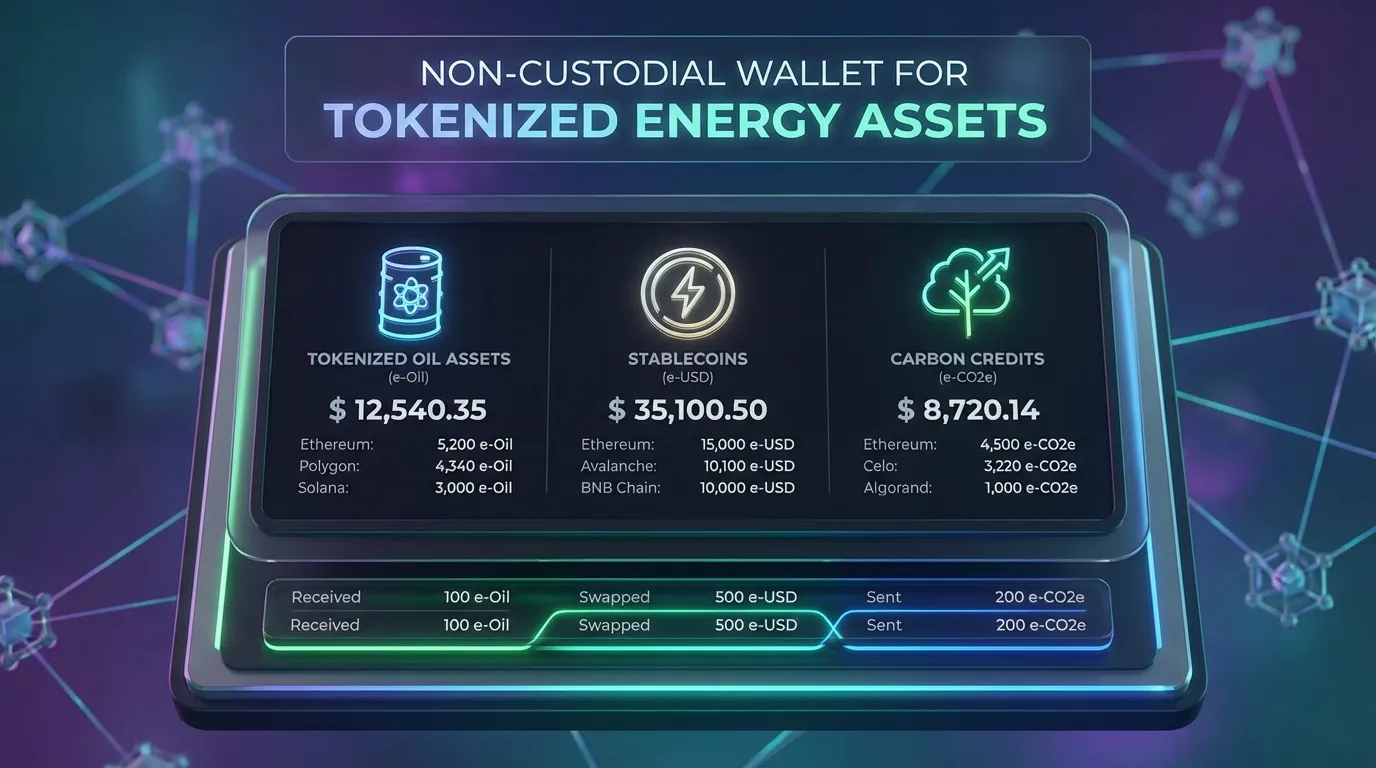
In that hybrid future, infrastructure matters more than slogans. Transparent data layers, programmable settlement, and secure self-custody tools will shape whether blockchain becomes a niche experiment or a meaningful part of the energy market. If tokenized commodity markets continue to develop, wallets such as FoxWallet may become one of the most practical gateways for users who want secure, multi-chain access to that next generation of digital energy assets.