


Best Crypto Converters and Calculators in 2026: Real Rates, No Guesswork

Best Crypto Converters and Calculators in 2026: Real Rates, No Guesswork
2026-08-19
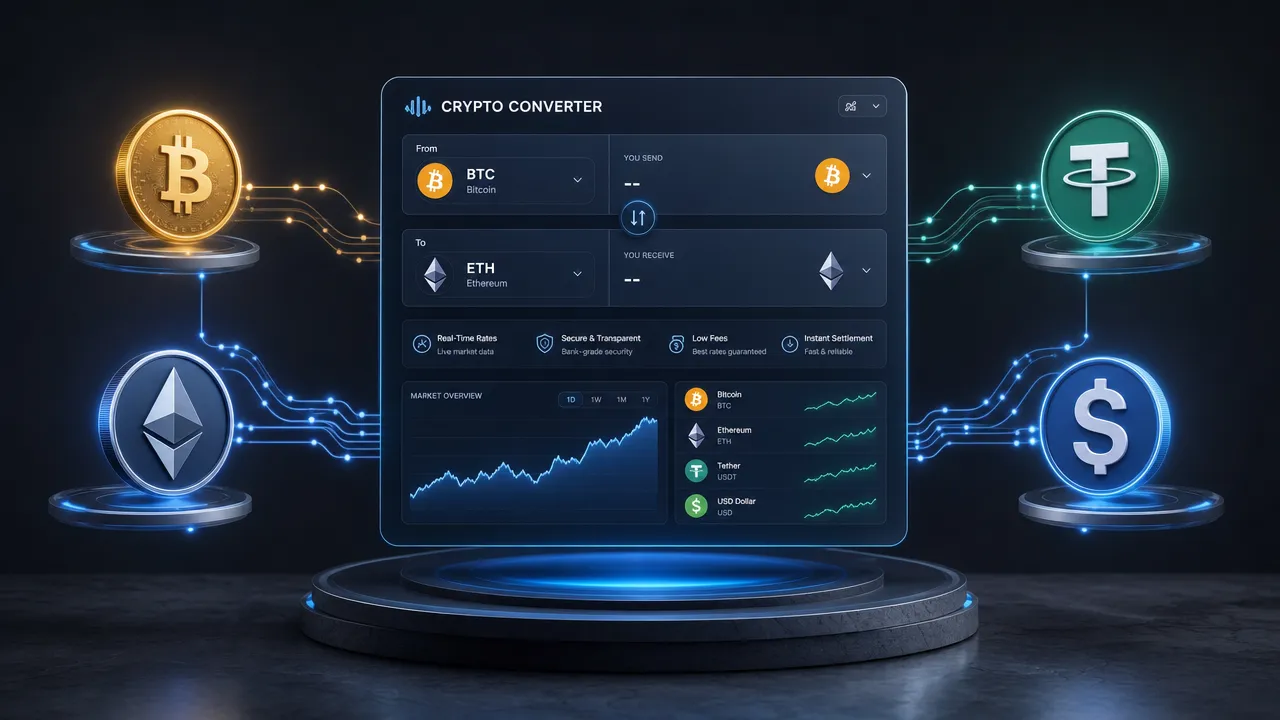
Crypto converters and calculators address the same task: they estimate what one crypto or fiat amount is worth in another, but the displayed result is not automatically the final amount you can transact. Bitsgap describes its utility as both a "crypto converter and crypto calculator," which reflects how closely the two terms match in everyday use. Whether you search for a crypto price calculator, a bitcoin converter, or an ethereum calculator, the goal is usually the same: check a current displayed conversion rate for a pair such as BTC to USDT or ETH to USD.
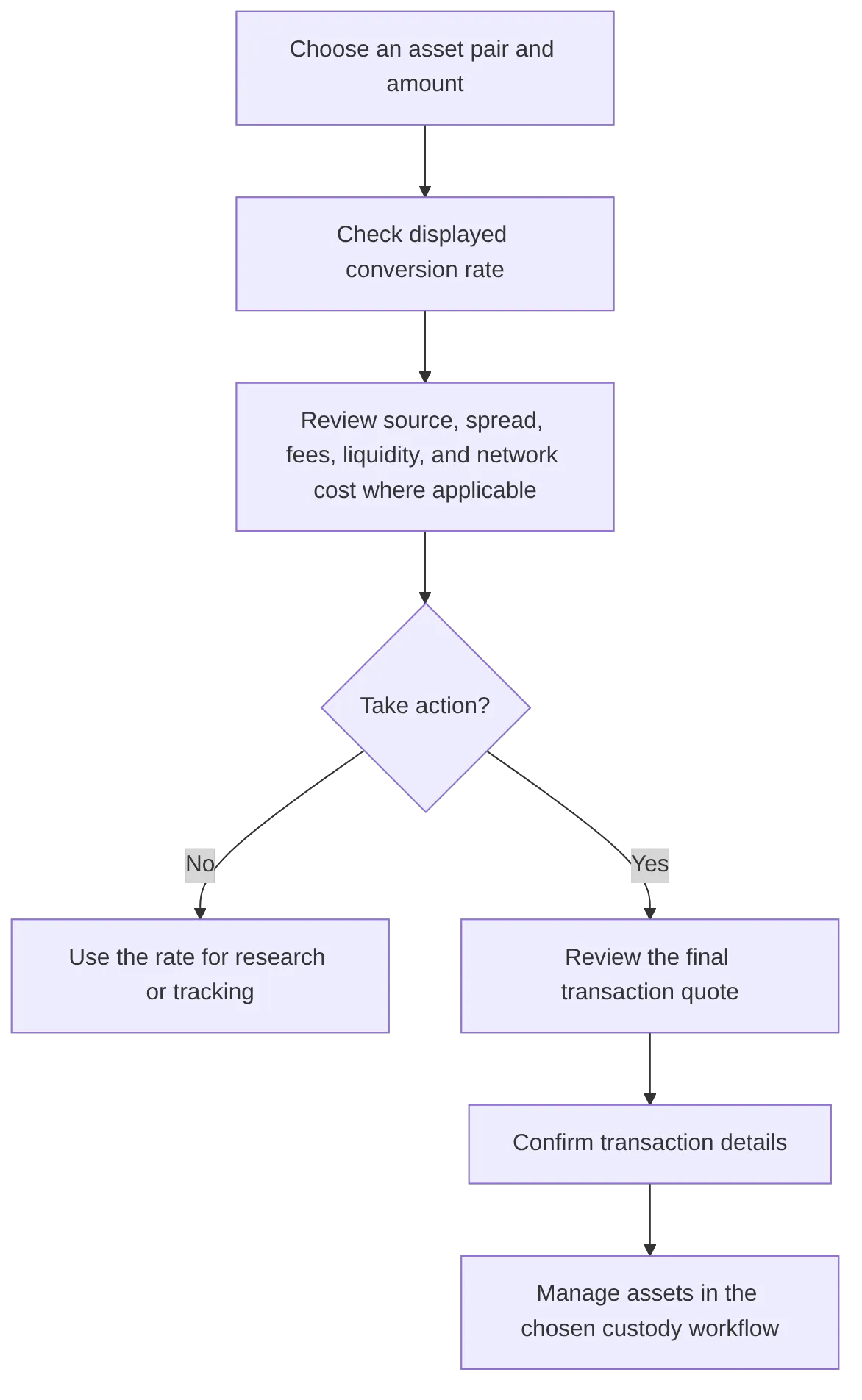
A useful rate check can support research, portfolio tracking, or a decision to trade. It should not be mistaken for a guaranteed execution price. The final amount received can change with the quote source, market movement, spread, liquidity, service fees, slippage, and blockchain network fees.
How crypto converters and calculators answer the same rate-check question
A cryptocurrency converter and a calculator both take an amount, apply a displayed rate, and return an estimated equivalent value. For example:
- A BTC to USDT lookup estimates how much USDT corresponds to a selected amount of BTC.
- An ETH to USD lookup estimates the current fiat value of an ETH balance.
- A token-to-fiat query estimates an asset's value in USD, EUR, GBP, or another supported currency.
- A crypto-to-crypto query compares the relative value of two digital assets.
The practical distinction is minimal for most users. A converter may emphasize switching between assets and currencies, while a calculator may emphasize entering an amount and seeing the result. Both are rate-lookup tools.
For a simple ETH to USD estimate, the calculation is:
ETH amount x displayed ETH/USD rate = indicative USD value
The word "indicative" matters. A public market-data result can be useful for context, but it may not match a later exchange quote or an on-chain swap outcome.
Comparison of crypto converters and calculators
| Tool | Best for | What it helps you check | What it does not complete by itself |
|---|---|---|---|
| CoinMarketCap Converter | Broad crypto-to-fiat and crypto-to-crypto lookups | General market-rate estimates and wide fiat currency support | Asset custody or an on-chain transaction |
| CoinGecko Converter | Altcoin, token, and global-currency research | Frequently updated crypto and fiat conversion estimates | A final transaction quote |
| CoinCodex | Pair checks with recent rate context | Conversion values and recent pair movement context | Trade execution or asset management |
| Coinbase Converter | Rate checks within an exchange-connected environment | Supported crypto and fiat pair estimates | A transaction outside the Coinbase workflow |
| Kraken Convert | Users considering Kraken's conversion environment | Conversion paths connected to Kraken services | Self-custody management after a transaction |
| Bitsgap Converter | Trading-oriented rate and chart context | Crypto-to-crypto and crypto-to-fiat conversion rates | A universal final execution result |
The best choice depends on what you need after seeing the number. For broad discovery, market-data tools can be a quick starting point. For a rate check connected to a particular exchange environment, Coinbase and Kraken may be more relevant. For users who want pair context alongside conversion information, CoinCodex and Bitsgap add useful perspective.
Why crypto converters and calculators show real crypto rates, not universal final prices
"Real crypto rates" is best understood as a current displayed market reference or platform quote. It does not mean there is one universal price that every buyer, seller, exchange, and on-chain liquidity pool will offer at the same moment.
Crypto assets trade across many venues and liquidity sources. The number shown by a cryptocurrency converter can therefore differ from the amount available when you take action.
| Term | What it means for a rate check |
|---|---|
| Indicative rate | A current estimate based on market data, a platform methodology, or a displayed quote |
| Spot price | The current price shown in a specific market or data feed |
| Final quote | The transaction-specific amount presented before confirmation |
| Spread | The gap between buying and selling prices, or between a reference rate and an offered conversion rate |
| Slippage | The difference between an expected price and the actual execution outcome |
| Liquidity | The available trading interest near the current market price |
| Network fee | A blockchain processing cost that can apply when assets move on-chain |
Reference rates and executable prices serve different purposes. A benchmark or aggregated market figure can summarize activity across eligible markets, while a live transaction happens under the conditions of a particular venue or route. The CME CF cryptocurrency benchmarks provide one example of how reference measures can use defined methodologies rather than represent a single executable market.
Bid and ask prices also help explain why immediate buying and selling can produce different outcomes. Investor.gov's definition of bid and ask prices shows that buyers and sellers can be willing to transact at different levels. In fast-moving or thinner markets, that difference can become more important.
Before acting on a rate from a no guesswork crypto calculator, review:
- The exact asset and network you are using.
- The final amount you will receive.
- Any displayed spread, price impact, or slippage.
- Service, conversion, or trading fees.
- Relevant blockchain network fees.
- The transaction details before you approve or confirm.
A bitcoin converter can give you a helpful BTC-to-USDT estimate. It cannot guarantee that the same amount of USDT will be available when a transaction is submitted. Similarly, an ethereum calculator can estimate ETH to USD, but the amount received in an actual sale depends on the specific trading conditions at that time.
Best crypto converters and calculators for different use cases
Each of these six tools is useful for a slightly different kind of lookup. They are complementary utilities, not substitutes for a wallet or a guarantee of a final trade outcome.
CoinMarketCap Converter
CoinMarketCap Converter is a practical starting point for general crypto and fiat conversion checks. Its broad recognition and wide fiat currency support make it useful when you want to estimate values such as BTC to USD, BTC to USDT, ETH to USD, or a token balance in your preferred currency.
Use it when the priority is a quick market-data estimate. If you later decide to transact, compare the displayed result with the final quote and conditions offered by your chosen service.
CoinGecko Converter
CoinGecko Converter is well suited to users researching a broad range of assets, including altcoins and tokens, against global currencies. It is especially useful for checking an asset's approximate value in USD, EUR, GBP, or another fiat currency.
For a user searching "ethereum calculator," this kind of tool can quickly estimate an ETH position in fiat terms. The output remains a current displayed rate, not a promise that a particular venue will execute at that exact value.
CoinCodex
CoinCodex adds pair-level context to a standard conversion lookup. In addition to the current conversion estimate, its pair pages can provide recent percentage-change and exchange-price context.
That makes it helpful when you want to view a BTC-to-USD estimate while also checking how the pair has moved recently. Historical context can clarify recent market behavior, but it does not predict a future rate or guarantee execution.
Coinbase Converter
Coinbase Converter is relevant for users who are checking an asset pair and may later consider an action in the Coinbase ecosystem. It supports crypto and fiat conversion estimates for supported pairs.
Coinbase notes on its converter materials that processing fees may not be reflected in displayed conversion prices. That is a useful reminder for any crypto price calculator workflow: treat the initial result as a reference, then carefully review the final receive amount and applicable conditions before confirming a transaction.
Kraken Convert
Kraken Convert is designed for users considering a conversion workflow associated with Kraken's exchange environment. It can be useful when your rate research is connected to a possible next step within that platform.
As with any exchange-connected conversion path, distinguish the initial rate check from the final transaction conditions. Review the final quote, any applicable spread or fees, and the amount to be received before approval.
Bitsgap Converter
Bitsgap Converter explicitly frames its utility around both converter and calculator intent, making it a natural reference point for this roundup. It offers crypto-to-crypto and crypto-to-fiat conversion information along with price-chart and trading-oriented context.
It can be useful for users comparing common combinations involving BTC, ETH, USDT, USD, EUR, and GBP. As with other tools, displayed values should be checked against the actual conditions of the route or service you choose if you decide to transact.

How crypto converters and calculators fit into a self-custody workflow
The shared limitation of rate-lookup tools is not a flaw. They are designed to answer a focused question: what is this amount worth right now? The next step is separate.
After using crypto converters and calculators, a user may choose to do nothing, trade through a selected service, send funds, or manage assets across blockchains. Those actions add considerations that a standalone rate tool cannot settle:
- Who controls the private keys?
- Which blockchain network is selected?
- What tokens and balances are visible?
- What final transaction details require review?
- How will assets be managed after a swap, transfer, or receipt?
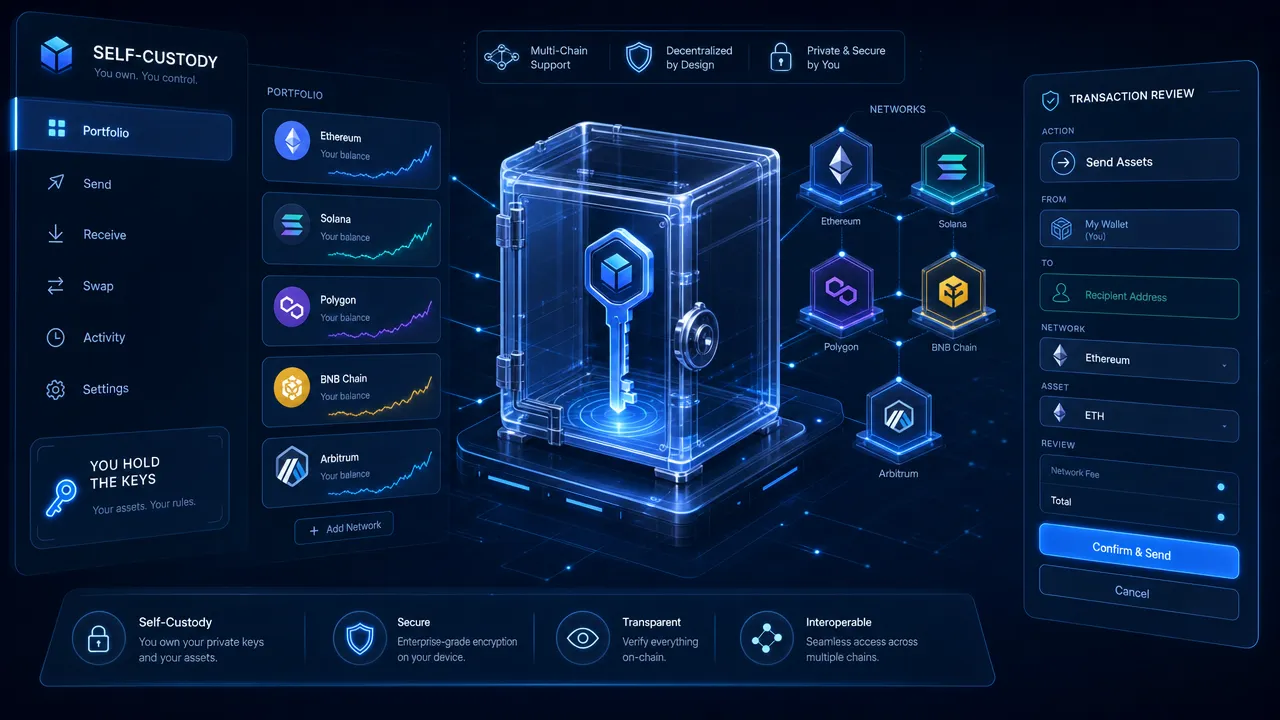
This is where a non-custodial wallet has a distinct role. FoxWallet is a multi-chain, non-custodial wallet designed for users to retain control of their private keys and assets. Rather than replacing rate-lookup sites, it addresses the separate stage of managing assets and interacting with supported on-chain services.
FoxWallet supports multi-chain asset management, including a unified view of assets across supported networks and automatic detection of assets and NFTs described in its product context. For users working across several blockchains, that can reduce the friction of monitoring balances separately. Learn more about managing multi-chain assets in FoxWallet.
For users who decide to take an on-chain action, FoxWallet also provides access to DApps through its built-in browser and supports cross-chain swap workflows through integrated aggregators. A conversion rate remains only a starting reference. Before confirming an on-chain action, review the token, selected network, receive amount, fee details, and transaction information carefully. The cross-chain swap risks checklist offers additional guidance for reviewing those details.
Self-custody also brings responsibility. Because users control their own keys, protecting recovery information and verifying transaction prompts are essential habits. FoxWallet's secure self-custody BTC wallet guide explains this responsibility in more detail.
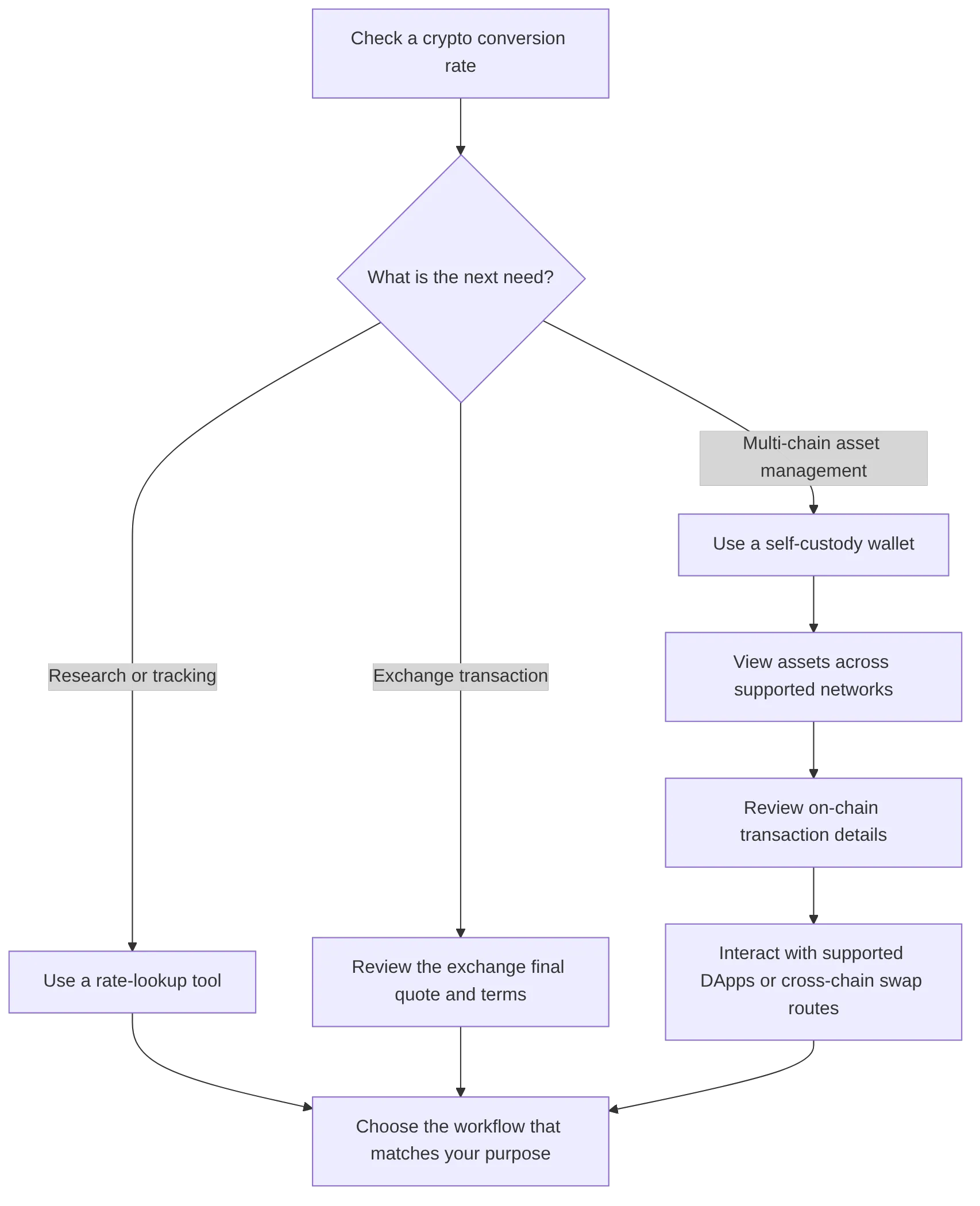
The practical takeaway is simple: check the rate where it is most useful, then choose the custody and transaction workflow that matches what you actually want to do. Rate lookup, execution, and asset management are related steps, but they are not the same service.
Ready to manage multi-chain assets with self-custody? Explore FoxWallet.
FAQ: Crypto converters and calculators
Is a crypto converter the same as a crypto calculator?
For most users, yes. Both estimate the value of one cryptocurrency or fiat amount in another. Bitsgap uses the combined language "crypto converter and crypto calculator," reflecting the shared rate-lookup purpose.
Why does BTC to USD differ between cryptocurrency converter tools?
Platforms can use different market-data sources, update schedules, exchange prices, liquidity sources, and methodologies. A displayed BTC-to-USD result may also differ from a final transaction quote because of spread, fees, and market movement.
How do I use a bitcoin converter for BTC to USDT?
Enter the amount of BTC, select BTC as the asset you hold, and select USDT as the comparison asset. The tool will show an estimated equivalent. If you decide to transact, verify the final quote, selected network, fees, and receive amount before confirming.
How does an ethereum calculator estimate ETH to USD?
An ethereum calculator multiplies your ETH amount by the displayed ETH/USD rate. For example, entering 2 ETH returns an indicative USD value based on the current displayed rate. The value can change quickly, and an actual sale may produce a different final amount.
Do crypto price calculator results include every fee?
Not always. A displayed rate may exclude some fees or only show an initial estimate. Depending on the workflow, costs can include a platform fee, spread, trading fee, price impact, slippage, or blockchain network fee. Always review the transaction-specific details.
What should I check before swapping or sending crypto?
Verify the token, network, destination, final amount, fees, and transaction details. For swaps, also review price impact or slippage where available. For self-custody, make sure you understand the transaction before signing it.
What is the difference between a converter and a non-custodial wallet?
A converter estimates a rate between assets or currencies. A non-custodial wallet helps users manage their crypto while retaining control of private keys. FoxWallet is designed for the separate self-custody, multi-chain asset-management, and on-chain interaction stage after or alongside rate research.