


The Ethereum Foundation has staked another 45,034 ETH.

Reports indicate the Ethereum Foundation has recently staked a large additional amount of ETH, but the exact "45,034 ETH" figure in this headline is not strongly verified by the available sources. The most consistently cited number across secondary reporting is 22,517 ETH, valued at about $46.2 million at the time. That distinction matters for accuracy, and it also shapes how ETH holders should read the news.
For everyday users, the bigger takeaway is not just the number. It is what this move says about Ethereum, treasury strategy, and how important secure ETH management remains during major ecosystem developments. When a highly visible Ethereum entity moves treasury ETH into staking infrastructure, the market usually reads it as participation in network security rather than a sale.
Why the ETH headline needs caution
Based on the research, the Ethereum Foundation clearly appears to have increased its staking-related treasury activity. However, the strongest support in the source set points to 22,517 ETH, not 45,034 ETH. Multiple reports attributed the transaction trail to Arkham Intelligence, while broader context suggests the move fits into a larger treasury staking strategy that may total around 70,000 ETH over time.
That means the safest interpretation is simple: ETH from the Ethereum Foundation treasury was reportedly allocated into Ethereum staking infrastructure, but the exact "another 45,034 ETH" claim could not be independently confirmed from the gathered primary evidence.
| ETH claim | Confidence | What sources suggest |
|---|---|---|
| Ethereum Foundation staked more treasury ETH | High | Consistently reported |
| Reported large tranche was 22,517 ETH | Moderate-High | Most frequently cited |
| Exact 45,034 ETH figure | Low | Not strongly verified |
| Move was staking-related, not a market sale | High | Consistent across reports |

This is an important distinction because crypto headlines often collapse nuance into a more dramatic number. For ETH readers, the more useful question is not whether one specific headline was perfect, but what ETH staking by the foundation means for network security, treasury management, and user behavior.
What the ETH staking move means for Ethereum
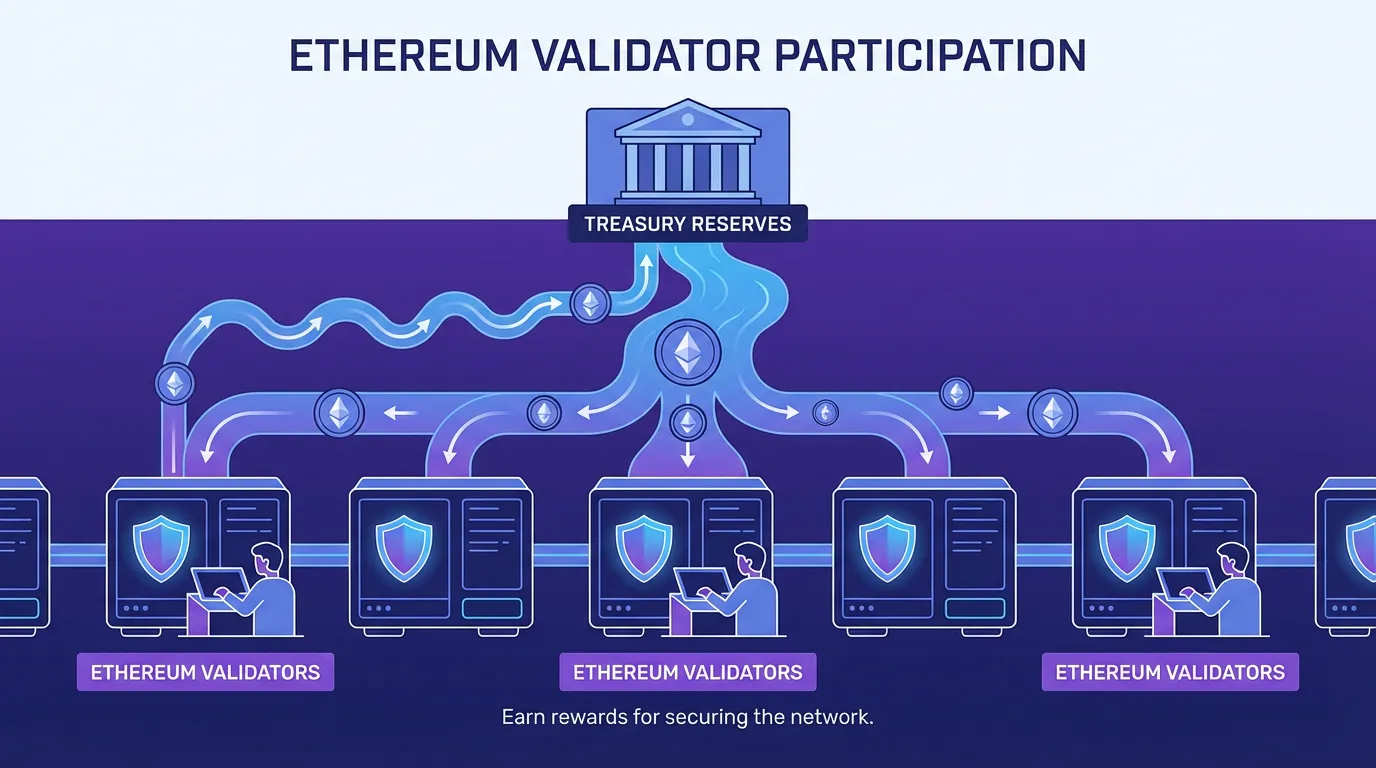
ETH staking is part of Ethereum's Proof-of-Stake system. According to the official Ethereum staking documentation, validators deposit ETH and run software that helps confirm transactions and maintain the network. In plain English, staking is not the same as selling ETH, and it is not the same as simply holding ETH in a wallet.
When the Ethereum Foundation stakes treasury ETH, several interpretations follow:
- It may want treasury ETH to become more productive.
- It may prefer validator rewards over relying only on future ETH sales.
- It may be signaling confidence in Ethereum's long-term network health.
- It may slightly reduce the amount of liquid ETH immediately available in treasury form.
The symbolic effect may be as meaningful as the numerical one. The Ethereum Foundation is closely associated with ecosystem stewardship, public goods funding, and long-term protocol alignment. So when it stakes ETH, observers naturally treat the move as bigger than a routine treasury transaction.
For readers who want a technical reference point, Ethereum staking mechanics can be explored through the official Ethereum staking guide and validator activity can be broadly monitored through Beaconcha.in's validator explorer.
Why ETH holders should care about security after this news
Major ETH headlines often bring a wave of fake "staking" websites, phishing campaigns, malicious wallet prompts, and misleading reward claims. That makes wallet security especially important whenever Ethereum attracts renewed attention.
For ETH holders, the safest response is not to rush into random staking interfaces. It is to strengthen self-custody habits first:
- store ETH in a non-custodial wallet
- verify every DApp before connecting
- review smart contract approvals carefully
- avoid links from social posts or unsolicited messages
- keep recovery phrases and private keys locally protected
This is where FoxWallet's positioning is relevant. As a multi-chain, non-custodial wallet, FoxWallet official website emphasizes user control, local encryption, on-chain transparency, DApp access, and risk-aware transaction review. For readers comparing storage options, FoxWallet's guide to a non-custodial ETH wallet is a practical next step.

If you are newer to self-custody, FoxWallet also offers a step-by-step guide on how to set up a secure crypto wallet. And because phishing risk often rises during high-interest ETH news cycles, its article on wallet security features is especially relevant here.
How ETH news fits into a broader ETH management strategy
Even though this story is specifically about Ethereum staking, ETH users rarely operate in isolation anymore. Many hold ETH while also managing tokens, NFTs, and DeFi positions across multiple ecosystems. That makes clean portfolio visibility and secure DApp access increasingly important.
FoxWallet's broader value for ETH users is not about claiming involvement in the Ethereum Foundation's staking activity. It is about helping users manage ETH safely in a self-custodial environment while still accessing the broader Web3 ecosystem. Readers interested in portfolio oversight can explore FoxWallet's take on multi-chain asset management and its guide to managing Web3 assets securely.
| What ETH users should do | Why it matters |
|---|---|
| Verify staking headlines before acting | Prevents decisions based on unconfirmed claims |
| Keep ETH in self-custody | Reduces dependence on third parties |
| Review DApp permissions carefully | Lowers malicious approval risk |
| Use security-focused wallet tools | Helps detect suspicious transactions |
| Learn Ethereum basics before participating | Improves decision quality |
That approach is especially useful for beginners who may see "ETH staking" in the news and assume every wallet or every on-chain prompt is trustworthy. It is not. A secure, non-custodial setup remains the foundation for any ETH strategy.
What the ETH story likely signals next
The most balanced conclusion is that the Ethereum Foundation appears to be moving further into staking-based treasury management, and that is meaningful even if the exact 45,034 ETH figure remains unverified. The stronger takeaway is that ETH staking by a major ecosystem entity reinforces three ongoing themes: confidence in Ethereum, continued focus on validator participation, and growing user demand for better education around self-custody and wallet safety.
For FoxWallet readers, the practical lesson is straightforward. Treat ETH headlines carefully, rely on verified sources, and make sure your ETH is managed in a wallet environment built for self-custody, security, and safe DApp access. If you want to explore that setup further, start with the FoxWallet official website or review its resources on secure ETH storage and wallet protection before making any new on-chain decisions.