


AI agent wallets need policy engines to stay safe

AI and agent-driven wallets need policy engines to stay safe because autonomous software should never have unlimited freedom to move assets, approve contracts, or interact across chains without clear rules. As AI wallet designs mature, the real differentiator is no longer whether an agent can sign a transaction, but whether that action is limited by spending limits, allowlists, approval checks, and human override logic. That is exactly why the latest push toward open standards and rules-based controls matters for self-custody users.
Why AI and agent-driven wallets need policy engines first
AI and agent-driven wallets are quickly shifting from experimental tooling to real wallet infrastructure. MoonPay's Open Wallet Standard, Coinbase AgentKit, OKX's AI-agent messaging, and ClawVault's rules-focused positioning all point in the same direction: agentic management is becoming a real design category for wallets.
The problem is straightforward. Once an AI agent can hold assets, initiate transfers, pay for services, or interact with DApps, the biggest question is not "can it transact?" but "what is it allowed to do?" Without policy engines, an autonomous wallet can become a fast executor of bad instructions, unsafe approvals, and malicious contract interactions.
For users and developers, this creates a new security baseline. AI and agent-driven wallets need controls that sit between the agent's intent and the final signature. That means open-source AI wallet standards are increasingly focused on policy engines, signer isolation, and bounded execution rather than just convenience.
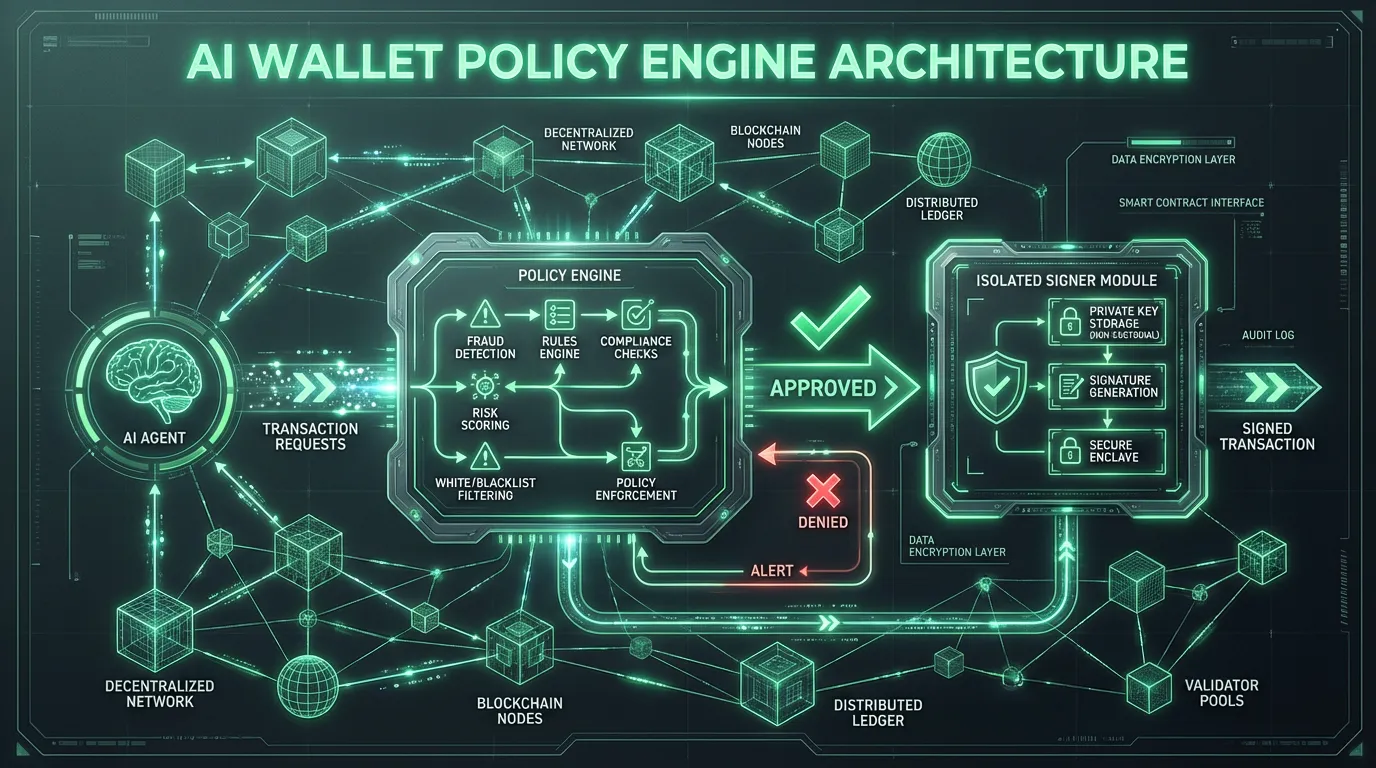
A useful way to think about the category is that wallet design is moving from storage toward governed execution. In that model, autonomy is possible, but only within rules that users or developers define in advance.
| Core layer | Why it matters in AI and agent-driven wallets |
|---|---|
| Policy engines | Decide whether an agent-requested action is allowed |
| Spending limits | Prevent unlimited or oversized transactions |
| Allowlists | Restrict destinations, contracts, or tokens |
| Human approvals | Escalate unusual or high-risk actions |
| Signer isolation | Keep keys separate from general agent runtime |
| Audit logs | Make agentic management reviewable and traceable |
How policy engines make AI and agent-driven wallets safer
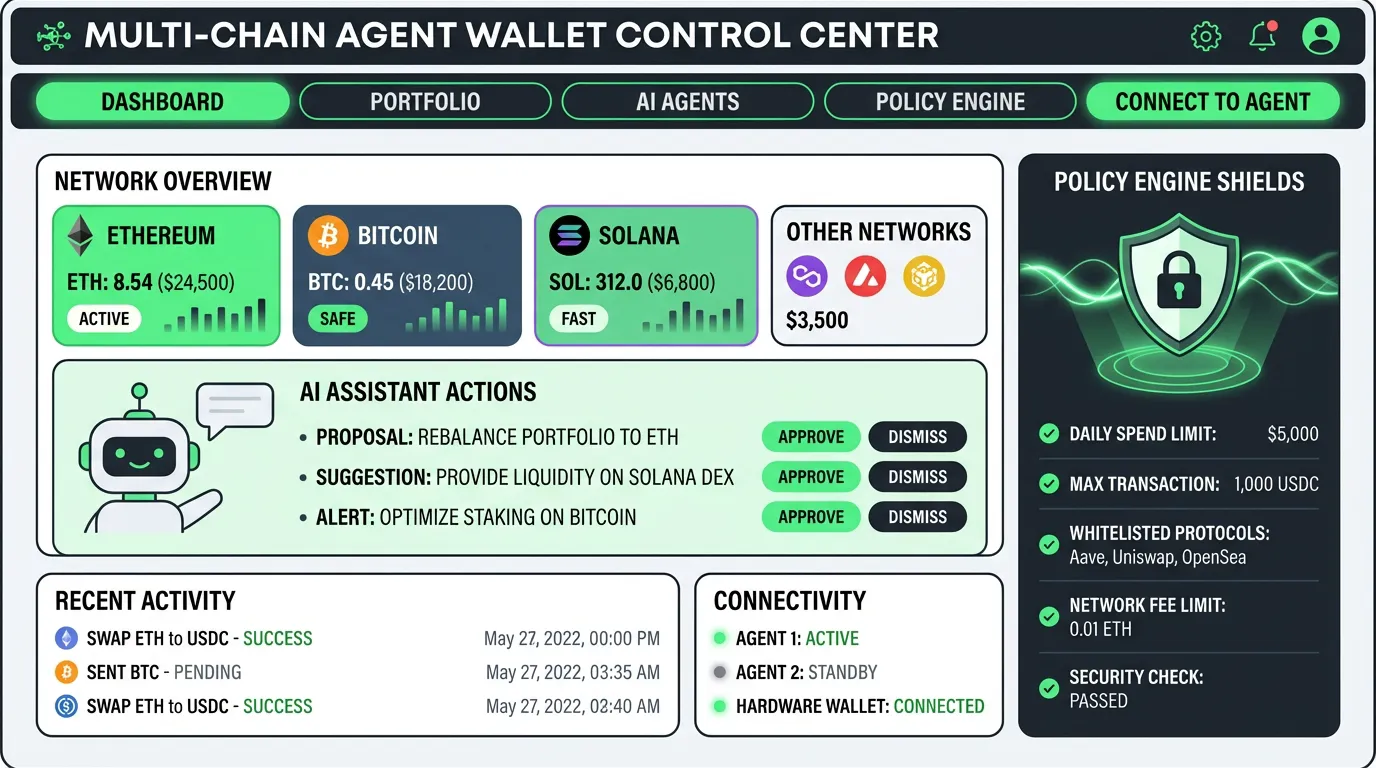
Policy engines are becoming the central safety layer for AI and agent-driven wallets because they create the missing middle ground between full manual approval and dangerous unrestricted automation.
In practice, policy engines can enforce:
- spending limits per transaction, day, or workflow
- allowlists for approved addresses, DApps, routers, or token contracts
- chain restrictions for where an agent can operate
- function-level rules for what smart contract actions are allowed
- human review thresholds for anything outside normal behavior
For example, an agent might be allowed to rebalance stablecoins below a set amount, but blocked from granting broad token approvals or sending assets to a new address without confirmation. This is where policy engines turn agentic management into something safer and more auditable.
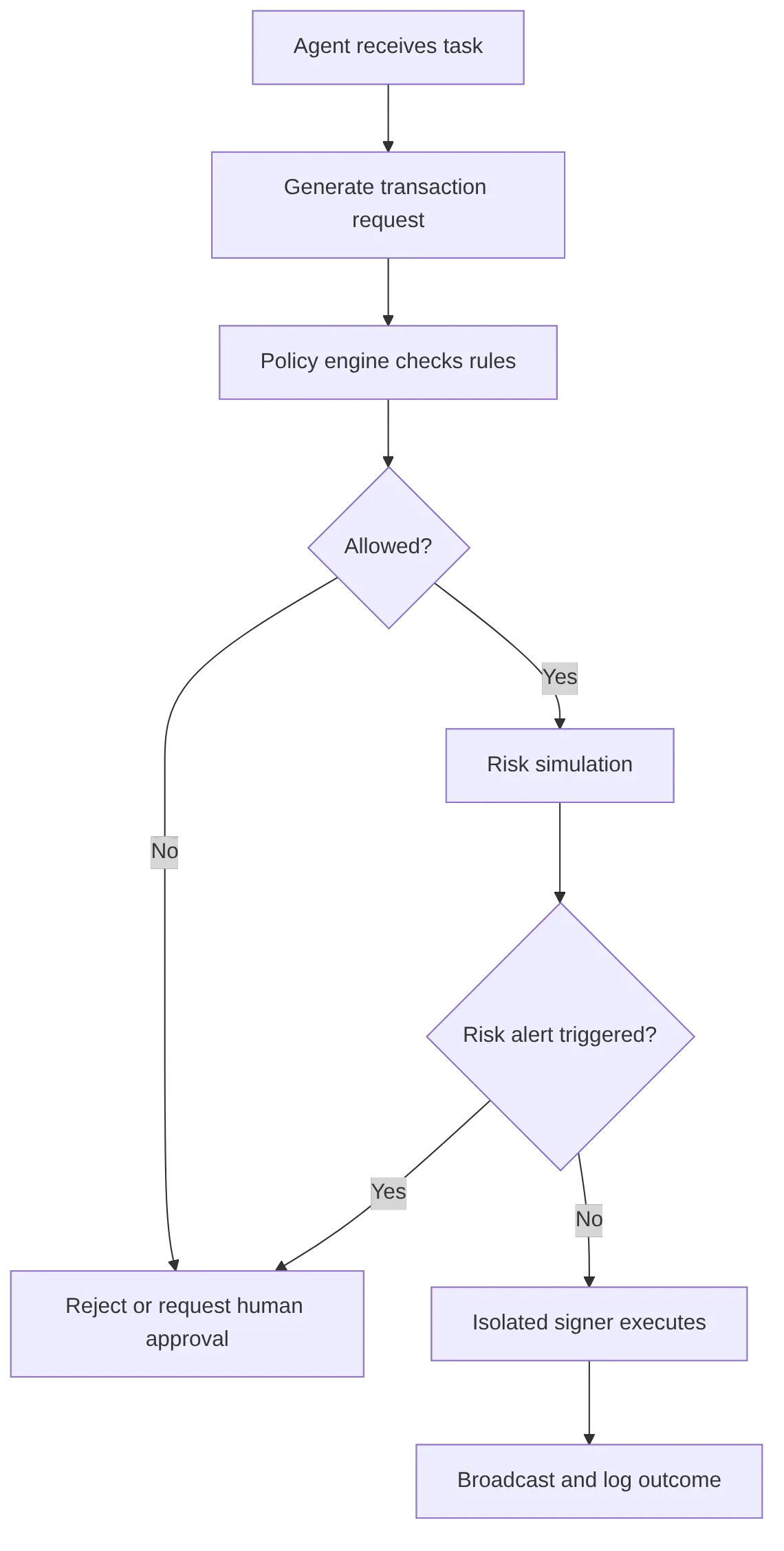
This model also fits the broader needs of a multi-chain wallet better than a simple yes-or-no permission system. As transactions span more networks and more DApps, policy engines help define not just whether an action is possible, but whether it is acceptable.
For a non-custodial provider like FoxWallet, that architecture is especially relevant. FoxWallet already emphasizes self-custody, local private key encryption, phishing protection, malicious contract protection, and a unified multi-chain asset view. Those are strong foundations for the agent era, even without making unsupported claims about live AI wallet features.
Why open-source AI wallet standards and policy engines are shaping the market
The rise of open-source AI wallet standards matters because fragmented agent-wallet designs can repeat the same security mistakes across ecosystems. If every provider handles key access, approvals, and execution logic differently, developers are more likely to introduce weak controls.
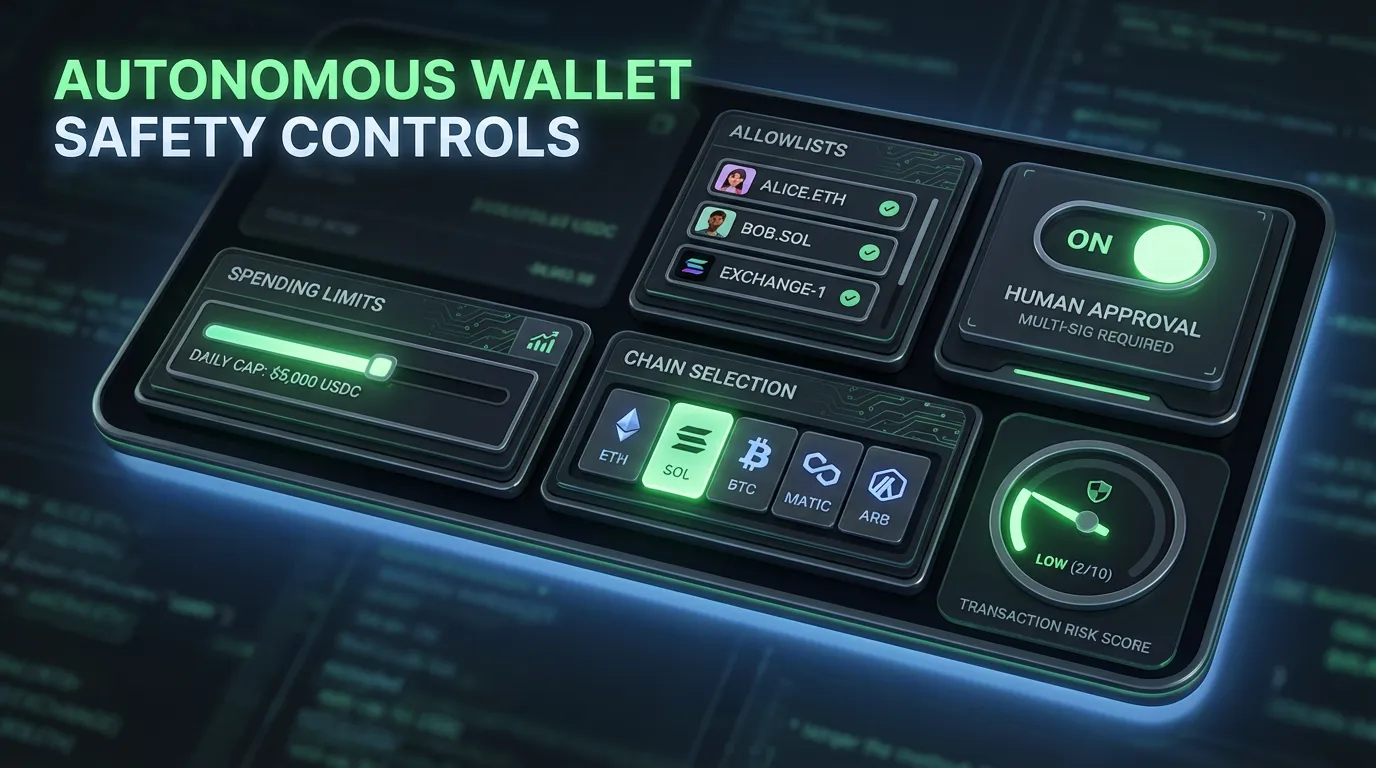
MoonPay's Open Wallet Standard is significant because it places policy controls at the center of wallet design for AI agents. Coinbase AgentKit is also important, but it is more developer-tooling focused. OKX has signaled AI-agent relevance through its Web3 positioning, while ClawVault is framing itself as a rules layer between agents and wallets.
That makes the current market look less like a simple product race and more like a debate over how autonomous wallets should be governed.
| Project | Main focus | Policy engines emphasis | Market signal |
|---|---|---|---|
| MoonPay Open Wallet Standard | Open-source wallet standard | High | Policy-aware infrastructure for AI wallets |
| Coinbase AgentKit | Developer toolkit | Moderate | Faster agent wallet development |
| OKX Web3 | Platform positioning | Unclear publicly | AI-agent relevance in Web3 stack |
| ClawVault | Rules engine layer | High | Security middleware for agent wallets |
Open standards can also help normalize safer defaults for agentic management. Instead of treating policy engines as optional add-ons, the industry is starting to treat them as core infrastructure.
That matters for wallet users, because AI and agent-driven wallets will eventually touch routine actions like swaps, DApp usage, token approvals, and multi-chain asset movement. In those situations, strong rules are far more valuable than broad freedom.
Where spending limits and agentic management can still fail
Even with better tooling, AI and agent-driven wallets still face a threat model that ordinary wallets do not. The risks are not only about key theft. They also involve bad instructions, unsafe destinations, and machine-speed execution.
Key failure points include:
- prompt injection that changes what an agent thinks it should do
- phishing links or spoofed DApps
- malicious contracts hidden behind normal-looking workflows
- unlimited approvals that create downstream risk
- chain confusion in multi-network activity
- over-automation that removes useful human checks
This is why spending limits alone are not enough. Good policy engines need to work together with contract recognition, risk simulation, and approval hygiene. FoxWallet's focus on non-custodial wallet security, phishing protection, and malicious contract detection already matches many of these safety requirements.
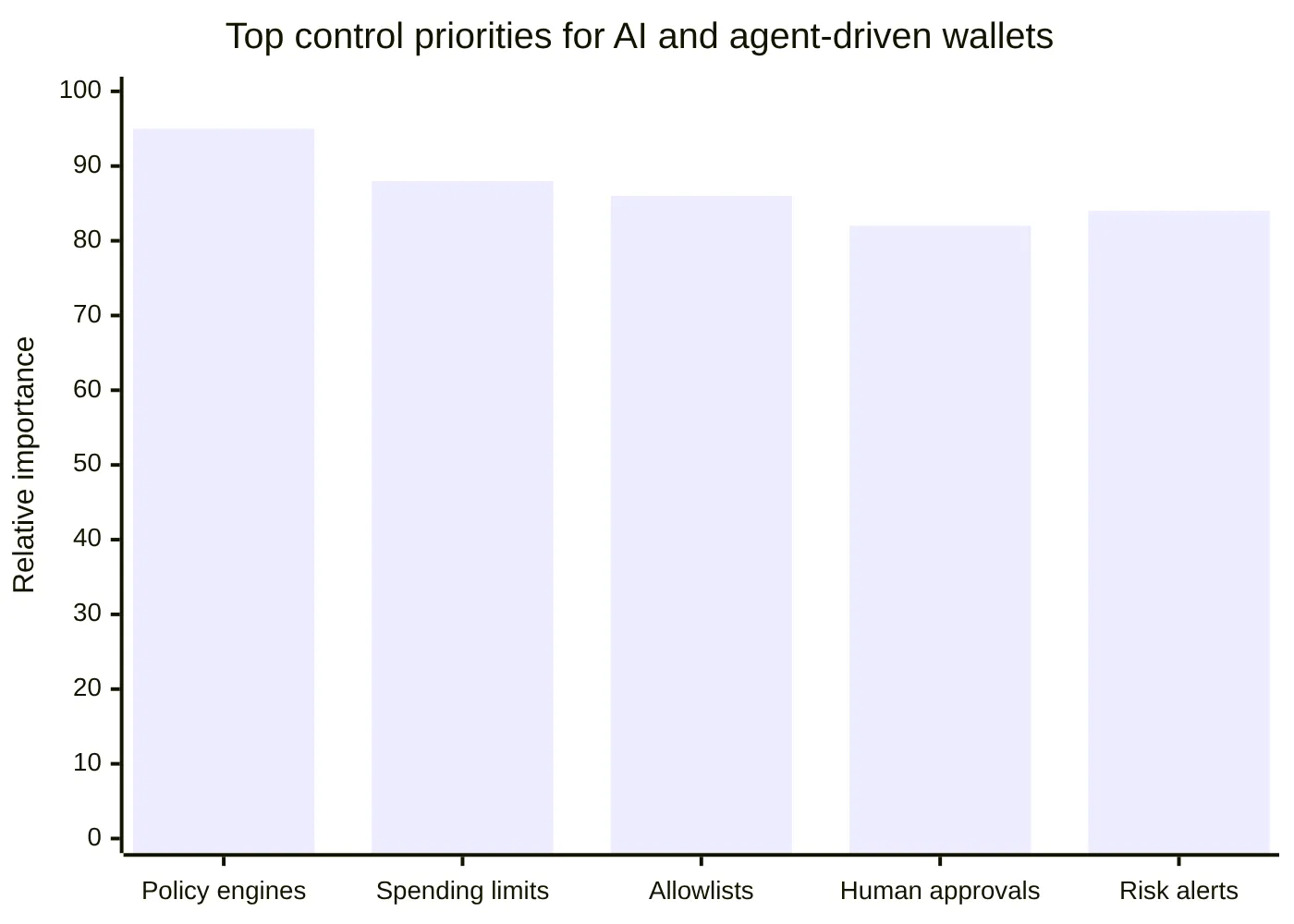
For users operating across chains, the need for visible controls becomes even stronger. A single high-level request from an agent may involve selecting a network, choosing a route, interacting with a DApp, and signing multiple steps. That complexity is exactly why FoxWallet's educational content on cross-chain swap risks and pre-transaction risk alerts is already relevant to this conversation.
How AI and agent-driven wallets affect non-custodial multi-chain wallet design
For self-custody products, AI and agent-driven wallets are not just another interface trend. They change what safe wallet architecture needs to do.
A future-ready non-custodial wallet should support:
- clear user control over delegated actions
- policy engines that apply chain-aware rules
- transparent transaction previews and alerts
- safe DApp access with contract recognition
- unified visibility across networks
- strong mobile and browser workflows for review and control
That is why the next step for wallet design is likely controlled autonomy, not full autonomy. In other words, users will want agents that can help, but only within rules they can inspect, change, and override.
For FoxWallet, this trend reinforces the value of its current strengths: local key encryption, secure self-custody, deep DApp access, real-time multi-chain asset management, mobile and extension availability, and built-in transaction safety checks. Users looking for a secure browser extension wallet or a trusted unified multi-chain asset view should increasingly care about how these features support bounded automation in the future.
The best takeaway is simple: AI and agent-driven wallets will only become trustworthy when policy engines define what agents can do before a signature ever happens. Open-source AI wallet standards, spending limits, and auditable agentic management are moving from niche ideas to core wallet design principles. For the broader self-custody market, that means safer automation will win over unrestricted automation every time.
