


Mastering Web3 Assets With FoxWallet in 2026

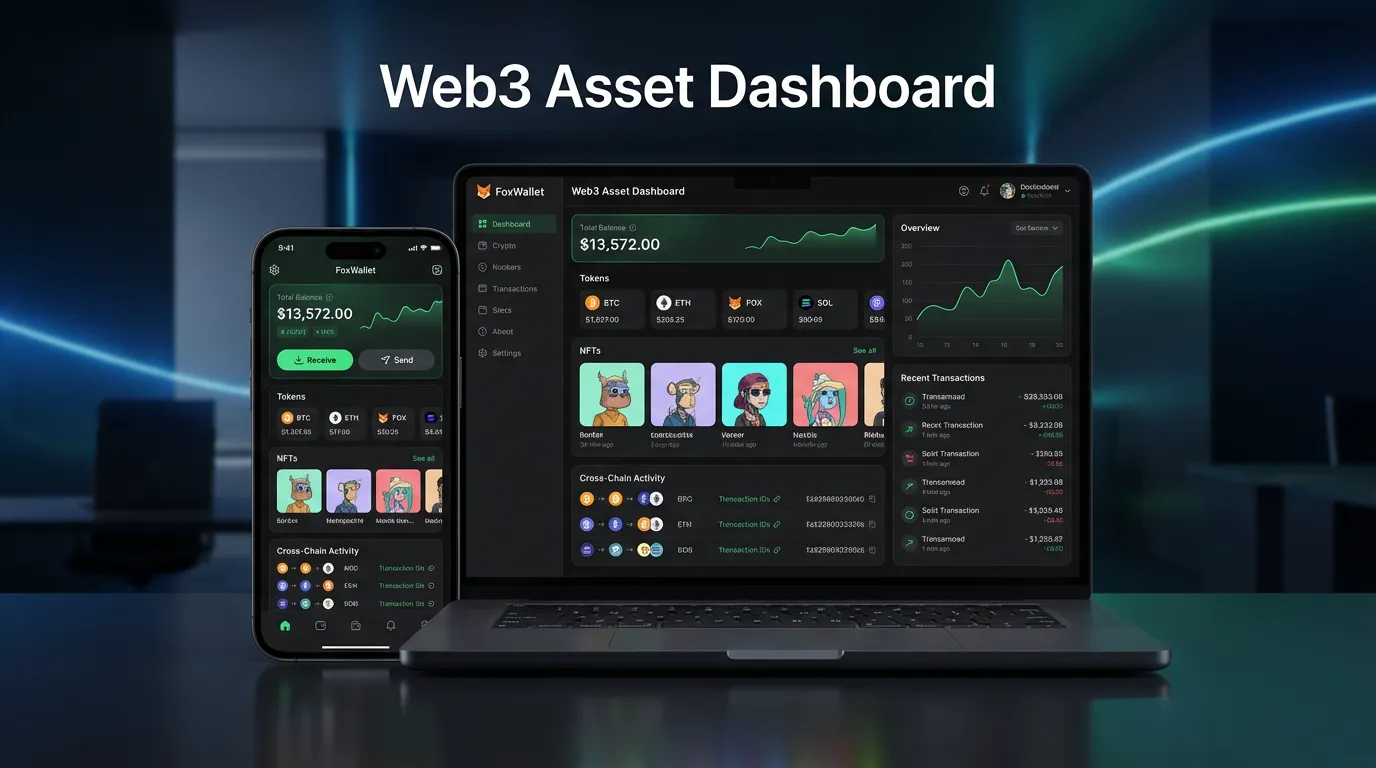
Mastering Web3 assets in 2026 is no longer just about storing a few tokens. Web3 now spans multiple blockchains, smart contracts, NFTs, DeFi positions, on-chain identity, and increasingly complex cross-chain activity. For everyday users, that means one big challenge: how do you stay in control without getting lost in fragmentation, hidden fees, or security risks?
That is where FoxWallet stands out. Built as a non-custodial, multi-chain wallet, FoxWallet is designed to help users manage digital assets across more than 100 blockchain networks while keeping private keys locally encrypted on the user device. It also combines built-in DApp access, native cross-chain swap routing, and security protections such as phishing detection, high-risk signature checks, and token authorization monitoring.
According to broad Web3 explainers from Chainlink's Web3 education hub, AWS's Web3 overview, and McKinsey's Web3 explainer, Web3 is defined by decentralization, user ownership, open protocols, and blockchain-based identity. In that world, your wallet becomes more than a balance checker. It becomes your access point, transaction signer, and control center.
If your goal is to use Web3 with more confidence in 2026, this guide explains how to do that with FoxWallet, from setup and asset organization to safer on-chain activity and practical everyday habits.
Why Web3 asset management in 2026 requires a different approach
Web3 in 2026 is broader than early crypto. Users now manage several different asset categories at once:
| Web3 asset type | What it includes | Why it matters |
|---|---|---|
| Native chain assets | ETH, BTC, SOL, MATIC, ARB and others | Used for gas, payments, and chain activity |
| Fungible tokens | ERC-20 and similar standards | Power DeFi, governance, gaming, and utilities |
| Stablecoins | USDT, USDC, and similar assets | Often used as on-chain cash equivalents |
| NFTs | Art, collectibles, access passes, in-game assets | Represent digital ownership and identity |
| DeFi positions | Lending positions, LP tokens, vault shares | Reflect active participation in protocols |
| Tokenized assets | Real-world asset representations | Expand Web3 beyond purely digital assets |
This shift creates three practical realities.
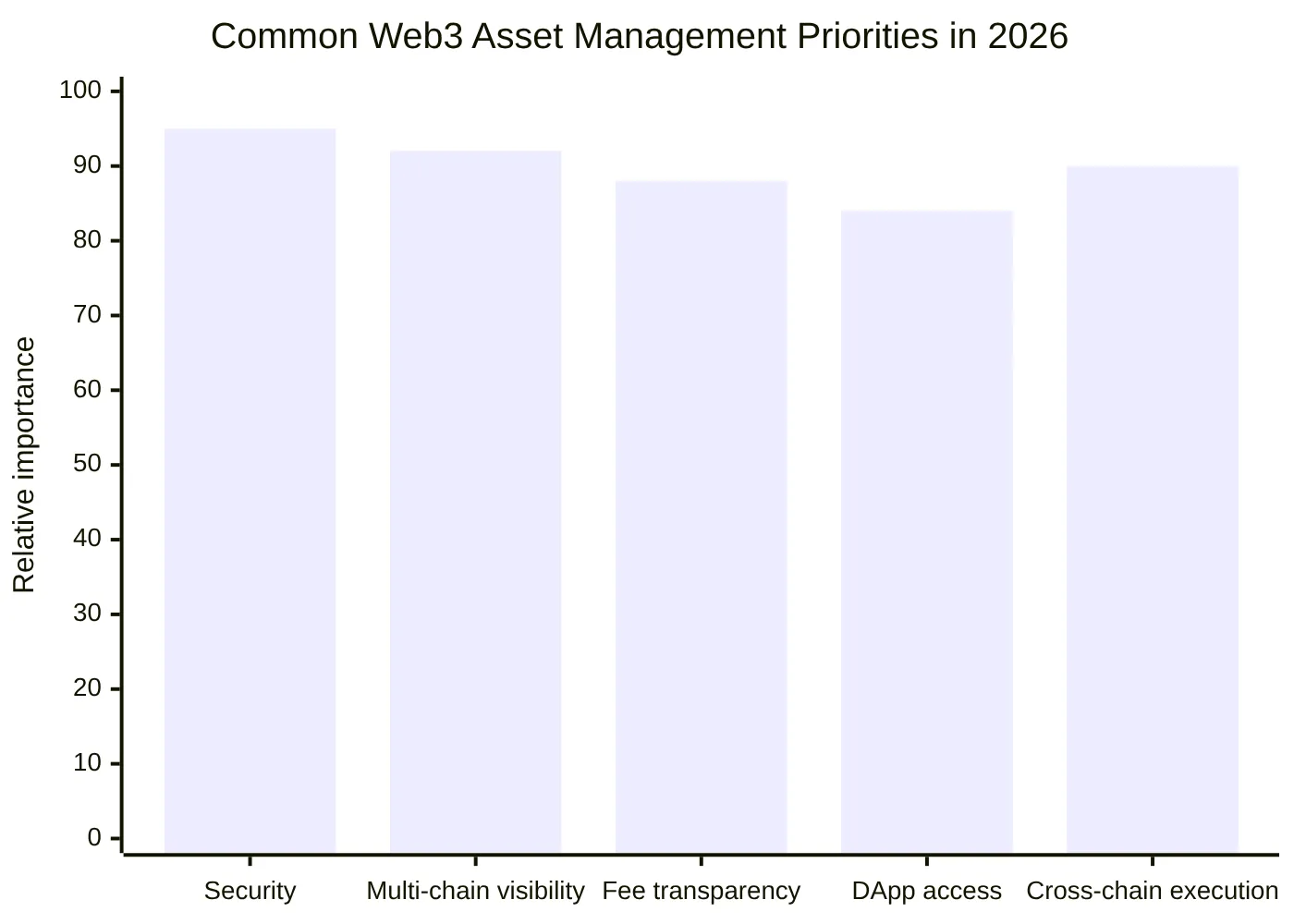
First, Web3 is multi-chain by default. Users often hold assets across Ethereum, Layer 2 networks, Solana, Bitcoin-related ecosystems, and other chains. Second, DApps are now central to the experience. Third, self-custody matters more because many users prefer to keep control of their private keys rather than rely on centralized intermediaries.
That is why a modern Web3 wallet must do more than show balances. It must help users understand where assets live, what approvals are active, what risks a transaction may carry, and how to move efficiently across supported networks.
FoxWallet is positioned around exactly that need. On the official FoxWallet website, the wallet is presented as a leading multi-chain wallet solution with over 100 supported blockchains, NFT and ERC-20 support, and a security-first architecture built around local private key encryption and advanced protections.
How FoxWallet helps you master Web3 securely
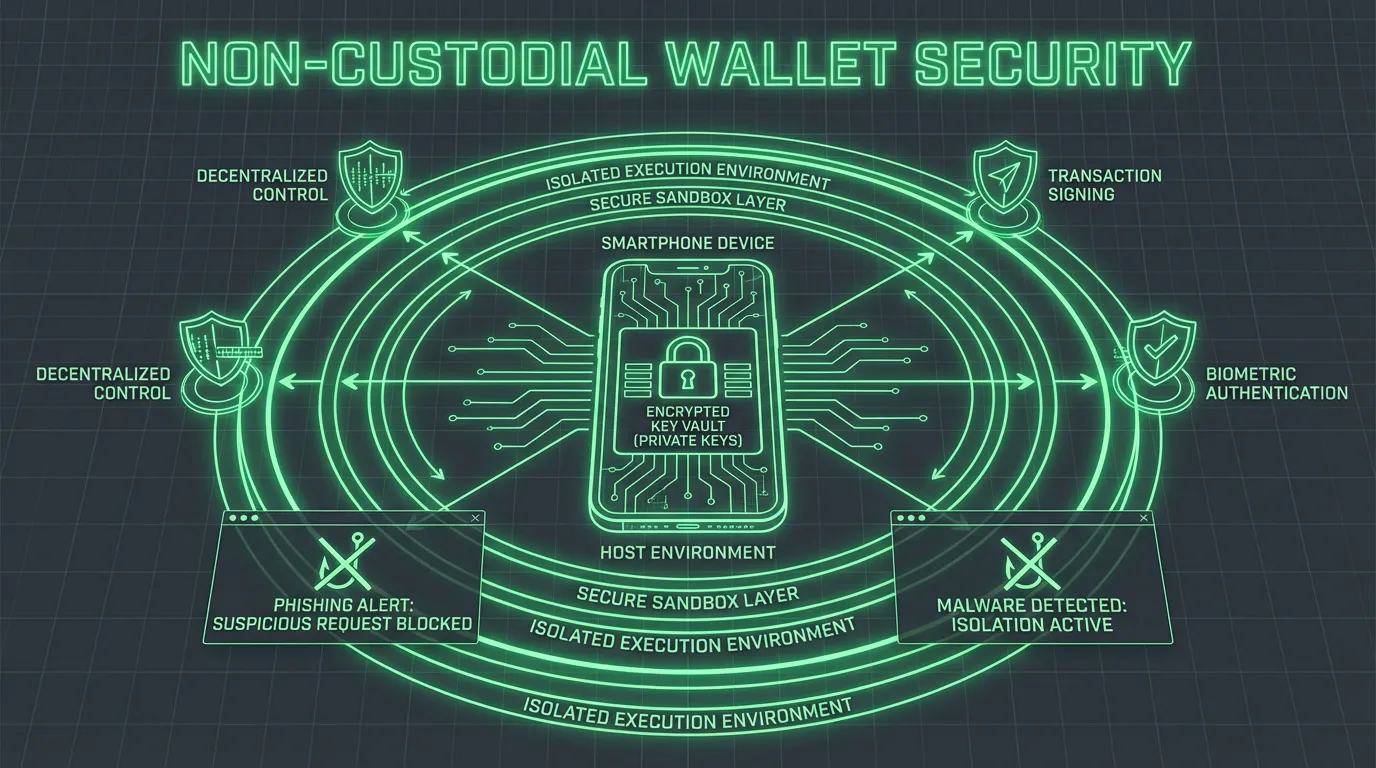
A major reason users struggle in Web3 is not lack of opportunity. It is risk. Fake websites, malicious approvals, confusing routes, and poor visibility can all lead to costly mistakes. FoxWallet addresses those pain points through a combination of non-custodial control and wallet-level protections.
Non-custodial control with local encryption
FoxWallet is fully non-custodial. That means users retain control of their private keys and assets. The wallet does not hold customer funds and does not rely on server-side custody to authorize transactions. Based on the research report and FoxWallet's official site, private keys and mnemonic data are stored locally and encrypted on the user device.
This matters because self-custody changes the trust model. Instead of asking a platform to protect your funds for you, you use a client-side tool that gives you direct ownership. That reduces reliance on a centralized operator, but it also means your own backup and security habits matter more.
Security features designed for real Web3 threats
FoxWallet emphasizes more than basic wallet storage. It also includes:
- Automatic identification and blocking of phishing websites.
- Verification of high-risk signatures before confirmation.
- Monitoring of token authorizations.
- Pre-transaction risk alerts and smart contract recognition.
- Secure sandbox isolation for local key protection.
These features are especially relevant in a Web3 environment where users increasingly interact with DApps, token approvals, and cross-chain routes. The FoxWallet cross-chain risk guide reinforces this by highlighting route complexity, fee visibility, approval risks, and the importance of understanding transaction paths before signing.
Multi-chain coverage that reduces fragmentation
One of FoxWallet's clearest strengths is broad chain support. The research report cites FoxWallet as supporting over 100 blockchain networks, including Bitcoin, Ethereum, and Solana. That broad support matters because Web3 users no longer operate in one ecosystem alone.
Instead of managing isolated wallets for separate chains, users can consolidate visibility inside FoxWallet. This helps reduce one of the biggest friction points in Web3: having assets scattered across ecosystems with no unified overview.
For users who want to explore related platform updates and comparisons, FoxWallet also publishes educational content in the FoxWallet blog and market context in Best Wallets 2026.
How to use FoxWallet to organize Web3 assets across chains
The simplest way to master Web3 is to stop treating it as a collection of isolated apps and start treating it as a structured portfolio. FoxWallet supports that mindset with unified multi-chain asset visibility, automatic detection of assets and NFTs, and real-time synchronization of on-chain status.
Step 1: Set up your Web3 foundation correctly
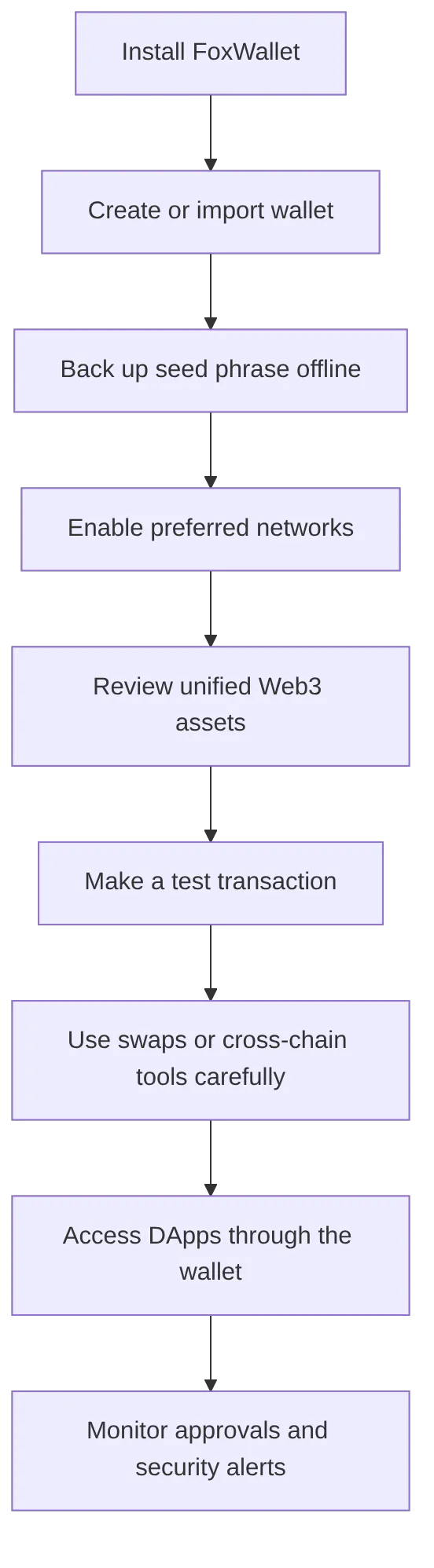
Start by downloading FoxWallet and creating or importing a wallet. If you create a new one, back up the seed phrase offline immediately. Never store it in an unsecured note, message thread, or random website form.
Your seed phrase is the master key to your Web3 assets. FoxWallet helps protect locally stored key data, but no wallet can protect a user who exposes the phrase carelessly.
Step 2: Enable the networks you actually use
Not every user needs every chain. A practical approach is to enable the networks you plan to use most often. For example, you may use one set of chains for DeFi, another for NFTs, and another for long-term holdings.
FoxWallet's multi-chain interface makes it easier to keep these environments inside one wallet experience rather than splitting them across several tools. That saves time and lowers the chance of sending assets through the wrong workflow.
Step 3: Review detected tokens and NFTs
Automatic token and NFT detection helps reduce the manual work of tracking a Web3 portfolio. Once assets appear, organize them around how you actually use them:
- Core holdings you monitor regularly.
- Active trading assets.
- DeFi-related assets and protocol positions.
- NFT collections and ecosystem-specific items.
- Experimental assets you want to keep separate mentally.
This kind of organization may sound simple, but it is one of the best ways to make Web3 manageable over time.
Step 4: Check chain context before every action
A large share of Web3 mistakes happen because users focus on the token name and ignore the network. Before sending, receiving, or trading anything, confirm:
- The source chain.
- The destination chain.
- The token contract or asset identity.
- The expected fee structure.
- The approval being requested.
FoxWallet's unified interface helps reduce this confusion by surfacing network context directly in the wallet flow.
How FoxWallet improves Web3 swaps, DApps, and daily workflows
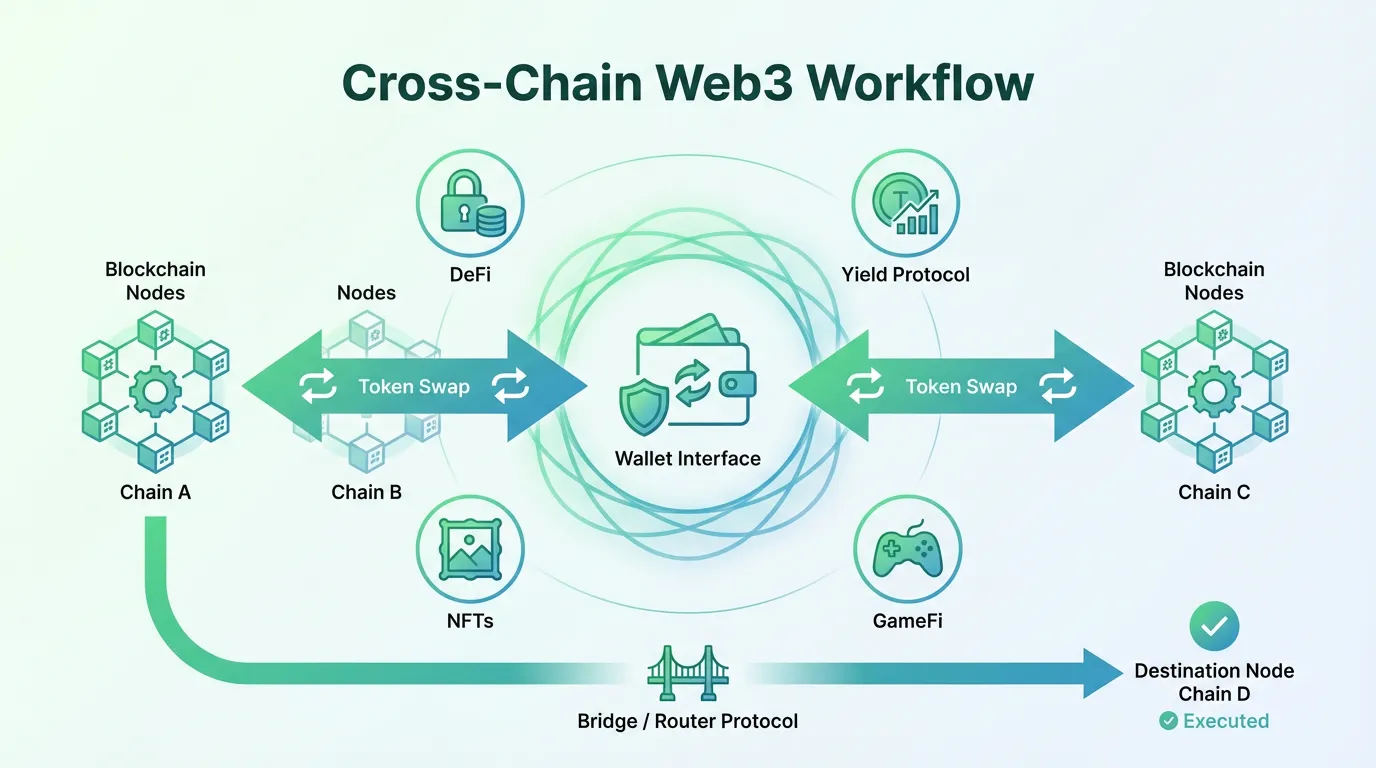
In 2026, Web3 participation is active, not passive. Users swap, explore DApps, manage NFTs, and rebalance funds across networks. FoxWallet is built to support those practical workflows in one place.
Built-in Web3 cross-chain swap functionality
FoxWallet integrates multi-chain swap aggregators natively. According to the research report and the FoxWallet cross-chain swap risks guide, the wallet can surface:
- Total fee breakdown.
- Expected slippage.
- Route complexity.
- Estimated completion times.
That transparency is valuable because many Web3 users lose money not through hacks, but through poor route selection, hidden fees, or low-liquidity execution. FoxWallet's approach is built around improving route quality and making the tradeoffs clearer before confirmation.
Just as important, FoxWallet's positioning stresses lower swap fees and reduced hidden costs over time, particularly for frequent multi-chain users.
Web3 DApp access without constant friction
A strong Web3 wallet should also be a gateway to DApps. FoxWallet includes a built-in DApp browser that supports interaction with DeFi, NFTs, GameFi, and other on-chain applications. This improves workflow continuity by reducing the need to jump between separate tools or repeat wallet connection steps constantly.
Safe DApp use still depends on user discipline. The best practice is to begin from trusted in-wallet navigation, review the site carefully, and read approval requests before signing. FoxWallet's phishing detection and smart contract risk overlays help reinforce those habits.
A practical comparison of FoxWallet strengths
| Capability | Why it matters in Web3 | How FoxWallet helps |
|---|---|---|
| Non-custodial design | You control keys and funds | Local encryption and user-held access |
| Multi-chain management | Assets live across many ecosystems | Unified view across 100+ chains |
| Cross-chain execution | Users often move value between networks | Native aggregator-based routing |
| DApp integration | Web3 activity happens through apps | Built-in DApp browser |
| Risk protection | Approvals and signatures can be dangerous | Phishing blocking, signature checks, authorization monitoring |
For broader reading on wallet trends and why these features matter in the current market, the FoxWallet Best Wallets 2026 article adds more context.
Web3 best practices for beginners and advanced users in 2026
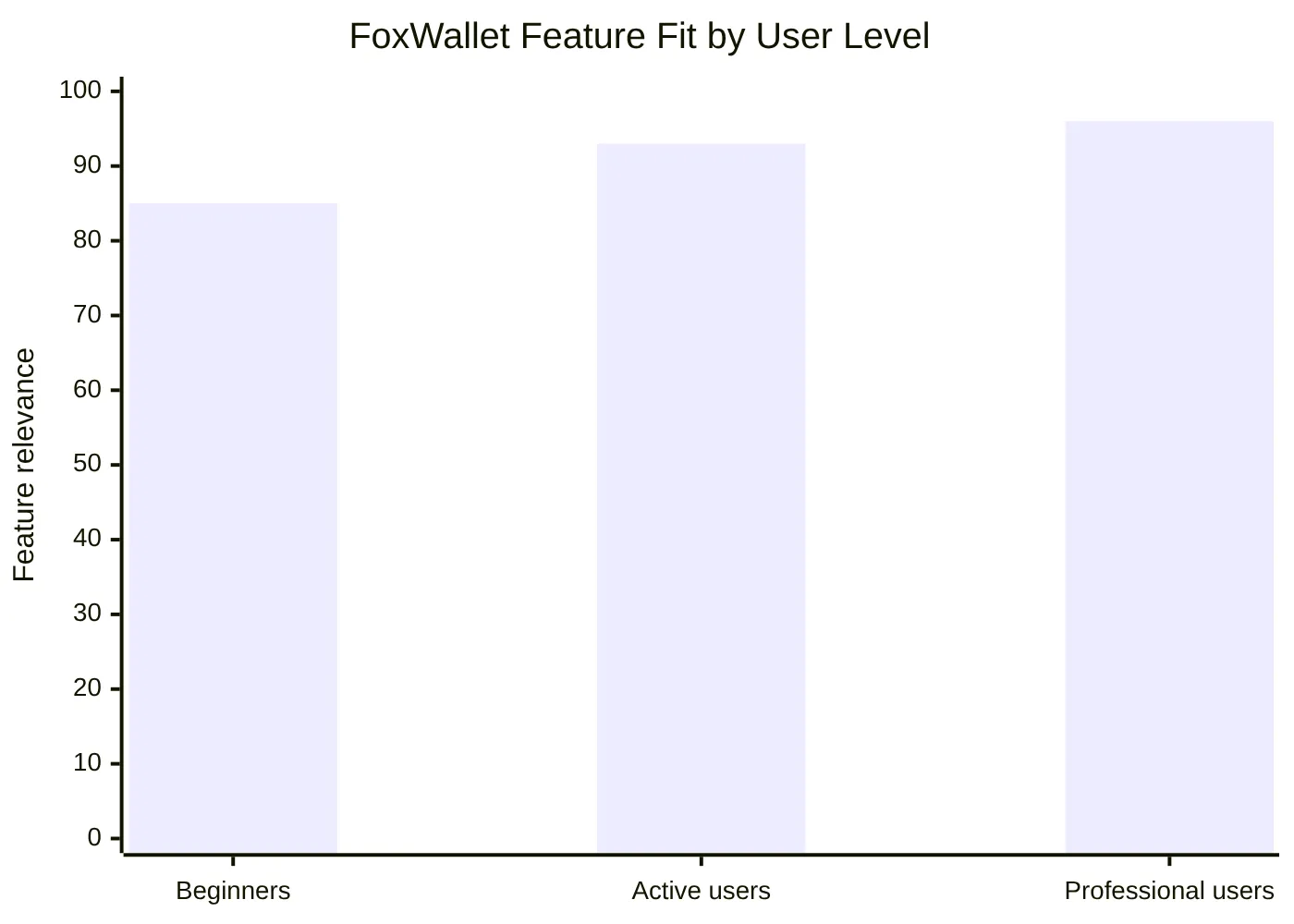
The best wallet setup is not just about features. It is about habits. FoxWallet is designed for beginners, advanced users, and professionals, but each group gets the most value when using a clear process.
For Web3 beginners
If you are just starting with Web3:
- Use FoxWallet as your main wallet interface.
- Back up your seed phrase offline.
- Start with one or two networks you understand.
- Make a small test transaction first.
- Review every signature and approval carefully.
- Use the wallet's security warnings as a hard stop, not a suggestion.
For active Web3 users
If you already use Web3 regularly:
- Consolidate visibility across chains.
- Favor clear routes over overly complex transaction paths.
- Review token authorizations regularly.
- Use fee and slippage visibility to avoid expensive execution.
- Separate high-risk exploration from core holdings where appropriate.
For professional or high-frequency Web3 participants
Advanced users need a wallet that scales with activity. FoxWallet supports that through multi-platform access on mobile and browser extension, strong multi-chain coverage, and route-level information for on-chain and cross-chain activity. For users who interact with Web3 markets often, cost efficiency and risk alerts become especially important over time.
A simple user journey looks like this:
Why FoxWallet is a strong Web3 choice in 2026
Web3 in 2026 is more powerful than ever, but also more demanding. Users need a wallet that can handle multi-chain assets, support daily DApp activity, simplify complex routing, and still protect self-custody at the core.
FoxWallet fits that role well because it combines the features users actually need in real Web3 usage:
- Fully non-custodial design.
- Local private key encryption.
- Support for more than 100 blockchains.
- Unified asset and NFT visibility.
- Built-in cross-chain swap aggregation.
- DApp browser access for DeFi, NFTs, and GameFi.
- Phishing detection, signature risk checks, and token authorization monitoring.
- Mobile and browser extension support for flexible workflows.
If your goal is to build a smarter, safer, and more organized Web3 routine, FoxWallet offers a practical path forward. You can start by downloading it from the official download page, learn more through the FoxWallet blog, and deepen your understanding with guides like Cross-Chain Swap Risks 2026 and Best Wallets 2026.
Mastering Web3 is ultimately about control, clarity, and consistency. With the right wallet and the right habits, that goal becomes much more achievable.