

Where Can I Buy Bitcoin? 2026 Secure Wallet Guide

Where can I buy Bitcoin in 2026? Your main options (and what to do right after)
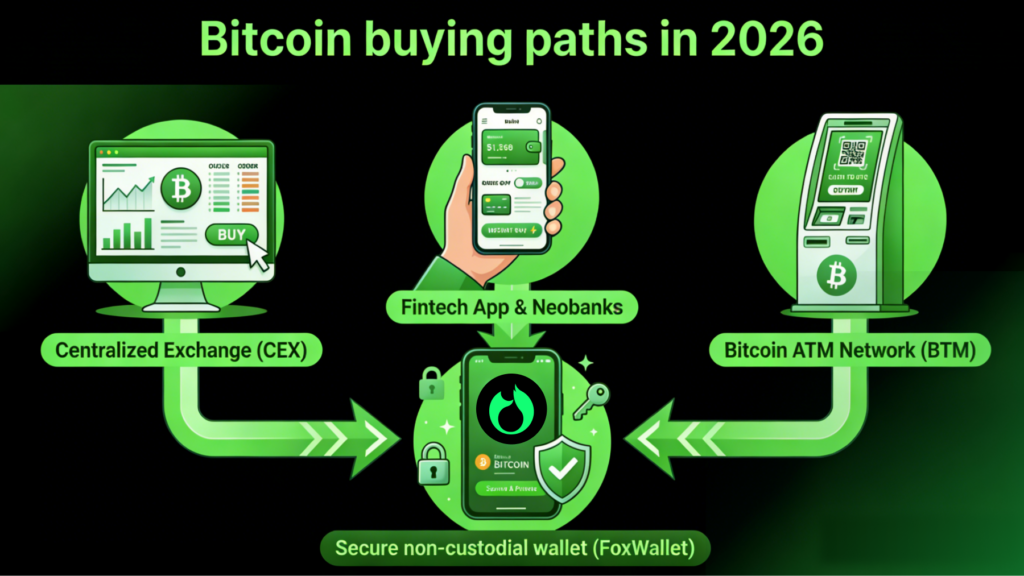
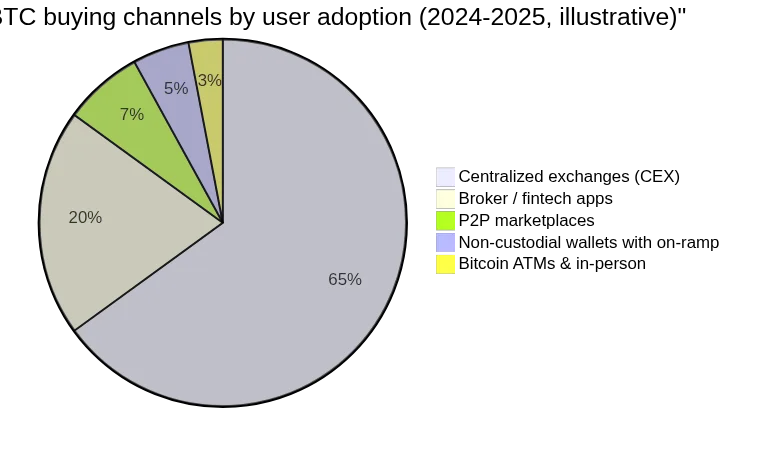
In 2026, most people who ask where can I buy Bitcoin end up choosing one of four routes, each with different tradeoffs on fees, speed, and custody:
- Centralized exchanges (CEXs): You create an account, complete identity checks, deposit funds, and buy BTC. This remains the dominant route in most mainstream guides because of liquidity and pricing. Sources: Milk Road buying guide, NerdWallet.
- Broker and fintech apps: You buy inside a familiar app experience, often optimized for small recurring purchases, but usually custodial and sometimes fee-heavy via spreads. Sources: Business Insider, NerdWallet.
- P2P marketplaces: You buy from another person using platform escrow. Useful in some regions, but higher scam and counterparty risk. Source: KuCoin learn.
- Bitcoin ATMs and in-person services: Convenient for cash, but typically the most expensive channel. Source: Bitcoin Depot guide.
One critical point that many "best places to buy" lists underemphasize: buying is only step one. Step two is deciding who controls the keys after purchase. The custody debate (custodial vs self-custody) is a core safety topic post-FTX and amid tightening regulation. Sources: MetaMask custody debate, Chainalysis regulatory round-up.
Quick comparison: fees, custody, and "best for"
Use the table below to shortlist the channel that fits your situation, then plan your storage immediately.
| Buying method | Typical experience | Custody by default | Typical cost profile (illustrative) | Best for | Key risk to manage |
|---|---|---|---|---|---|
| Centralized exchange (CEX) | Account + KYC + deposit + trade | Custodial until you withdraw | Often low explicit trading fees; fee schedules vary (commonly under 1 percent for many users) | Larger buys, best execution, more control over order types | Leaving funds on-platform (counterparty risk) |
| Broker / fintech app | Buy in a familiar app | Usually custodial | Often embedded spread, commonly higher than active trading venues (examples often cited in mainstream guides) | Beginners, small recurring buys | Limited on-chain control and withdrawal friction |
| P2P marketplace | Choose offer + pay seller + escrow release | Mixed (escrow) | Pricing varies widely | Users needing local payment rails | Scams, chargebacks, manual errors |
| Bitcoin ATM | Cash or card at kiosk | Self-custody possible (you provide address) | Often very high fees (commonly cited 10 to 20 percent) | Cash-heavy users, fast access | Overpaying, kiosk operator quality |
Tutorial: buy BTC, then move it into self-custody with FoxWallet
This workflow is designed for US users who want a practical answer to where can I buy Bitcoin, while also avoiding the common mistake of treating a buying platform as a long-term vault.
Step 1: Choose your buying venue based on your priority
- If you want better pricing and liquidity, a CEX is often the starting point. Source: Milk Road.
- If you want simplicity, a broker or fintech app can be easier for a first purchase. Source: Business Insider.
In most regulated fiat on-ramps, expect identity verification requirements. Source: Chainalysis regulatory round-up.
Step 2: Set up your self-custody destination first (so you do not rush later)
Create a wallet that is non-custodial, meaning you control the private keys rather than a platform holding them on your behalf. Background reading: BitGo on custodial vs non-custodial.
For a multi-chain, non-custodial setup built for both beginners and advanced users, use FoxWallet:
- Full user control: private keys stay with you (not a platform).
- Locally encrypted key storage and security-first architecture.
- Multi-chain asset management with a unified view across networks.
- Built-in cross-chain swaps (useful when you are managing assets across ecosystems).
- Risk alerts and contract recognition to help reduce phishing and malicious contract exposure.
Step 3: Copy your receive address carefully (and verify the network)
Inside your wallet:
- Select the asset you want to receive (BTC).
- Tap receive and copy the address.
- Verify you are using the correct network on the sending platform.
Mistakes here can be costly. If you are withdrawing from a CEX, you will often be asked to choose a network. Double-check before confirming.
Step 4: Withdraw a small test amount first
Before moving your full balance:
- Send a small test withdrawal.
- Confirm it arrived in your wallet.
- Then send the remainder.
This simple habit reduces the chance that a typo, wrong network selection, or misunderstanding becomes a full-loss event.
Step 5: Confirm final custody: you control the keys
If your BTC is in your non-custodial wallet, you have reduced counterparty exposure compared with leaving funds on a custodial venue. The tradeoff is that you must protect your recovery phrase. Source: MetaMask custody debate.
Safety checklist for buying and storing BTC (2026 scam-resistant basics)
These are the highest-impact checks that align with what major consumer and industry guides repeatedly emphasize:
- Do not leave long-term holdings on an exchange by default
Many mainstream educational resources highlight counterparty risk and the importance of understanding custody. Sources: NerdWallet, MetaMask custody debate. - Treat your recovery phrase like the asset itself
Anyone with the phrase can take the funds. Lose it and you may not be able to recover access. - Watch for phishing and fake support
Always navigate to official app stores and official domains. Never share your recovery phrase with anyone claiming to be support. - Understand what you are receiving: native BTC vs BTC on other networks
On-chain ecosystems may use tokenized representations (commonly called "wrapped" versions) on non-Bitcoin networks. This matters for compatibility and risk. For context on BTC usage on EVM-compatible networks, see: MetaMask support article. - Expect KYC on fiat rails
In major markets, regulated ramps generally require identity checks, and rules continue to evolve. Sources: Chainalysis regulatory round-up, PWC global crypto regulation report 2025.
After you buy: why FoxWallet is built for multi-chain BTC holders
Buying BTC is increasingly just the start. Many users later interact with Web3 apps, hold assets across multiple networks, or need a cleaner way to monitor everything without juggling multiple tools.
FoxWallet is designed as a secure, non-custodial "home base" with:
- One-stop multi-chain asset management: automatic detection of assets and a unified cross-chain view.
- Built-in cross-chain swaps: routing for pricing and liquidity, aiming to reduce slippage and hidden costs for frequent cross-chain users.
- DApp ecosystem integration: a built-in browser to access Web3 apps with fewer redirects and safer approval flows.
- Security architecture: local encryption, sandbox isolation, and pre-transaction risk alerts.
If your goal is not only to answer where can I buy Bitcoin, but also to keep it safer after the purchase, set up FoxWallet first, then buy through your preferred regulated venue and withdraw into self-custody.