


Low-Fee USDT Wallet for Cross-Chain Transactions

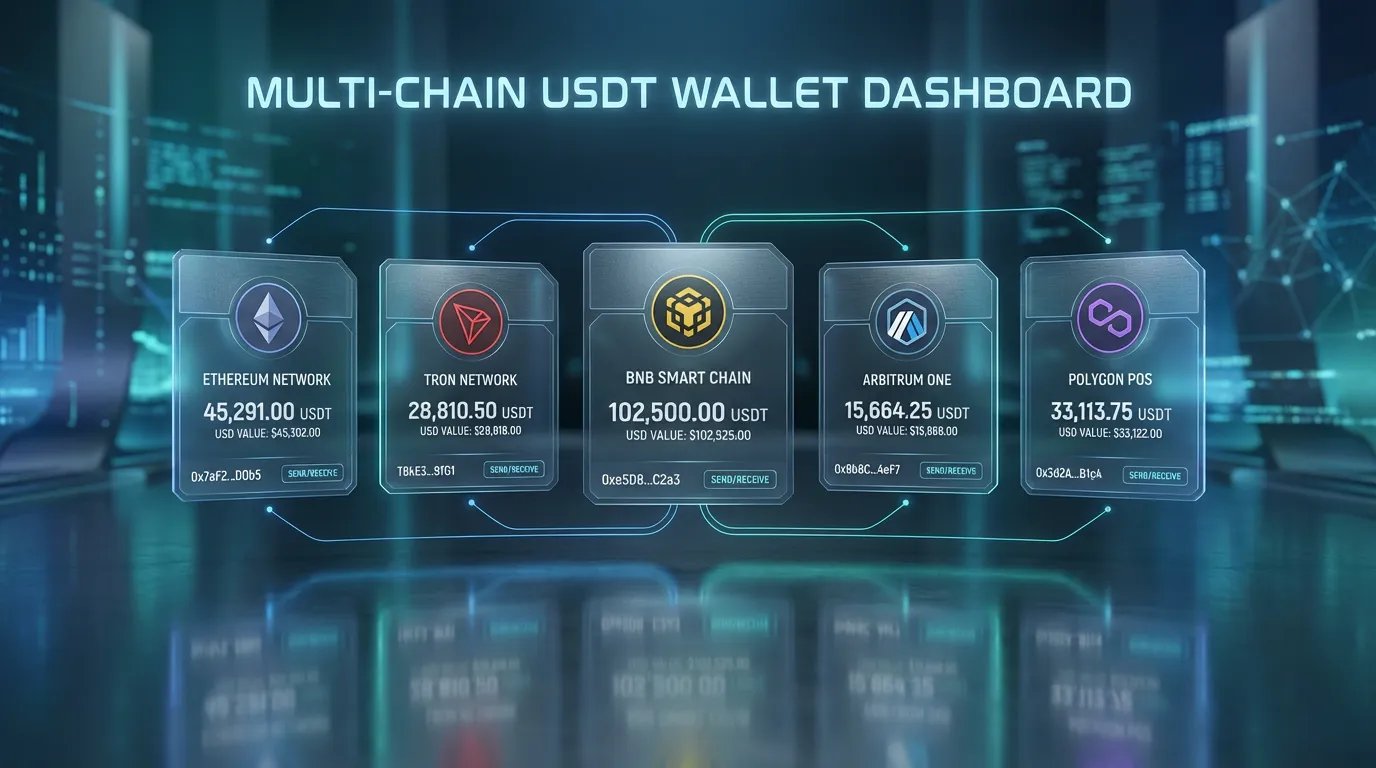
USDT remains one of the most practical assets in crypto because it is widely used for trading, payments, and moving capital between ecosystems. But the wallet you choose matters more than many users realize. A good USDT wallet does not just store tokens. It should help you control fees, reduce unnecessary steps, and keep assets safe while you move between chains like Ethereum, Tron, BNB Smart Chain, and Layer 2 networks.
For users who care about cost efficiency, FoxWallet stands out as a strong option. As a multi-chain, non-custodial wallet, FoxWallet is designed around self-custody, unified asset management, built-in cross-chain swaps, and secure Web3 access across mobile and desktop. According to the FoxWallet Help Center, users keep full control of private keys while benefiting from local encryption, real-time asset syncing, and integrated cross-chain tools.
Why low-fee cross-chain USDT usage depends on wallet design
USDT exists on multiple blockchains, and each network comes with a different cost structure. Tether and CoinMarketCap show that USDT is issued across Ethereum, Tron, BNB Smart Chain, Solana, and other networks. That means a transfer can be cheap or expensive depending on the chain you use.
For example:
- Ethereum often has deeper DeFi liquidity, but gas fees can be significantly higher.
- Tron is widely known for very low transfer costs.
- BNB Smart Chain and Polygon often offer lower-cost activity than Ethereum mainnet.
- Arbitrum and Optimism reduce Ethereum-style costs while keeping access to major DeFi ecosystems.
FoxWallet vs other wallets for USDT cross-chain transactions
When comparing wallets for cross-chain USDT activity, five areas matter most: chain coverage, cross-chain routing, fee efficiency, security, and usability.
| Wallet | Cross-chain USDT focus | Fee efficiency | Security model | Platform support |
|---|---|---|---|---|
| FoxWallet | Built-in multi-chain and cross-chain routing | High | Non-custodial, local key encryption | Mobile and browser extension |
| Binance Web3 Wallet | Strong multi-chain support | Medium to high | MPC model tied to Binance ecosystem | Mainly mobile |
| Trust Wallet | Broad chain support | Medium | Non-custodial | Mobile and extension |
| OKX Web3 Wallet | Strong routing and DeFi access | High | Self-custodial | Mobile and extension |
| MetaMask | Strong on EVM chains | Lower for cross-chain USDT workflows | Non-custodial | Mobile and extension |
FoxWallet's main advantage is focus. Some wallets are broad-purpose Web3 tools, while FoxWallet is positioned around multi-chain asset management and efficient cross-chain use. Based on the research report, its built-in swap aggregators are designed to optimize pricing and liquidity while reducing slippage and hidden costs. That matters for users who move stablecoins often, because even small differences in execution can add up over time.
MetaMask remains popular, especially on EVM networks, but its swap feature has a known service fee and cross-chain flows often require extra tools. Binance Web3 Wallet and OKX Web3 Wallet both offer strong functionality, but they are more closely connected to exchange ecosystems. Trust Wallet supports many chains and stablecoin flows well, but it is more generalist in positioning.
What makes FoxWallet a strong fit for frequent USDT users
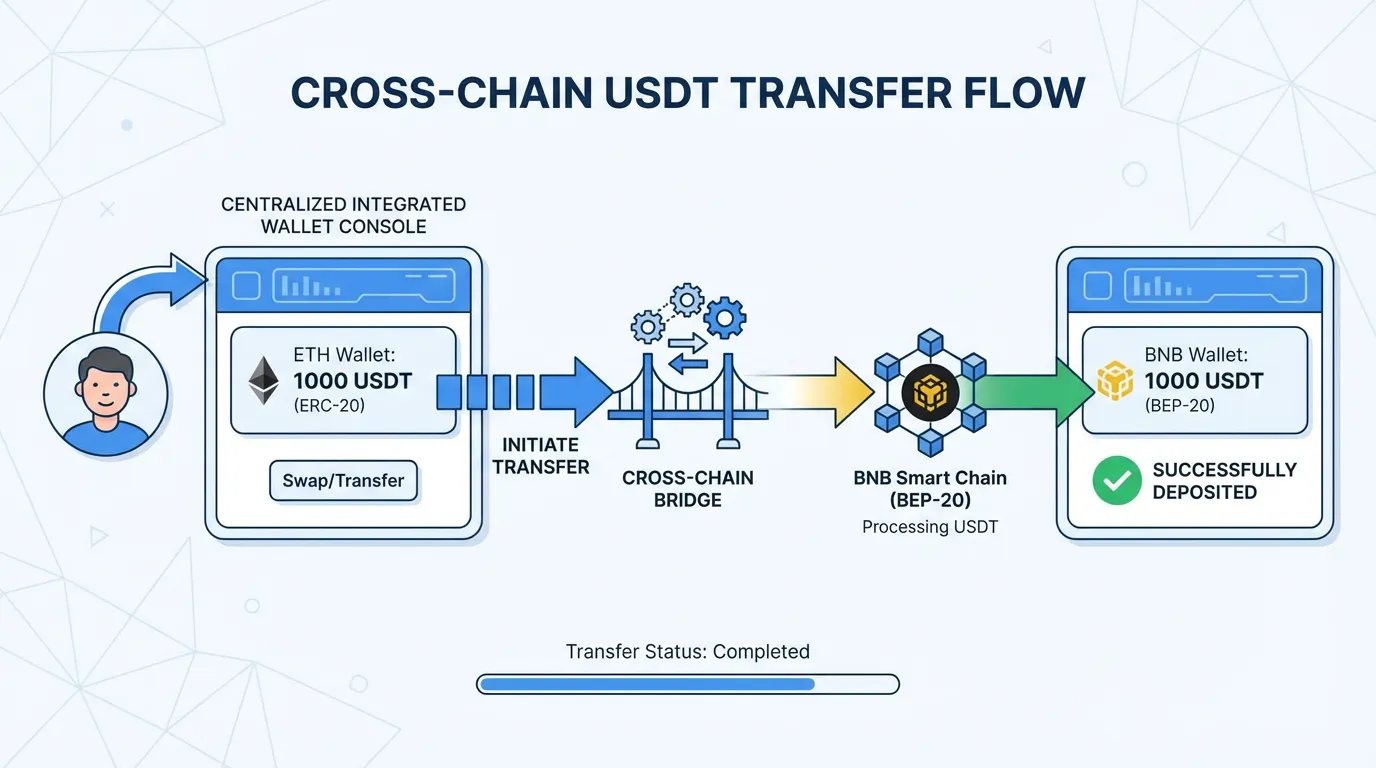
FoxWallet aligns well with what active USDT users typically need:
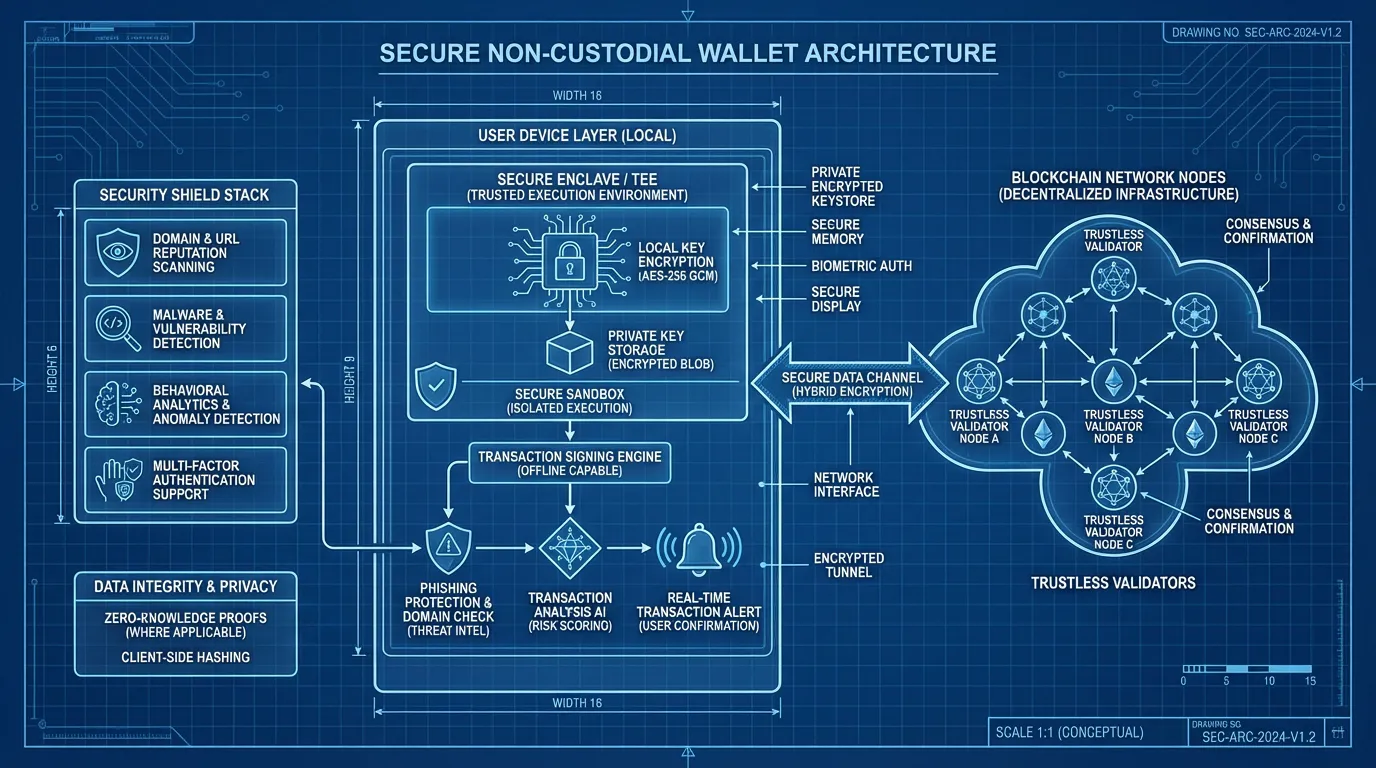
- Full self-custody. Users keep control of mnemonic phrases and private keys, which are encrypted locally rather than held by the platform.
- Unified multi-chain asset view. This reduces confusion when USDT is spread across several networks.
- Built-in cross-chain swaps. Users can handle routing inside the wallet instead of jumping between external bridge and DEX interfaces.
- Mobile and browser extension support. That makes it practical for both casual transfers and desktop-based DeFi usage.
- Security protections. FoxWallet highlights contract recognition, phishing protection, and pre-transaction risk alerts through its documentation and wallet design.
If you want to understand more about its security-focused approach, the FoxWallet Help Center and the account system guide offer useful background. For a broader look at the wallet's multi-chain direction, the FoxWallet blog post on secure multi-chain wallet design is also relevant. Users exploring safer routing practices can also read FoxWallet's guide to cross-chain swap risks. If you are ready to try the wallet, you can use the official FoxWallet download page.
Final comparison takeaway
If your main priority is finding a USDT wallet for low-fee cross-chain transactions, FoxWallet makes a strong case. It combines non-custodial security, multi-chain asset management, integrated cross-chain swaps, and broad platform coverage in one product. Compared with Binance Web3 Wallet, Trust Wallet, OKX Web3 Wallet, and MetaMask, its clearest differentiator is that multi-chain and cross-chain usage sit at the center of the experience.
For beginners, that can mean a cleaner path to sending and swapping USDT with fewer mistakes. For advanced users, it can mean lower hidden costs and better long-term efficiency. For high-frequency users, those savings and workflow improvements may become even more meaningful over time.
If you want a security-first wallet that keeps you in control while simplifying cross-chain USDT activity, FoxWallet is one of the most compelling options in this category today.