


Is Bitcoin Good for Long-Term Holding Right Now? Risks and Opportunities

People searching "bitcoin agora" are usually asking a simple question with big implications: what does Bitcoin mean in the marketplace of value right now, and does it still make sense to hold for the long run?
My view: Bitcoin can still be a reasonable long-term hold for certain people, but only if you accept that the biggest risk is not just price volatility, it is staying solvent, patient, and secure through multi-year drawdowns.

What "bitcoin" signals about long-term intent
Bitcoin has historically delivered enormous upside with brutal downturns. Long-term datasets show repeated drawdowns exceeding 80 percent in prior cycles, even after major bull runs (see drawdown context from Newhedge drawdown data and NYDIG drawdown research). Year-to-year performance has also been extreme, swinging from massive gains to deep losses (examples documented in Slickcharts BTC returns).
Why the long-term debate feels different in 2024 to early 2026
Two forces matter most in the current window:
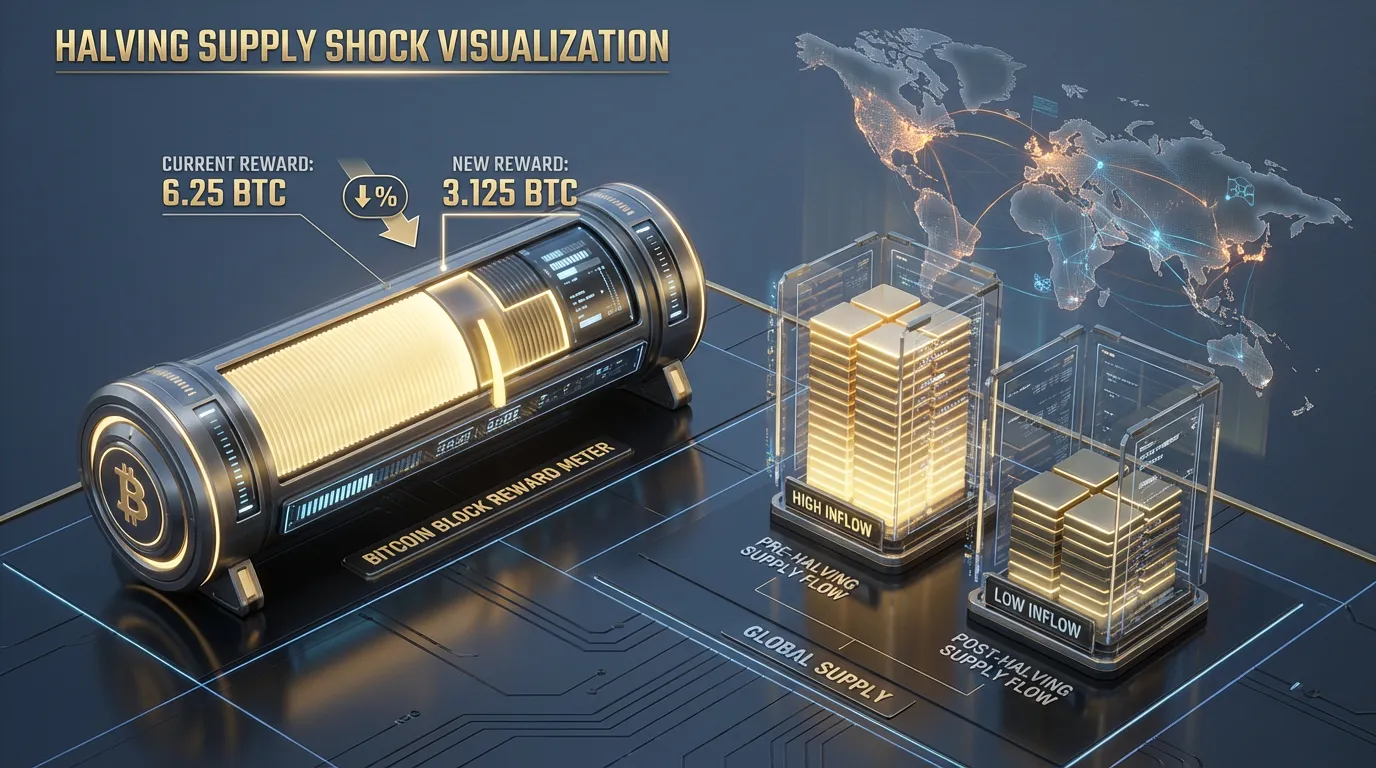
- The 2024 halving cut issuance to 3.125 BTC per block, reinforcing Bitcoin's programmed scarcity (background in the Bitcoin whitepaper and halving explanation from VanEck).
- Spot Bitcoin ETFs opened a more traditional pipeline for institutional exposure, with adoption visible in filings and reports like CoinShares 13F ETF analysis.
The trade-off: ETFs may support demand, but they can also make Bitcoin behave more like a macro, high-beta risk asset at times, especially when liquidity conditions change (discussed in Kraken's 2026 crypto markets overview).
The risks long-term holders cannot ignore
Long-term holding is less about being right eventually and more about surviving the path.
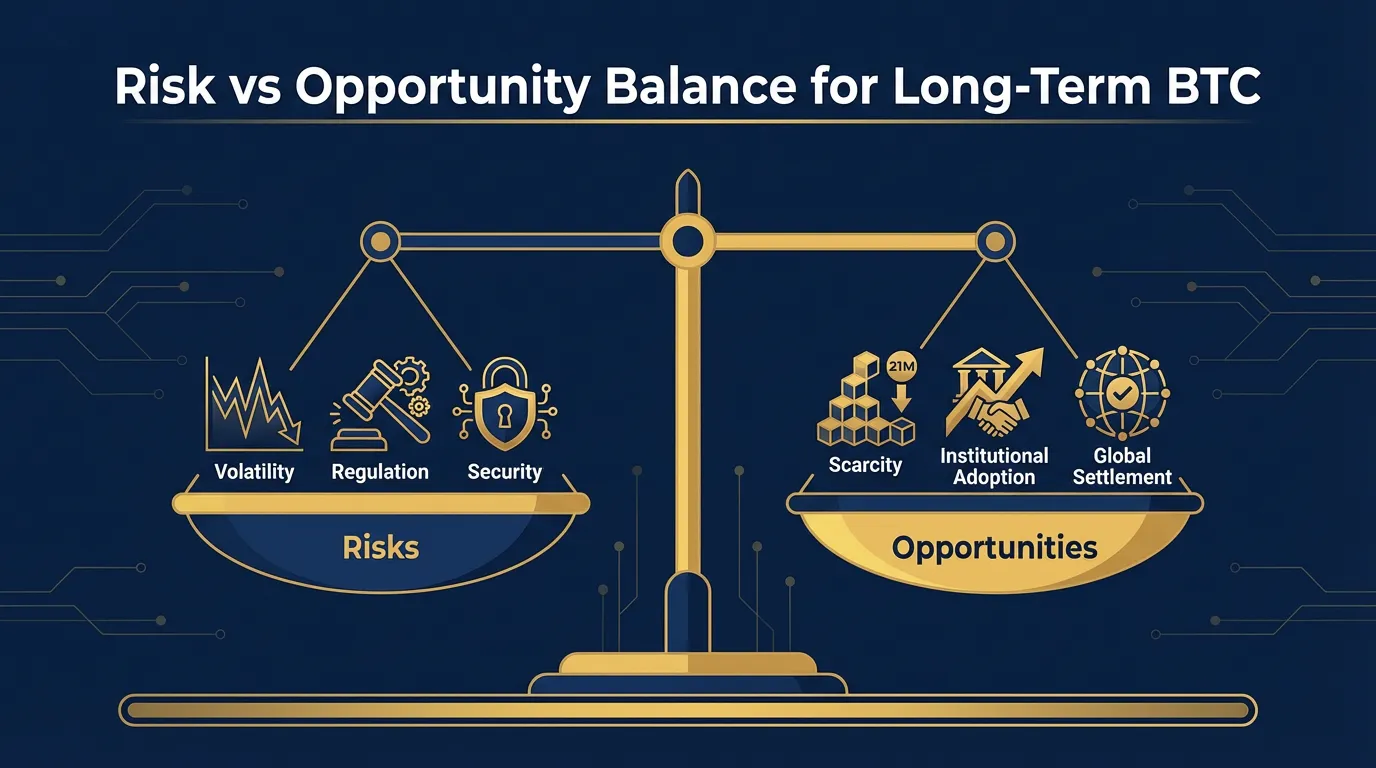
- Market and volatility risk: 50 to 80 percent drawdowns have been historically normal (see Newhedge). If you might need liquidity in a downturn, "long term" can turn into forced selling.
- Regulatory risk: policy can tighten quickly in major regions, as seen with China's comprehensive ban (coverage from The Block).
- Custody and security risk: the history of exchange failures is not theoretical. Mt. Gox and FTX remain the clearest reminders that convenience can carry counterparty risk (reporting from CoinDesk on Mt. Gox and CoinDesk on FTX bankruptcy).
- Protocol tail risks: rare, but real. Bitcoin has patched serious bugs before, like the 2010 overflow issue (explained by CoinDesk).
The opportunities that still make the case compelling
Even critics generally concede Bitcoin's core "why" is unique:
- Hard cap and declining issuance: the 21 million cap and halving schedule support the store-of-value narrative (Bitcoin whitepaper).
- Institutional frameworks are forming: some models discuss small "satellite" allocations, often in the 1 to 5 percent range, as a way to express the thesis while budgeting risk (see scenario work from VanEck capital market assumptions and Bitwise assumptions).
- Open, censorship-resistant settlement: Bitcoin remains relevant where financial access is constrained or trust in institutions is low (macro context in Fidelity Digital Assets research).
A practical framework: holding, custody, and the role of FoxWallet
If you are considering long-term holding, treat the process like a system, not a prediction. The biggest controllables are position sizing, time horizon, and custody.
| Decision | Lower complexity | Higher control |
|---|---|---|
| Where to hold | Custodial platforms (counterparty risk) | Non-custodial wallets (you manage keys) |
| Best for | Short-term convenience, frequent trading | Long-term conviction with self-custody discipline |
| Failure mode | Withdrawals halted, insolvency risk | Seed loss, phishing, device compromise |
For people who choose self-custody and also hold assets across multiple networks, a multi-chain non-custodial wallet can reduce operational friction without giving up key control. FoxWallet is built around non-custodial security (local encryption and user-held keys), multi-chain asset management, and integrated cross-chain swaps for users who rebalance across networks. It also includes a DApp browser and transaction risk alerts designed to help users spot malicious contracts and phishing attempts.
My opinionated bottom line for the "bitcoin" crowd: Bitcoin can be a legitimate long-term idea, but the execution is the investment. If you cannot commit to secure custody habits and a multi-year horizon, the volatility will eventually pressure you into the wrong decision at the wrong time.
If you want to explore self-custody with a multi-chain setup, start small, learn the mechanics, and only then scale usage with a wallet like FoxWallet.