


How to Buy Bitcoin via Cross-Chain Swap (2026)

If you are searching "where can i buy bitcoin" in 2026, you will quickly notice there is no single best answer. The right path depends on what you already have (fiat vs crypto), how much you value self-custody, and whether you want Bitcoin on the native Bitcoin network or Bitcoin exposure on another chain.
The main ways to buy Bitcoin in 2026 (and when each is best)
Most people end up using one of these routes:
| Method | Best for | What you get | Main trade-offs |
|---|---|---|---|
| Centralized exchange (CEX) then withdraw | First-time buyers starting from fiat | Typically native BTC | Requires KYC, custody risk until you withdraw, withdrawal fees and possible spreads |
| Non-custodial wallet + fiat on-ramp partner | People who want self-custody from day one | BTC or a starter asset (often stablecoins) then BTC | Partner fees and availability vary by region, still often KYC |
| Fiat on-ramp apps / payment processors | Convenience-focused buyers | Sometimes custodial BTC | Fees and spreads can be higher, withdrawals may be limited |
| P2P marketplaces | Regions with limited traditional rails | BTC via escrow-based trades | Higher fraud and dispute risk, more manual steps |
| Cross-chain swap (Web3-native) | Users who already hold crypto on another chain | BTC or BTC-backed assets (often WBTC) | Bridge and smart contract risk, fees across multiple chains |
For a broad overview of buying and holding Bitcoin safely (including exchange flows and fees), see the educational breakdown from NerdWallet.
Why cross-chain swaps matter for "where can i buy bitcoin" now
Cross-chain swaps are increasingly relevant because crypto usage is multi-chain. Many people already hold USDT, USDC, ETH, BNB, or SOL and want to rotate into Bitcoin without selling back to fiat and re-buying on an exchange. This trend is part of the broader multi-chain market structure discussed in Kraken's outlook for 2026: Crypto markets in 2026.
A cross-chain swap is essentially an exchange that spans two different blockchains. It often combines a bridge step and a DEX swap step behind the scenes. For background definitions, these explainers are useful:
In practical terms, cross-chain swaps are a strong fit if:
- You already have crypto on a non-Bitcoin chain and want Bitcoin exposure.
- You want to stay self-custodial instead of routing through a centralized platform.
- You care about minimizing friction across networks by using an aggregator-driven route.
Tutorial: buy Bitcoin via cross-chain swap with FoxWallet (2026 workflow)
This walkthrough is written for a Web3-native flow: you start with crypto you already own (for example, stablecoins on an EVM chain) and swap into BTC exposure using a cross-chain route inside a multi-chain wallet.
You will use FoxWallet, a non-custodial, security-first wallet built around multi-chain asset management and integrated cross-chain swap aggregation on both mobile and browser extension.
Step 1: Set up self-custody correctly (do this first)
- Install FoxWallet (mobile or browser extension).
- Create a new wallet.
- Back up your mnemonic phrase securely offline.
- Confirm you understand this rule: FoxWallet is non-custodial, meaning you control the keys and FoxWallet does not hold your funds.
Step 2: Make sure you have a source asset on a supported chain
Common starting points include USDT, USDC, or ETH on networks where you already hold funds. If you are starting from fiat, a common approach is:
- Buy crypto through a regulated on-ramp or exchange.
- Withdraw to your FoxWallet address.
Then you can do the cross-chain swap from inside your wallet.
Step 3: Open Swap and select a cross-chain route
Inside FoxWallet:
- Open the Swap feature.
- Set the "From" asset and chain (example: USDT on an EVM chain).
- Set the "To" asset. Depending on route availability, you may see either:
- Native BTC, or
- A BTC-backed token used in DeFi (commonly WBTC on EVM chains)
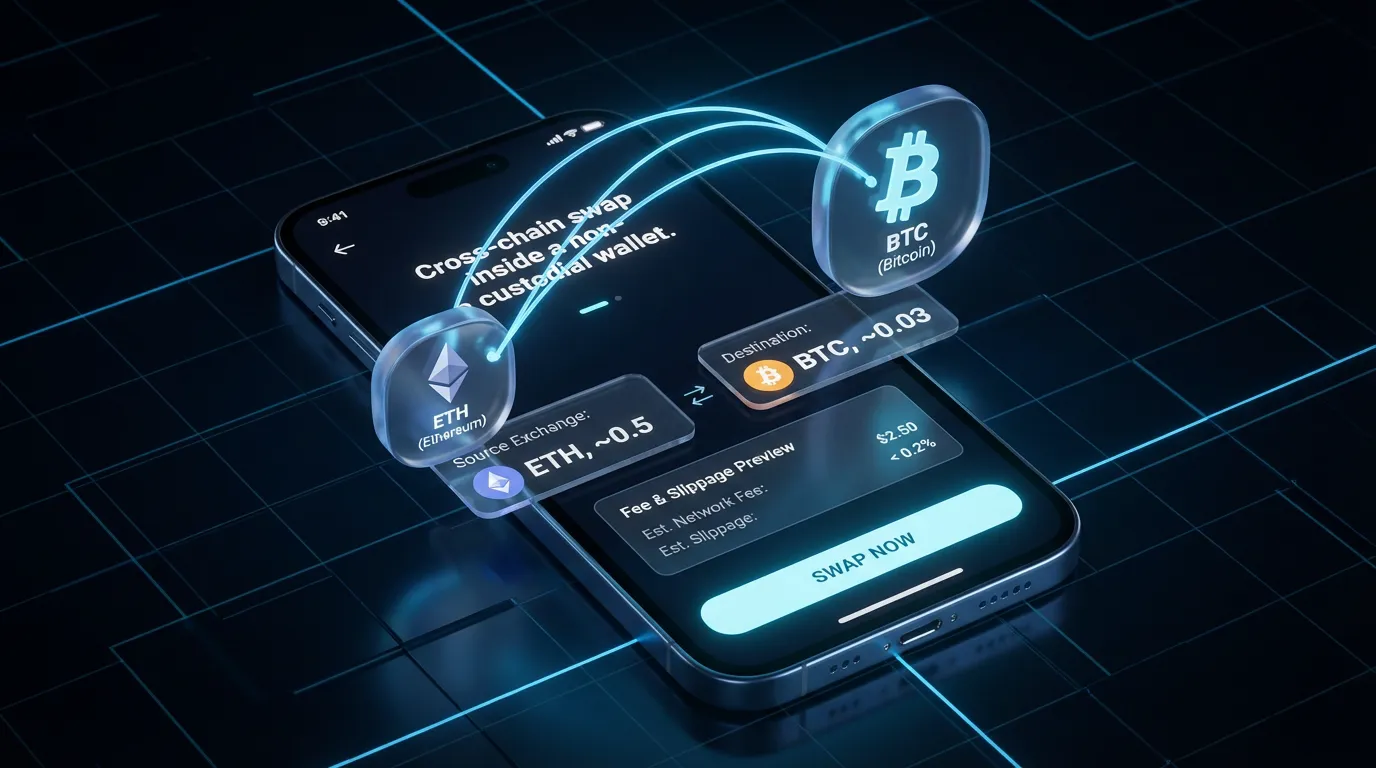
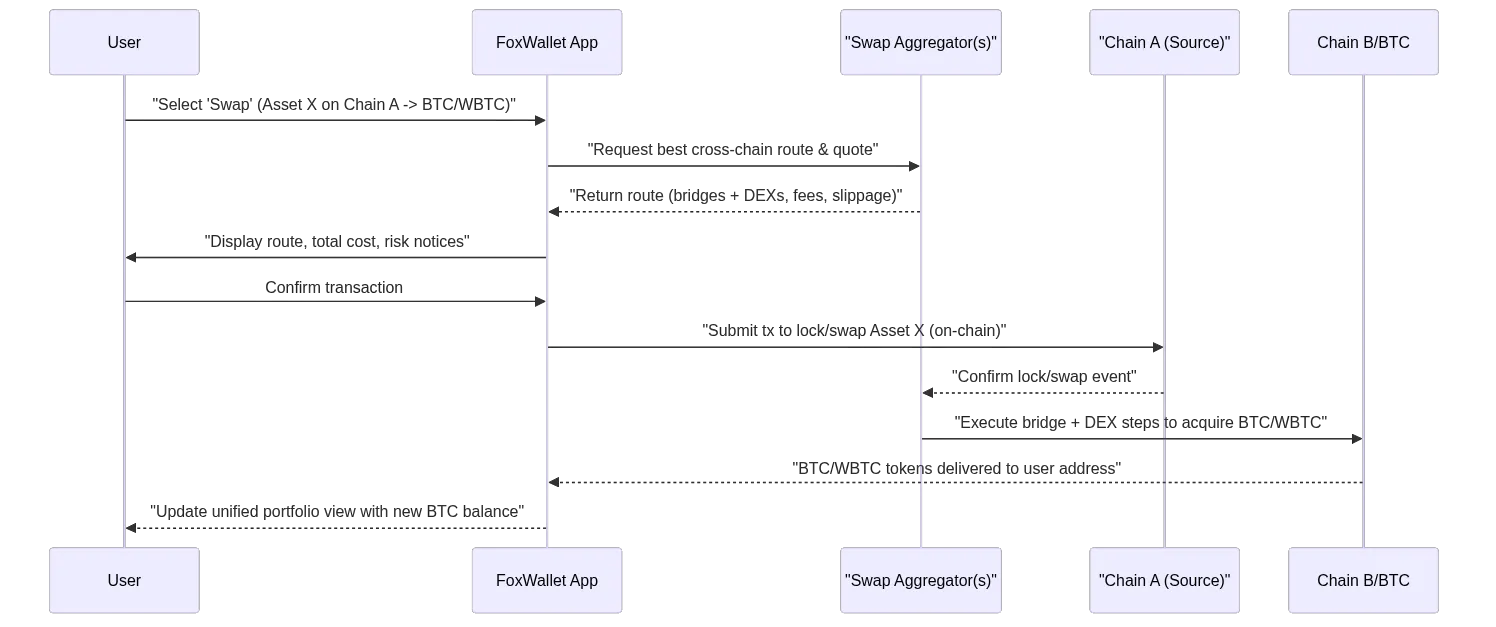
FoxWallet's integrated swap aggregators are designed to automatically route for pricing and liquidity, with transparency on expected fees and slippage before you confirm.
Step 4: Review the preview carefully (fees, slippage, and warnings)
Before confirming, look for:
- Total estimated network fees (source chain and destination chain).
- Any bridge-related fees in the route.
- Slippage settings and minimum received.
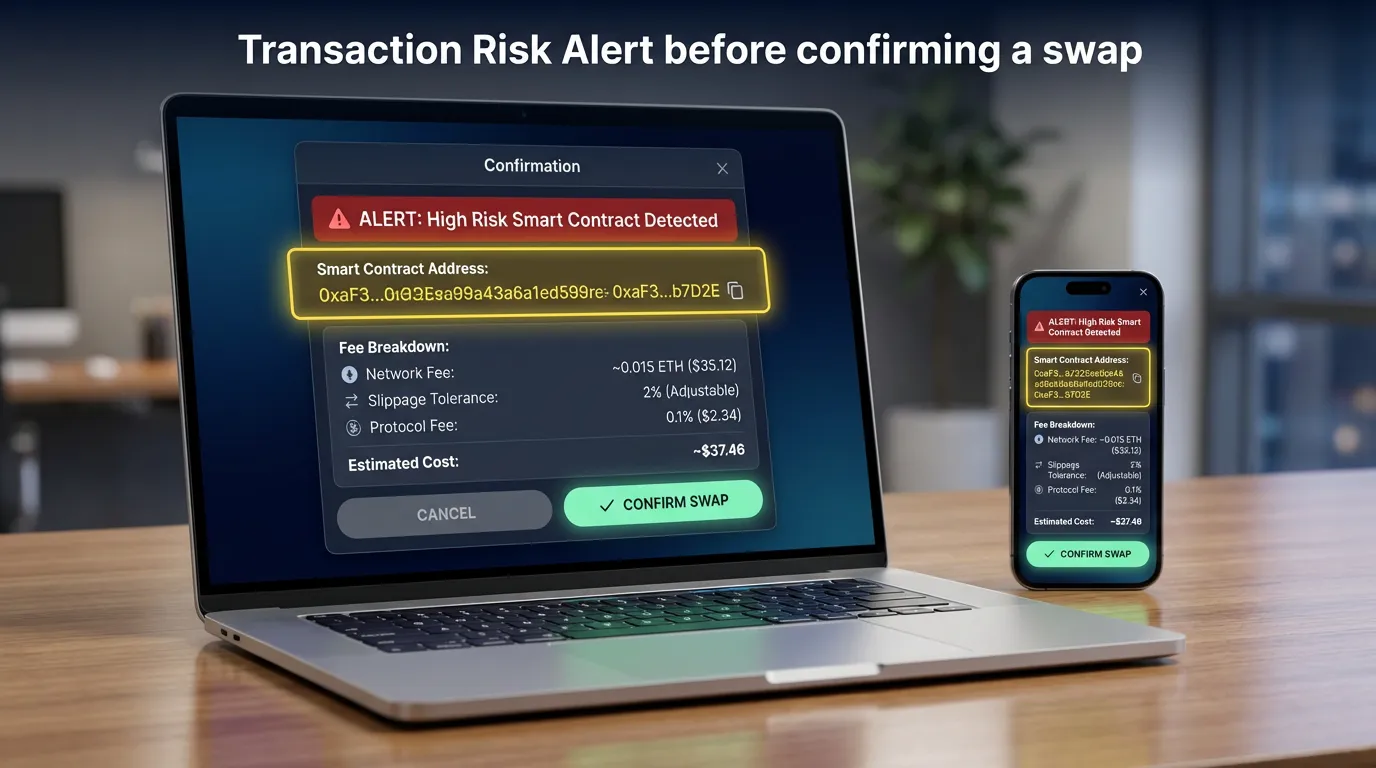
- Risk prompts (smart contract recognition and pre-transaction risk alerts).
Step 5: Confirm and wait for final settlement
Cross-chain swaps can take longer than same-chain swaps because confirmations occur across multiple networks. After completion:
- Your BTC or BTC-backed asset appears in FoxWallet's unified multi-chain asset view.
- You can verify activity using on-chain transaction details inside the wallet.
To visualize what the wallet is doing behind the scenes, the sequence usually looks like this:
BTC vs WBTC: what you are actually buying in a cross-chain swap
A common point of confusion is that "Bitcoin" can mean different things depending on the chain:
- BTC usually means native Bitcoin on the Bitcoin network.
- WBTC usually means a tokenized representation of BTC on an EVM chain (used for DeFi-style activity on those networks).
This matters because:
- Native BTC is ideal if your goal is holding Bitcoin on its own network.
- WBTC-style exposure is often used when you want Bitcoin exposure inside multi-chain ecosystems.
If you are unsure which asset you received, check the token name, the network it is on, and how it appears in your wallet's asset list.
Fees and safety checklist for cross-chain swaps (practical, not hype)
Cross-chain swaps can be efficient, but they bundle multiple cost and risk components:
Costs you should expect
- Source-chain gas fees.
- Destination-chain gas fees.
- Bridge-related fees.
- DEX trading fees and spread.
- Potential slippage if liquidity is thin.
Wallet previews help, but you should still treat the quote as an estimate, especially in volatile markets.
Key risks (and how to reduce them)
- Bridge risk: Bridges are frequent targets, so prefer well-established routes and avoid moving oversized amounts in one transaction.
- Smart contract risk: Any DEX, bridge, or router contract can have vulnerabilities. Use wallets that surface contract warnings and risk alerts before you sign.
- Human error: Cross-chain operations are unforgiving. Use a single interface that reduces manual copy/paste and clearly shows networks and assets.
One more reminder: market risk still applies
Even if the transaction is executed correctly, Bitcoin remains volatile. For an investor-oriented perspective on risk and how people think about crypto in 2026, see Morningstar's discussion.
Quick decision guide: is cross-chain swap your best "buy Bitcoin" method?
If you only have fiat and want the simplest first purchase, a regulated exchange flow plus withdrawal to self-custody is often the most straightforward.
If you already hold crypto on another chain, a cross-chain swap can be the most Web3-native answer to "where can i buy bitcoin" because it lets you move from existing assets to BTC exposure without detouring through fiat rails.
If you want to manage Bitcoin alongside assets on multiple networks with self-custody and security-first controls, start with FoxWallet: set up your wallet, fund it with an asset you already own, and use the built-in cross-chain swap experience to route into BTC or BTC-backed assets with clear previews and risk alerts.