


Best Multi-Chain Stablecoin Wallet for 2026

Stablecoins like USDT and USDC are now used for everything from trading to remittances, and they increasingly live across multiple networks (Ethereum, Tron, BNB Chain, Solana, and Layer 2s). By mid to late 2025, the stablecoin market recovered and expanded to roughly $250-300B, with monthly on-chain transaction volume approaching $1T, making wallet choice a real cost and risk decision, not just a UI preference. Sources: https://defillama.com/stablecoins, https://coinledger.io/nl/research/stablecoin-market-share-and-transaction-volume, https://info.arkm.com/research/how-stablecoins-reached-a-300-billion-market-cap-in-2025, https://transak.com/blog/stablecoins-powering-global-money-movement-report-2025

Why multi-chain stablecoin wallets matter in 2026
In 2026, stablecoin users rarely stay on one chain. The practical reality is:
- Transfers may be cheapest on one network, while your preferred DeFi app may live on another.
- Exchanges and payment rails often support different stablecoin networks, which increases the chance of wrong-network mistakes.
- Liquidity is fragmented across ecosystems, so moving value efficiently matters more than ever.
That is why a multi-chain stablecoin wallet needs to do two jobs well:
- Multi-chain management: Help you clearly see what you hold on each network, without confusion.
- Cross-chain execution: Provide a safer, simpler way to move value between networks when needed, without forcing you to hunt for tools.
A helpful distinction: multi-chain means the wallet supports many networks and lets you manage assets across them. Cross-chain means moving value between networks. They are related, but not the same overview: https://brave.com/web3/multi-chain-wallet/, and concept context: https://zypto.com/blog/zypto-app/what-makes-a-wallet-truly-multichain/.
What to look for in the best wallet (security, clarity, cost, and DeFi access)
When you are comparing options, focus on stablecoin-specific fundamentals, not just how many chains are listed.
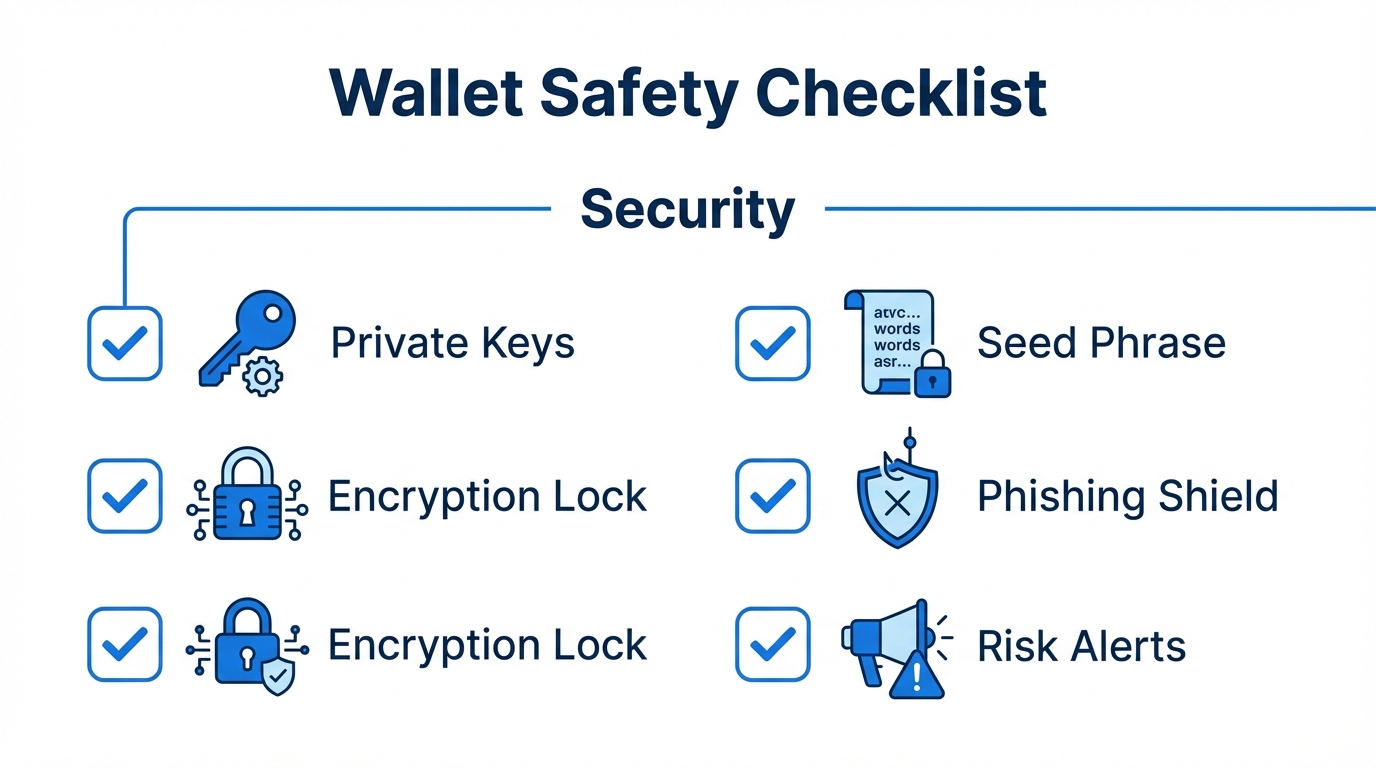
1. Non-custodial self-custody and app-level protection
All leading wallets in this comparison are non-custodial (you control the seed phrase). The difference is how well the wallet protects you from common real-world risks like phishing, malicious contracts, and risky approvals.
FoxWallet emphasizes security-first self-custody, including locally encrypted key storage, sandbox isolation, and pre-transaction risk alerts docs and download pages: https://hc.foxwallet.com/docs, https://foxwallet.com/download/.
2. Stablecoin clarity across networks
Stablecoin UX is often where users lose money: USDT on one chain is not the same as USDT on another chain in terms of where it can be sent and how it is received.
Look for:
- Clear chain labeling for every stablecoin balance.
- Automatic token detection so you are not manually adding contracts just to see your funds.
- Real-time on-chain sync so balances update transparently.
3. Cross-chain swaps with routing that reduces hidden costs
If you frequently move stablecoins, the “cost” is not just gas. It is also slippage, suboptimal routes, and the friction of repeated steps.
FoxWallet is positioned around built-in multi-chain swap aggregators and cross-chain swaps that automatically route for pricing and liquidity, aiming to minimize slippage and reduce hidden costs for active users (product overview and docs: https://foxwallet.com, https://hc.foxwallet.com/docs.
4. DeFi and DApp access without unsafe detours
Stablecoins are DeFi’s primary “working capital.” A wallet should make it straightforward to connect to DApps while reducing phishing exposure and risky signing flows. FoxWallet includes a built-in DApp browser and positions the wallet as an entry point for DeFi and DApps https://hc.foxwallet.com/docs.
2026 comparison: FoxWallet vs common alternatives
The table below summarizes what matters most for stablecoin-heavy users in 2026: chain breadth, stablecoin visibility, cross-chain execution, platform coverage, and security guardrails.
| Category | FoxWallet | MetaMask | Trust Wallet | OKX Web3 Wallet |
|---|---|---|---|---|
| Custody model | Non-custodial, user controls keys https://hc.foxwallet.com/docs | Non-custodial | Non-custodial | Non-custodial |
| Multi-chain breadth | 100+ chains including Bitcoin, Ethereum, Solana, and major ecosystems(App Store listing: https://apps.apple.com/us/app/foxwallet-secure-crypto-asset/id1590983231 | Strong on EVM, broader via add-ons | Broad multi-chain, mobile-first | Broad multi-chain, trading-centric ecosystem |
| Stablecoin UX | Automatic detection, unified multi-chain asset view, real-time sync https://hc.foxwallet.com/docs | Solid on EVM, more manual network switching | Broad support, simple mobile experience | Broad support with integrated tooling |
| Cross-chain execution | Built-in cross-chain swaps with aggregator routing and slippage focus https://hc.foxwallet.com/docs | Available, but often centered on EVM flows | Often relies on integrations/providers | Strong aggregator and bridge-style tooling |
| Security and risk tooling | Local encryption, sandbox isolation, pre-tx risk alerts, phishing protection https://foxwallet.com/download/ https://hc.foxwallet.com/docs | Strong baseline protections | Strong baseline protections | Strong baseline protections |
| Platforms | iOS, Android, and browser extension https://foxwallet.com/download/ extension repo: https://github.com/foxwallet/foxwallet-extension | Extension + mobile | Mobile + extension | Mobile + extension + web |
If your day-to-day stablecoin activity spans multiple ecosystems (for example, holding balances across several networks and regularly moving value), the biggest differentiator is whether multi-chain and cross-chain are native to the product design, or added later as optional flows.
Visual comparison (indicative scoring)
The following chart is an illustrative summary (not a measured benchmark). It reflects the relative positioning described above for stablecoin-centric usage: breadth, clarity, DeFi entry, security guardrails, and cost efficiency for frequent swaps.
Why FoxWallet is a strong pick for a multi-chain stablecoin wallet in 2026
FoxWallet’s positioning fits what stablecoin users increasingly need as stablecoins expand across chains and Layer 2s:
- Security-first self-custody: FoxWallet is non-custodial, with locally encrypted storage, sandbox isolation, and transaction risk alerts designed to reduce mistakes and exposure to malicious contracts https://hc.foxwallet.com/docs.
- Multi-chain management at real scale: Support for 100+ chains and automatic asset detection reduces operational complexity when you hold USDT, USDC, and other tokens across multiple networks https://apps.apple.com/us/app/foxwallet-secure-crypto-asset/id1590983231.
- Cross-chain swaps built in: Integrated swap aggregators focus on routing and liquidity to help reduce slippage and hidden costs for frequent movers https://hc.foxwallet.com/docs.
- Mobile plus extension parity: A consistent experience across iOS, Android, and a browser extension supports both “quick transfer on mobile” and “DeFi workflow on desktop” usage https://foxwallet.com/download/, https://github.com/foxwallet/foxwallet-extension.
Getting started with FoxWallet (plus FAQs for stablecoin users)
Quick setup steps
- Download FoxWallet from the official page: https://foxwallet.com/download/
- Create a new wallet or import an existing one and back up your recovery phrase offline.
- Add or view stablecoins on each network (FoxWallet supports automatic detection across supported chains, per docs: https://hc.foxwallet.com/docs.
- When moving value between ecosystems, use in-wallet swap and cross-chain swap flows and read the fee and route preview carefully.
FAQs
Is a non-custodial wallet safer than leaving stablecoins on an exchange?
It removes exchange custody risk because you control the keys, but it also increases personal responsibility. Use offline seed storage and treat every approval and signature carefully.
How do I avoid sending USDT or USDC to the wrong network?
Always confirm (1) the chain selected in the wallet, (2) the recipient chain, and (3) the token standard. A multi-chain view helps, but you still need to verify before you send.
Can I use FoxWallet on both phone and desktop?
Yes. FoxWallet supports mobile apps and a browser extension for desktop workflows https://foxwallet.com/download/, https://github.com/foxwallet/foxwallet-extension.
How does FoxWallet reduce common Web3 risks?
FoxWallet highlights local key encryption, sandbox isolation, pre-transaction risk alerts, and phishing protection in its security design https://foxwallet.com/download/, https://hc.foxwallet.com/docs.
If you want a 2026-ready wallet built for stablecoins across many networks, start with FoxWallet’s official download page and documentation to match features to your exact chains and usage patterns: https://foxwallet.com/download/ and https://hc.foxwallet.com/docs.