


Is Altseason Starting? 10 Altcoins to Watch After Bitcoin’s August 2026 Breakout

Bitcoin has had its strongest week in years, trading around $77,000-$79,000 and up roughly 20% this week, with Ethereum up approximately 27% over the same period and Solana and XRP also rallying sharply (CoinDesk, Wall Street Journal). None of that alone confirms altseason. Broad rotation requires persistent strength in ETH/BTC, declining Bitcoin dominance alongside a growing total market, expanding stablecoin liquidity, and participation across several crypto sectors, not just a strong week for a handful of large-cap assets.
Nothing in this article is investment, legal, or tax advice.
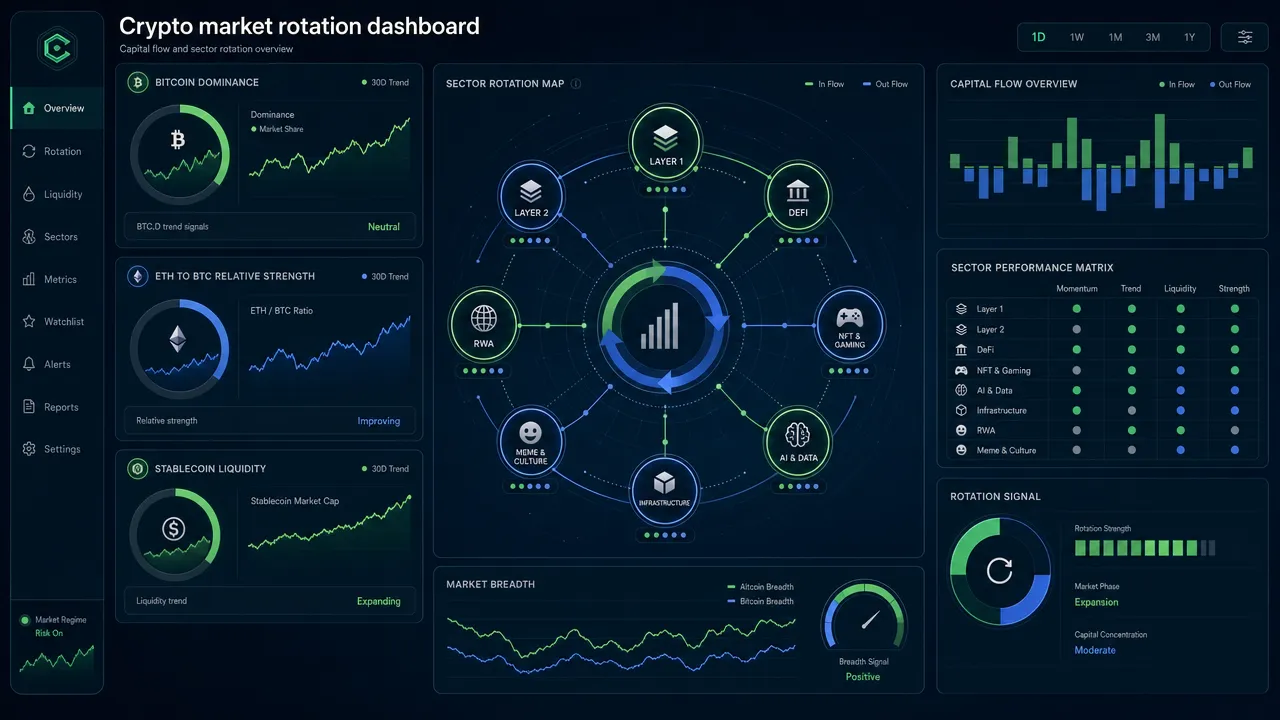
How altcoins to watch after Bitcoin breakout can confirm a real market rotation
This week's move is real and sourced: Bitcoin broke above resistance and is having its best week since 2023, and Ethereum's roughly 27% weekly gain is a genuinely large move for an asset that size. The phrase altcoins to watch after Bitcoin breakout should still describe a research process, not a prediction. Capital can concentrate in BTC and ETH specifically while broader rotation into smaller assets hasn't actually started yet. Strength in a small number of large-cap assets is a real and useful signal, but it does not by itself establish that altseason starting conditions are in place.
A more credible crypto market rotation usually develops in stages:
- Bitcoin attracts initial liquidity and establishes a sustained price trend.
- Ethereum and other liquid large-cap assets begin showing relative strength.
- Bitcoin dominance softens while the overall crypto market capitalization expands.
- On-chain liquidity, DEX activity, lending demand, and sector breadth increase.
- Smaller and more speculative assets participate later, often with substantially higher downside risk.
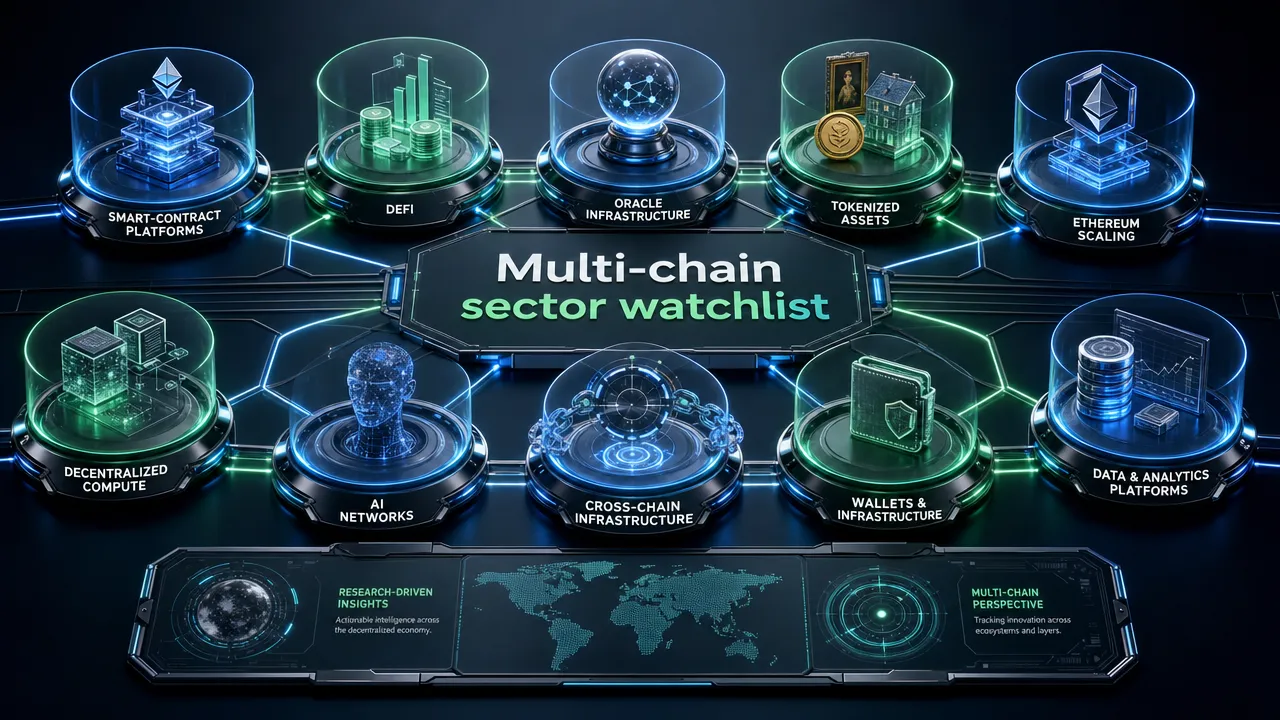
The key distinction is breadth. One fast-moving token, one popular chain, or one AI narrative does not make an altseason. Broad participation across smart-contract platforms, DeFi, infrastructure, tokenized assets, scaling networks, and decentralized compute is more meaningful.

Monitor these signals together rather than treating any single metric as decisive:
| Signal | What may support rotation | Important limitation |
|---|---|---|
| Bitcoin dominance | A sustained decline while total market capitalization grows | Dominance can fall because BTC declines faster than altcoins |
| ETH/BTC | Durable Ethereum relative strength | A short-term bounce is not confirmation |
| Stablecoin supply | Expanding on-chain purchasing capacity | Supply growth does not prove funds will enter altcoins |
| DEX volume and DeFi TVL | More on-chain activity across several networks | Incentives can temporarily inflate activity |
| Market breadth | More liquid assets and sectors outperform BTC | A few large-cap winners are still narrow participation |
| Derivatives data | Balanced funding and open interest with spot demand | High leverage can make a rally fragile |
Readers researching altseason starting should check Bitcoin dominance data from CoinMarketCap, ETH/BTC market data on TradingView, stablecoin supply data from DeFiLlama, and crypto market-cap charts from CoinGecko. These sources measure market conditions, but no dashboard can guarantee a future market outcome.
Altcoins to watch after Bitcoin breakout: 10 sector-based research candidates
The following best altcoins to watch list is a sector-diversified research watchlist, not a buy list. It emphasizes liquidity, identifiable use cases, observable ecosystem data, and official documentation. Established assets can still be volatile, while thematic tokens may face material supply, governance, regulatory, liquidity, and technical risks.
| Asset | Sector | Why it is on the watchlist | What to monitor | Risk view |
|---|---|---|---|---|
| ETH | Smart-contract platform | Ethereum remains the primary large-cap altcoin benchmark for market rotation and supports a broad DeFi, stablecoin, tokenization, and application ecosystem. | ETH/BTC, fees, stablecoin liquidity, TVL, DEX volume, scaling activity | Established |
| SOL | Smart-contract platform | Solana is a liquid platform associated with consumer applications, trading, payments, and token issuance. | Transactions, fees, DEX volume, stablecoins, application retention | Established |
| LINK | Oracle and interoperability | Chainlink provides data feeds, automation, proof-of-reserve, and interoperability tools used by smart-contract applications. | Integrations, service use, liquidity, concentration, product updates | Established |
| AAVE | DeFi lending | Aave is a major decentralized lending protocol whose activity can reflect on-chain collateral and borrowing demand. | TVL, borrow utilization, fees, reserve health, governance proposals | Established |
| UNI | DEX infrastructure | Uniswap is a leading decentralized exchange protocol, making its activity useful for monitoring on-chain liquidity and trading demand. | Volume, liquidity depth, market share, governance decisions | Moderate risk |
| ONDO | Tokenized real-world assets | Ondo Finance is connected to the tokenized-finance narrative, where product access and compliance structures matter. | Official product disclosures, token unlocks, governance, chain integrations | Higher risk speculative |
| ARB | Ethereum scaling | Arbitrum is a major Ethereum Layer 2 ecosystem with meaningful DeFi activity, although network use and token value capture are separate questions. | TVL, stablecoins, DEX volume, token unlocks, DAO activity | Higher risk speculative |
| OP | Ethereum scaling | Optimism and its Superchain ecosystem represent an Ethereum scaling thesis with token-economics uncertainty. | Superchain adoption, activity quality, grants, unlocks, governance | Higher risk speculative |
| RENDER | Decentralized compute | Render Network offers exposure to decentralized GPU rendering and compute demand. | Network demand, provider growth, token mechanics, liquidity | Higher risk speculative |
| TAO | Decentralized AI | Bittensor uses a subnet-based incentive design for decentralized machine-learning activity. | Subnet activity, emissions, developer activity, security, liquidity | Higher risk speculative |
1. Ethereum, ETH
ETH is up approximately 27% this week, one of the clearer signals in the current move, and belongs among post-Bitcoin breakout altcoins because it is often the most closely monitored large-cap indicator of whether liquidity is moving beyond Bitcoin. Ethereum's open standards and smart-contract ecosystem support tokenized assets, decentralized finance, stablecoins, and applications.
Use Ethereum's developer resources for protocol context and Ethereum chain metrics on DeFiLlama to review TVL, stablecoins, fees, and decentralized exchange activity. ETH supply mechanics are dynamic, so current issuance and fee-burning data should be reviewed through ultrasound.money rather than assumed to follow a permanent trend.
2. Solana, SOL
SOL has rallied sharply alongside Bitcoin and Ethereum this week and is one of the high-potential altcoins to research when market attention favors fast, lower-cost smart-contract applications. Its relevance depends on measurable application use, stablecoin liquidity, decentralized exchange turnover, network reliability, and retained activity rather than this week's price action alone.
Review Solana documentation, Solana tokenization resources, and Solana ecosystem data on DeFiLlama. Network performance, competition, and speculative trading concentration remain significant risks.
3. Chainlink, LINK
LINK represents oracle and interoperability infrastructure. Chainlink's technology supports data feeds, automation, verifiable randomness, proof-of-reserve functions, and cross-chain messaging tools.
Its token utility and token value are not automatically the same thing. Research users should track verified product adoption, new integrations, network incentives, liquidity, and holder concentration through Chainlink documentation and the Chainlink whitepaper.
4. Aave, AAVE
AAVE offers governance exposure to decentralized lending infrastructure. During a genuine liquidity expansion, lending utilization, collateral activity, and protocol fees may offer more useful evidence than price action alone.
Review Aave documentation, Aave governance, and Aave protocol metrics on DeFiLlama. Smart-contract risks, oracle failures, bad debt, governance concentration, and changing regulation can affect the protocol and token.
5. Uniswap, UNI
UNI is relevant to decentralized exchange infrastructure. Rising Uniswap volume and liquidity may support the case for stronger on-chain participation, but activity does not automatically create direct UNI token value.
Track Uniswap documentation, Uniswap governance discussions, and Uniswap data on DeFiLlama. Important risks include governance outcomes, regulatory uncertainty, competition, MEV, liquidity incentives, and uncertain value-capture mechanisms.
6. Ondo Finance, ONDO
ONDO is a thematic token associated with tokenized real-world assets. This category may benefit from institutional demand for compliant on-chain financial products, but it should not be confused with a broad retail-led altseason.
Use Ondo Finance, Ondo documentation, and Ondo governance resources to verify product details, eligibility requirements, disclosures, token allocation, and governance developments. Unlocks, counterparties, regulations, and concentration are central risks.
7. Arbitrum, ARB
ARB is tied to the Arbitrum Layer 2 ecosystem. It is one of the which altcoins could surge next candidates that requires particularly careful separation between ecosystem growth and token value capture.
Monitor Arbitrum documentation, Arbitrum ecosystem metrics on DeFiLlama, and Arbitrum DAO discussions. Token unlocks, incentives, sequencer assumptions, bridge risk, governance execution, and competing Layer 2 networks can all affect outcomes.
8. Optimism, OP
OP is connected to Optimism's Layer 2 and Superchain ecosystem. It may draw attention when Ethereum scaling activity accelerates, but scaling adoption does not prove that OP will capture economic value.
Check Optimism documentation, Optimism governance resources, and Optimism chain metrics on DeFiLlama. Dilution, competition, fragmented liquidity, governance decisions, and token unlocks are key risks.
9. Render, RENDER
RENDER provides a decentralized GPU rendering and compute narrative. Demand for AI-related infrastructure can create attention, but broad AI enthusiasm is not the same as validated network demand or sustainable token economics.
Review Render Network documentation and Render Foundation information. Focus on disclosed workload demand, provider economics, migration updates, liquidity, and competition from centralized cloud providers and decentralized alternatives.
10. Bittensor, TAO
TAO is linked to Bittensor's decentralized AI network and subnet incentive model. It is technically complex and highly sensitive to AI narrative cycles, protocol mechanics, liquidity conditions, and the perceived usefulness of its subnets.
Research Bittensor documentation and OpenTensor's GitHub activity. Concentration, technical risk, incentive manipulation, rapid protocol changes, and thin liquidity relative to larger assets make TAO a high-risk monitoring candidate.
Altcoins to watch after Bitcoin breakout across key sector trends
Different sectors can perform for different reasons. A durable altcoin investment opportunities framework should separate network use, token supply, liquidity, governance, and valuation rather than grouping all assets under the same "altseason" label.
| Sector | Potential evidence of demand | What can invalidate the narrative |
|---|---|---|
| Smart-contract platforms | Stablecoin growth, retained users, fees, DEX activity, developer traction | Fragmentation, outages, competitive displacement |
| DeFi | Growing lending utilization, organic volume, sustainable fee generation | Exploits, weak collateral quality, incentive-driven activity |
| Oracles and interoperability | Verified integrations and persistent service use | Security incidents, competition, unclear token demand |
| Tokenized assets | Compliant product growth and transparent disclosures | Regulatory limits, counterparties, liquidity mismatch |
| Layer 2 networks | Application retention, stablecoin liquidity, real usage beyond incentives | Unlocks, token dilution, unclear value capture |
| Decentralized AI and compute | Verifiable workloads, provider growth, developer participation | Hype cycles, opaque metrics, centralized competition |
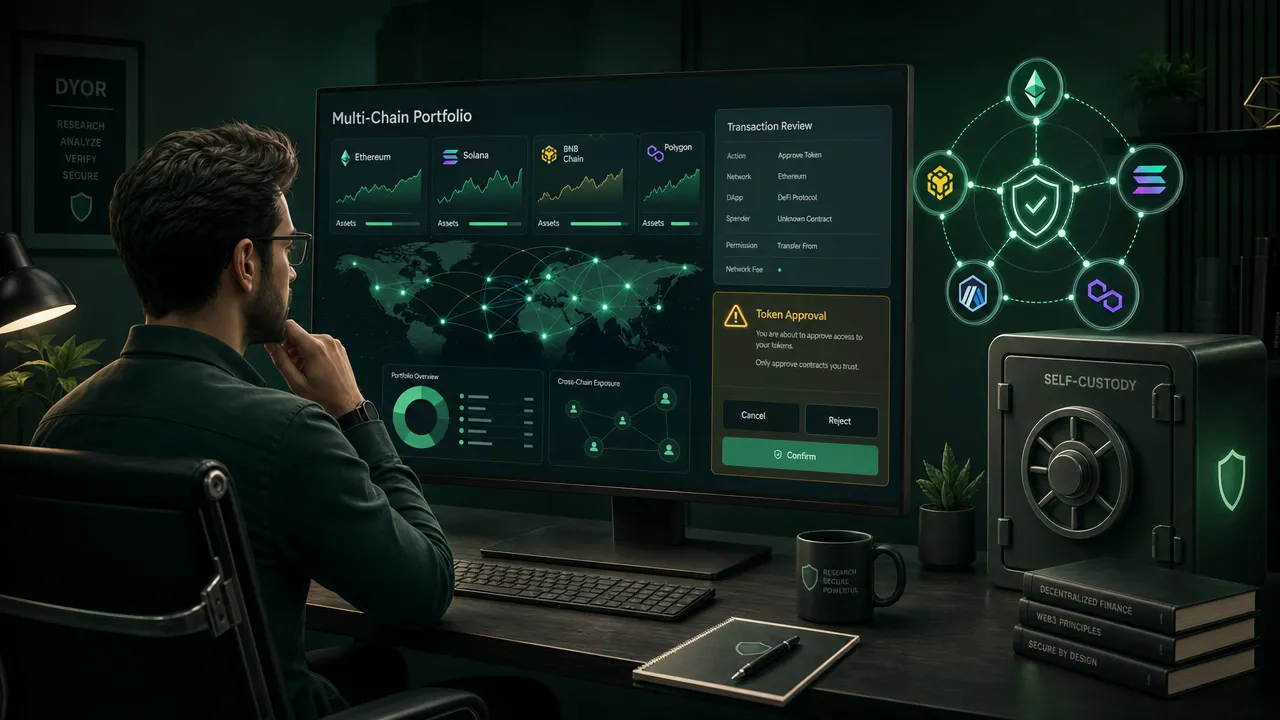
The strongest crypto market rotation signal is usually multi-sector confirmation. For example, ETH/BTC strength becomes more meaningful when stablecoin liquidity increases, DeFi volumes improve, Layer 2 activity broadens, and leverage remains controlled. Conversely, a rally led by only a few tokens with extreme funding rates is more vulnerable to reversals.
Altcoins to watch after Bitcoin breakout without overlooking the risks
The main danger in a potential altseason is mistaking speculative dispersion for sustainable adoption. Even during strong markets, high-potential altcoins can face rapid drawdowns from unlocks, low liquidity, concentrated ownership, smart-contract incidents, regulatory changes, or leveraged liquidations.
Before interacting with any token or DApp, apply this checklist:
- Verify the official project site and token contract address.
- Confirm the blockchain network and whether an asset is native, wrapped, or bridged.
- Review circulating supply, unlock schedules, treasury holdings, and holder concentration.
- Check liquidity depth, price impact, fees, and slippage before a transaction.
- Treat audits as helpful information, not a safety guarantee.
- Read all approval and signature prompts before confirming.
- Avoid unlimited token allowances where a limited approval is practical.
- Use bookmarked official domains rather than links from unsolicited messages.
- Test unfamiliar routes with a small amount.
- Assume confirmed blockchain transactions may be irreversible.
For broader market conditions, review derivatives data from CoinGlass, DeFi market data from DeFiLlama, and Federal Reserve monetary policy information. Extreme leverage, weakening liquidity, macro risk-off conditions, and narrow breadth can all prevent a broad altseason from forming.
How to prepare your crypto wallet for a bull market
A multi-chain watchlist becomes difficult to manage when assets, networks, and DApps are spread across separate interfaces, and rallies like this week's tend to bring a spike in fake tokens, phishing links, and rushed transactions. FoxWallet is a non-custodial, multi-chain wallet designed to help users manage supported assets while retaining control of their private keys and funds through moments like this one.
Its supported features can be useful for research-driven on-chain activity:
- Review supported multi-chain token balances and detected NFTs in a unified view.
- Access supported DeFi and Web3 applications through the built-in DApp browser.
- Use locally encrypted private-key and mnemonic-phrase storage as part of a self-custody workflow.
- Review on-chain transaction details before signing.
- Use supported swap functionality while independently checking the token, network, liquidity, fees, slippage, and transaction details.
For more context on this workflow, read FoxWallet's guide to multi-chain non-custodial wallet management, its comparison of non-custodial and custodial wallets, and its decentralized swap safety guide.
FoxWallet's security features, including local encryption, transaction-risk alerts, smart-contract recognition, and phishing protection, are risk-reduction tools rather than guarantees. Users remain responsible for safeguarding recovery information, validating DApp domains, checking token contracts, selecting the correct network, reviewing approvals, and understanding all transaction costs.
For transactions that move assets between networks, consult FoxWallet's cross-chain swap risks guide before proceeding. Confirm the source network, destination network, received token format, route details, destination-chain gas requirements, and final transaction prompt.
FAQ: altseason and this week's rally
What is altseason?
A period where capital broadly rotates from Bitcoin into altcoins, typically showing up as sustained ETH/BTC strength, declining Bitcoin dominance alongside a growing total market, and participation across multiple sectors, not just a handful of large-cap assets.
Is this week's rally proof that altseason has started?
Not by itself. Bitcoin's move and Ethereum's roughly 27% weekly gain are real and significant, but a strong week for a small number of large-cap assets is a different thing from broad, sustained rotation. Check the signals in the table above (dominance, ETH/BTC, stablecoin supply, DEX/DeFi activity, breadth) together rather than relying on price action alone.
Is this list financial advice?
No. It's a research watchlist, not a buy list. Every asset carries real, distinct risks, and this article doesn't recommend buying or holding any of them.
What's the biggest risk during a rally like this specifically?
Mistaking speculative dispersion for sustainable adoption. Rapid moves also tend to bring more fake tokens, phishing attempts, and rushed transactions, worth being more careful than usual right now, not less.
How do I tell if a rally is broad or narrow?
Broad rotation shows up across multiple sectors at once, smart-contract platforms, DeFi, Layer 2s, oracles, not just one or two headline assets. A rally concentrated in BTC and ETH alone, however large, is still a narrow move until that participation widens.
Altseason may be starting only when market evidence broadens beyond Bitcoin and a few headline assets. Until that evidence appears, the most disciplined approach is to monitor liquid sectors, verify fundamentals, manage operational risk, and treat every post-Bitcoin breakout altcoins thesis as conditional rather than guaranteed.
This article is for educational purposes only and is not investment, legal, tax, or security advice. Digital-asset transactions involve risk and may be irreversible.