


Best Crypto Wallets for Day Trading in 2026

Day trading from a self-custody wallet means signing your own transactions, managing token approvals, and moving assets across networks yourself — the wallet that fits this best is the one that makes your actual on-chain workflow clear, not the one with the boldest marketing claim.
This guide is published by FoxWallet and is for educational purposes only, not investment, tax, legal, or regulatory advice. Crypto assets can lose substantial value, and trading carries real risk. Confirm the rules that apply in your own jurisdiction before deciding whether active on-chain trading is right for you.
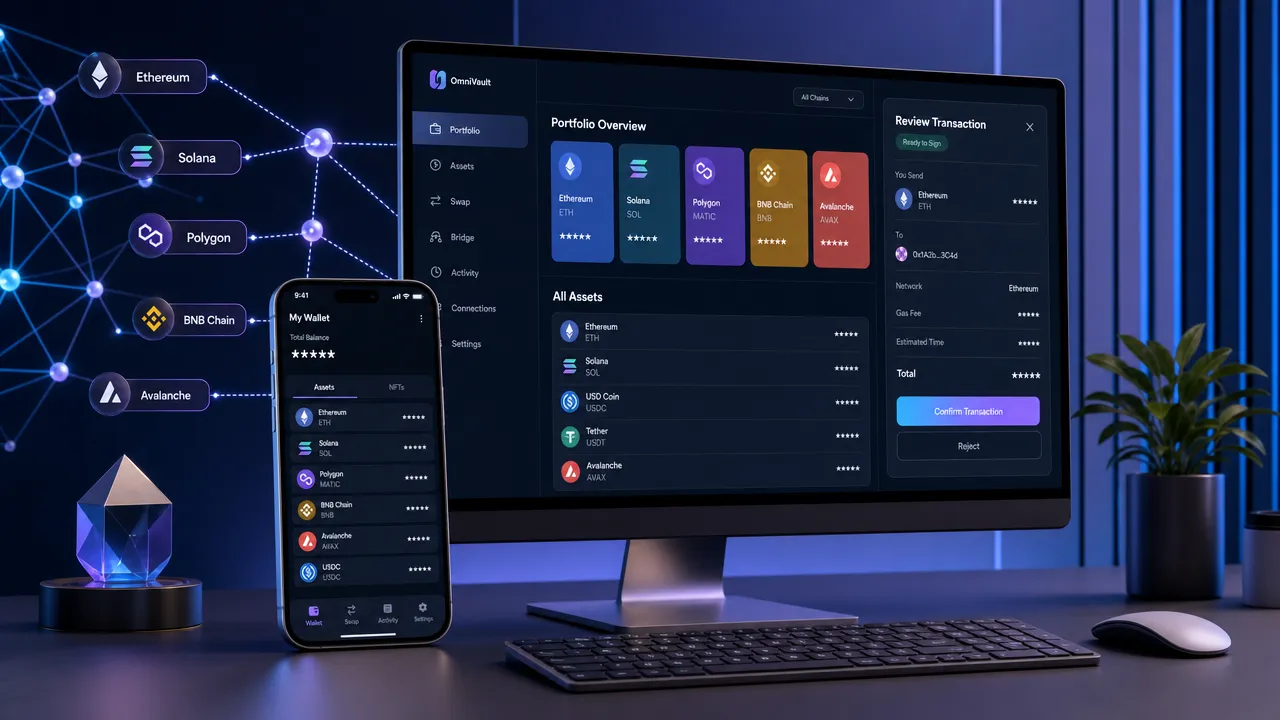
What active traders should look for
A wallet suitable for active on-chain trading should make it easier to review assets, connect to trusted DApps, inspect transaction requests, and manage activity across the networks you use. It should not be expected to guarantee a profitable trade, instant settlement, the lowest possible cost, or protection from every malicious contract.
For day trading workflows, assess these practical areas first:
| Evaluation area | Why it matters for active users |
|---|---|
| Self-custody | You control the private keys and recovery credentials rather than relying on a provider to hold assets. |
| Multi-chain visibility | A unified view can reduce the confusion of tracking balances across multiple networks. |
| DApp connectivity | Direct access to decentralized exchanges and other Web3 applications can reduce repeated switching between tools. |
| Mobile and desktop access | Mobile is useful for quick monitoring, while a browser extension can suit desktop DApp activity. |
| Swap route details | You need to check the quoted output, network fees, price impact, slippage settings, and minimum amount received. |
| Risk controls | Alerts, phishing protection, contract recognition, and approval management can help identify issues before signing. |
| Recovery process | A non-custodial wallet requires you to protect your recovery phrase offline and keep it private. |
A wallet is a signing tool, not a trading guarantee. It cannot remove blockchain gas fees, force a transaction to confirm faster than the network permits, or eliminate price movement while a transaction is pending.
It is also important to separate cost categories:
- Network gas: Paid to validators or the blockchain network.
- DEX or liquidity provider fees: Applied by the protocol or liquidity route.
- Routing or service fees: May apply depending on the selected transaction route.
- Slippage and price impact: Can change the final amount received in fast moving or thinly liquid markets.
- Cross-chain costs: May include source-chain gas, destination-chain gas, bridging costs, swap costs, and liquidity effects.
For an unfamiliar route, use a small test transaction first. This matters even more when moving value across networks.
The best wallets for active trading
The following options are classified by workflow rather than presented as a universal ranking. Each wallet should be checked against its current supported networks, app availability, DApp compatibility, and transaction features before use.
FoxWallet
FoxWallet is a non-custodial, multi-chain wallet available on iOS, Android, and as a browser extension. Users retain control of their private keys and assets, with mnemonic phrases and private keys stored locally in encrypted form.
The mobile app and the browser extension are not the same surface. On mobile, FoxWallet provides swaps, bridging, and access to compatible DApps across supported ecosystems. The browser extension is a separate, more limited EVM and Aleo wallet surface for basic wallet actions — swap, bridge, and staking are not available there. If your workflow depends on in-wallet swaps or cross-chain activity, plan around the mobile app for those specific actions.
Key FoxWallet capabilities:
- Non-custodial self-custody, with users retaining control of their keys.
- Multi-chain asset management with supported asset and NFT discovery.
- Built-in DApp browser and WalletConnect support — to connect a desktop DApp, open it on your computer and scan the WalletConnect QR code with the FoxWallet mobile app.
- Mobile Swap powered by 1inch, and Bridge powered by LI.FI, where those routes are available.
- iOS, Android, and browser extension access, with mobile and extension serving different parts of the workflow as noted above.
- Security features including phishing protection, high-risk signature warnings, malicious authorization checks, and approval management.
FoxWallet can be a strong fit for traders who need a consolidated workflow rather than a wallet built around only one ecosystem. Its value is not that it removes execution risk. Its value is that it can help users review and manage multi-chain activity within one self-custody environment.
Before approving any token permission, learn how to manage token approvals.
MetaMask
MetaMask is a widely recognized self-custodial wallet and gateway to blockchain applications. It is especially relevant for users whose trading and DApp activity is centered on Ethereum-compatible networks. Its official product materials also describe support for Solana, along with swaps, bridging, token management, and DApp connectivity.
It can be a practical choice for users who value broad familiarity across EVM DApps and browser-based Web3 interactions. However, users should still compare supported networks, transaction routes, fees, and mobile workflow details for their specific use case.
Phantom
Phantom is a consumer self-custody wallet strongly associated with Solana-oriented workflows, while also supporting activity across additional networks including Ethereum, Polygon, and Bitcoin. It is worth considering for users whose assets, decentralized exchanges, NFTs, and applications are concentrated in the ecosystems Phantom supports.
For a Solana-focused trader, ecosystem familiarity and DApp compatibility may matter more than broad cross-chain functionality. As with any wallet, verify the displayed transaction request, token details, destination, and requested permissions before signing.
Rabby
Rabby is a self-custodial, fully open-source wallet (MIT license) built by the DeBank team, focused specifically on Ethereum and EVM-compatible chains — it does not support non-EVM chains like Solana or Bitcoin natively. It ships as a browser extension for Chrome, Brave, and Edge, a desktop app for Windows and macOS, and native iOS and Android apps.
Its standout feature is pre-signature protection: every transaction is simulated and previewed before you sign, showing what assets will leave and arrive, and it automatically switches to the correct network based on the DApp you're connecting to. For EVM-heavy DeFi users who want the clearest picture of what a transaction actually does before confirming it, Rabby is a strong specialist option — just not a fit if your workflow includes non-EVM chains.
TokenPocket
TokenPocket is a self-custody, multi-chain wallet supporting all EVM-compatible networks plus major non-EVM networks including Bitcoin, Solana, TRON, Sui, and XRP. It offers built-in DApp browsing and cross-chain asset management from a single interface.
Its broader non-EVM coverage makes it relevant for traders working across ecosystems that Rabby and MetaMask don't natively support. As with any multi-chain wallet, confirm current network and feature support in official documentation before moving funds.
OKX Wallet
OKX Wallet is a non-custodial, multi-chain wallet available as a mobile app and browser extension, supporting Bitcoin, Ethereum, BNB Smart Chain, Avalanche, Tron, Arbitrum, Base, Optimism, Polygon, and Solana, with a built-in DEX aggregator, cross-chain bridge, and WalletConnect support. It connects to the OKX exchange, which can reduce friction for traders who already use OKX and want to move assets between the exchange and self-custody.
Feature and service availability can vary by region — confirm current access and supported features in your own location before relying on it.
Bitget Wallet
Bitget Wallet (formerly BitKeep) is a self-custody wallet supporting 100+ chains, with a swap engine that routes across DEXs and bridges, and Keystone hardware-wallet integration for users who want hardware-backed key storage alongside software convenience.
Its hardware-wallet integration is a genuine differentiator for active traders managing larger balances who still want a full-featured swap layer rather than a bare-bones hardware-only setup.
Trust Wallet
Trust Wallet is a self-custody multi-chain wallet that operates as an independent entity. It was acquired by Binance in 2018 but is no longer owned or controlled by the Binance Exchange Group as of May 2025. It supports 100+ blockchains, charges no platform fees on staking, sending, or receiving, and displays swap fees transparently before confirmation.
Its independence from any single exchange ecosystem matters if you specifically want a self-custody wallet that can be evaluated on its own, without a connected centralized-exchange business behind it.
How the wallets compare
| Wallet | Typical workflow fit | Self-custody | Multi-chain reach | Mobile and extension |
|---|---|---|---|---|
| FoxWallet | Active multi-chain users, DApps, mobile swaps and cross-chain activity | Yes | Multi-chain, mobile-first for swap/bridge | iOS, Android, and extension (extension is EVM/Aleo only, no swap/bridge/staking) |
| MetaMask | EVM-heavy DApp and DeFi users | Yes | Ethereum-compatible networks and Solana per official materials | Extension and mobile |
| Phantom | Solana-focused and supported ecosystem users | Yes | Solana, Ethereum, Polygon, Bitcoin, Sui | Extension and mobile |
| Rabby | EVM-focused DeFi users who want pre-signature simulation | Yes | EVM-only, no native Solana or Bitcoin | Chrome/Brave/Edge extension, Windows/macOS desktop, iOS and Android |
| TokenPocket | Users needing broad non-EVM coverage alongside EVM | Yes | All EVM chains plus Bitcoin, Solana, TRON, Sui, XRP | Mobile and extension |
| OKX Wallet | Users already active on the OKX exchange | Yes | 10+ major chains including Bitcoin, Ethereum, Solana | Mobile and extension; availability varies by region |
| Bitget Wallet | Traders wanting hardware-backed self-custody with a full swap layer | Yes | 100+ chains | Mobile and extension; Ledger/Keystone hardware integration |
| Trust Wallet | Mobile-first users wanting an exchange-independent wallet | Yes | 100+ chains | Mobile and extension |
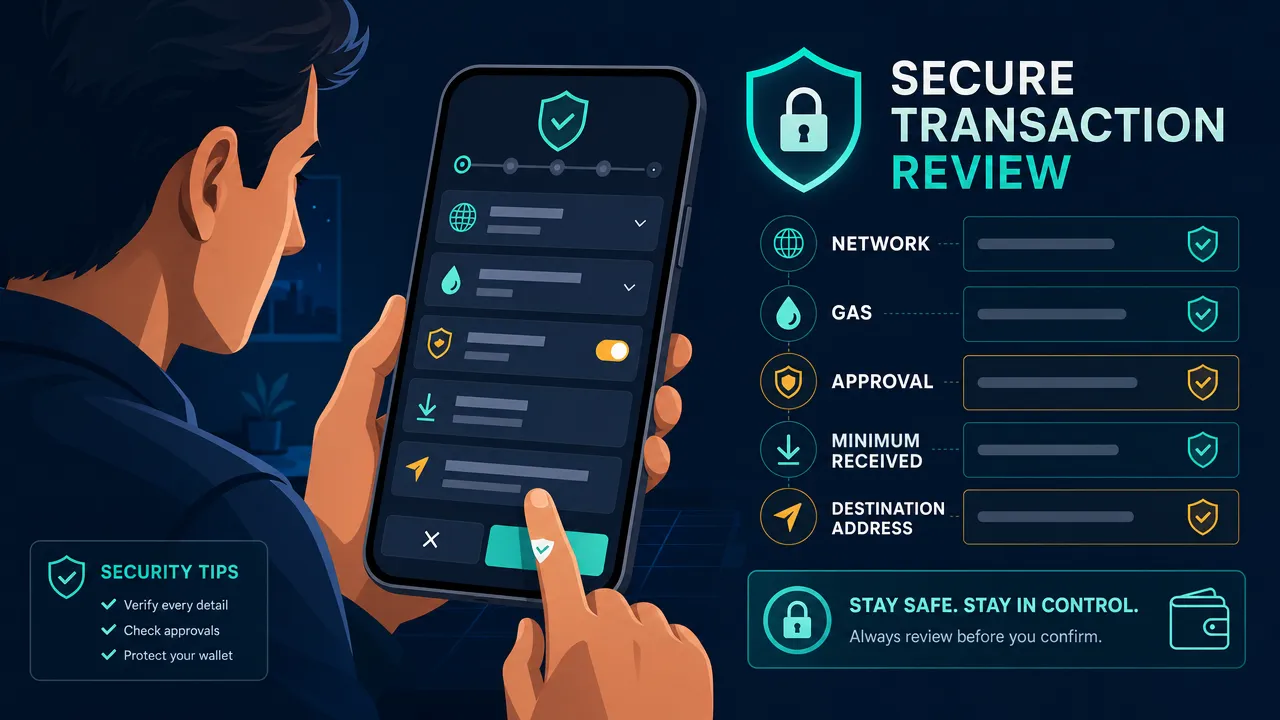
For a day-trading workflow, cross-chain transactions require reviewing more details than a same-chain transfer — source chain, destination chain, route provider, estimated completion, minimum received, bridge conditions, and destination-chain gas. This isn't a risk score, just an operational reminder that complexity rises with cross-chain activity.
For a practical explanation of these considerations, review FoxWallet's guide to cross-chain swap risks.
Why FoxWallet works for multi-chain trading
FoxWallet is built around a self-custody model where users maintain control over private keys and assets. That model creates responsibility, but it also avoids treating the wallet provider as the holder of user funds.
Unified asset visibility across supported chains
Asset fragmentation is a common operational problem. You may have balances on several networks, hold tokens with similar tickers, or forget where a particular asset is located. FoxWallet is designed to detect supported assets and NFTs while synchronizing on-chain information, helping you identify where assets are held before beginning a swap, transfer, or DApp interaction.
For more context, see FoxWallet's overview of multi-chain asset management.
Mobile swaps and cross-chain activity
On mobile, FoxWallet's Swap is powered by 1inch and Bridge by LI.FI, letting you review routes from within the wallet rather than moving between separate tools. This doesn't eliminate the need for careful transaction review — cross-chain swaps and staking are separate activities, and confusing one for the other is a real risk.
To understand the mechanics and fee variables involved, read FoxWallet's guide on how cross-chain ETH swaps work.
Security tools that support better signing decisions
No security feature can guarantee safety, but transaction alerts and approval controls can help you pause before confirming an unclear request. FoxWallet documents local encryption, phishing-site protection, high-risk signature warnings, malicious authorization checks, and approval management — guardrails, not a substitute for your own judgment.
If a transaction is pending, don't randomly repeat it. Review network status and available options first. FoxWallet provides guidance on how to speed up or cancel a pending transaction where the relevant network supports it.
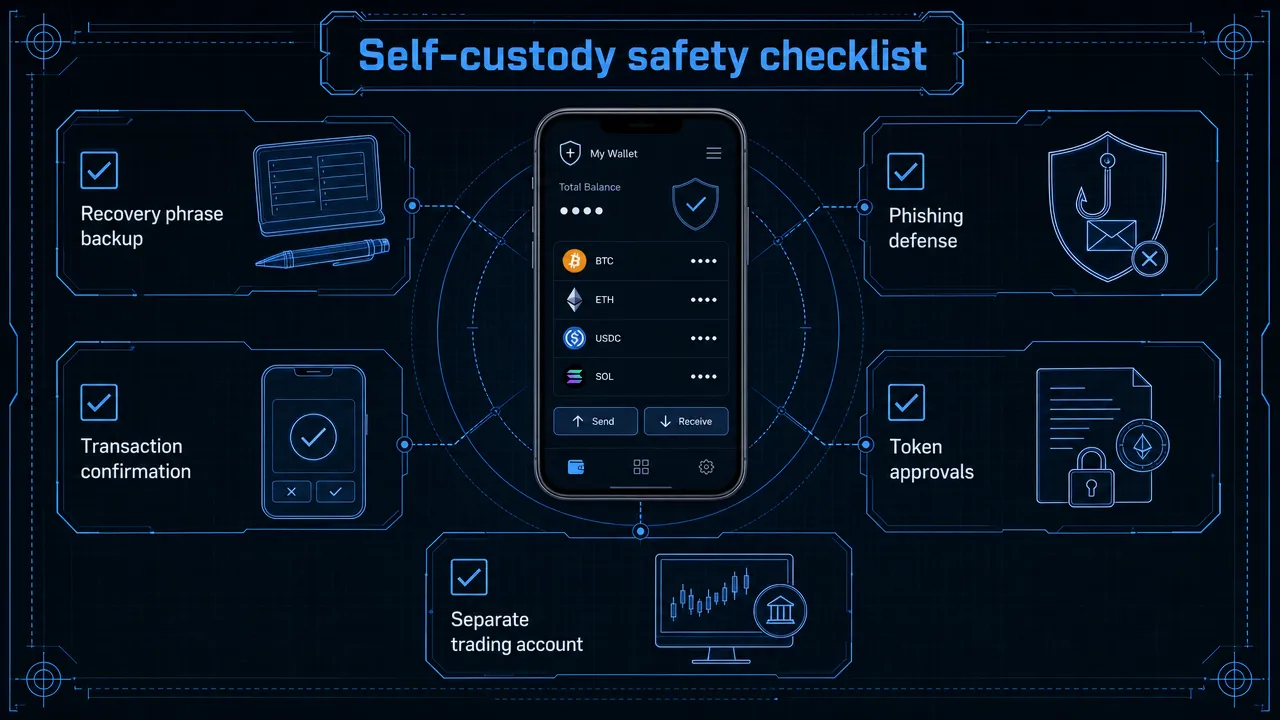
What to check before you trade
Good habits reduce avoidable mistakes, though they can't remove market, smart contract, liquidity, or blockchain risk.
- Install only from an official source — the official website, app store listing, or verified extension listing. Avoid links from unsolicited messages, cloned websites, and unofficial APK files.
- Back up recovery credentials offline — never in cloud notes, email, screenshots, or a website claiming it needs to "verify" your wallet.
- Start with limited active funds — keep a limited balance in an active trading wallet, especially when connecting to new DApps or unfamiliar routes.
- Verify every transaction request — domain, wallet connection, network, recipient, token contract, approval amount, gas estimate, and transaction summary. Be especially cautious with requests for unlimited approval, unfamiliar domains, confusing signature data, promised urgency, or any request to disable security checks or reveal your recovery phrase.
- Review cross-chain transactions more carefully — use a small test amount for new combinations of assets, networks, and routes, and keep enough native gas available for any follow-up action.
- Reassess token approvals regularly — remove approvals you no longer need. See FoxWallet's guide to approval management.
For a deeper look at wallet security practices beyond this checklist, see FoxWallet's dedicated security tips.
Choosing based on your priority
| If your priority is | A practical wallet-selection focus |
|---|---|
| Broad multi-chain asset management | Look for unified visibility, supported networks, DApp access, and clear transaction controls. |
| Frequent cross-chain activity | Prioritize route visibility, fee review, supported destination networks, and careful test transactions. |
| EVM DeFi interaction with pre-signature review | Prioritize simulation/preview tools, DApp support, and approval awareness. |
| Solana-centered activity | Prioritize ecosystem-specific DApp compatibility and transparent transaction review. |
| Hardware-backed self-custody | Look for Ledger/Keystone integration alongside a full swap layer. |
| Exchange-independent self-custody | Prioritize wallets not tied to a centralized exchange ecosystem. |
For users who want a non-custodial wallet with multi-chain asset management, mobile swaps and cross-chain workflows, DApp access, and risk-oriented transaction protections, FoxWallet is a strong option to evaluate.
Before confirming any transaction, verify the network, route, fees, permissions, token details, and minimum received. Self-custody gives you control, and that control works best when it is paired with disciplined security habits.