


Seamless Cross-Chain ETH Swap | FoxWallet

What an ETH swap is (and what it is not)
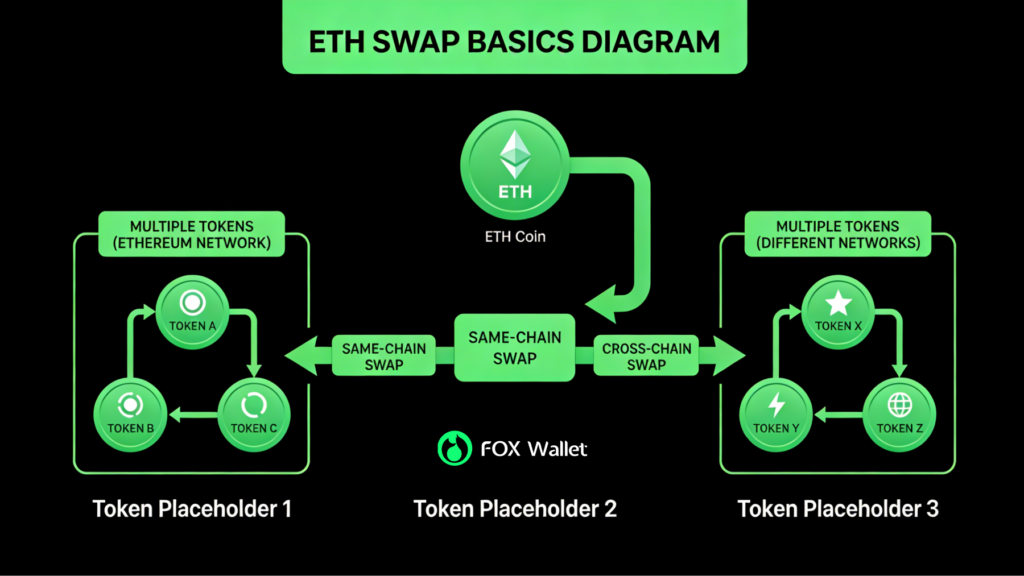
An ETH swap is a direct exchange between ETH and another crypto asset without using fiat or a centralized order book. In practice, this usually happens in two ways:
- Same-chain swap: You exchange ETH for an ERC-20 token (or the reverse) on the same network, such as Ethereum mainnet. Automated market maker (AMM) DEXs use liquidity pools and on-chain pricing to execute the trade (a helpful conceptual overview is in the Uniswap explainer on crypto swaps).
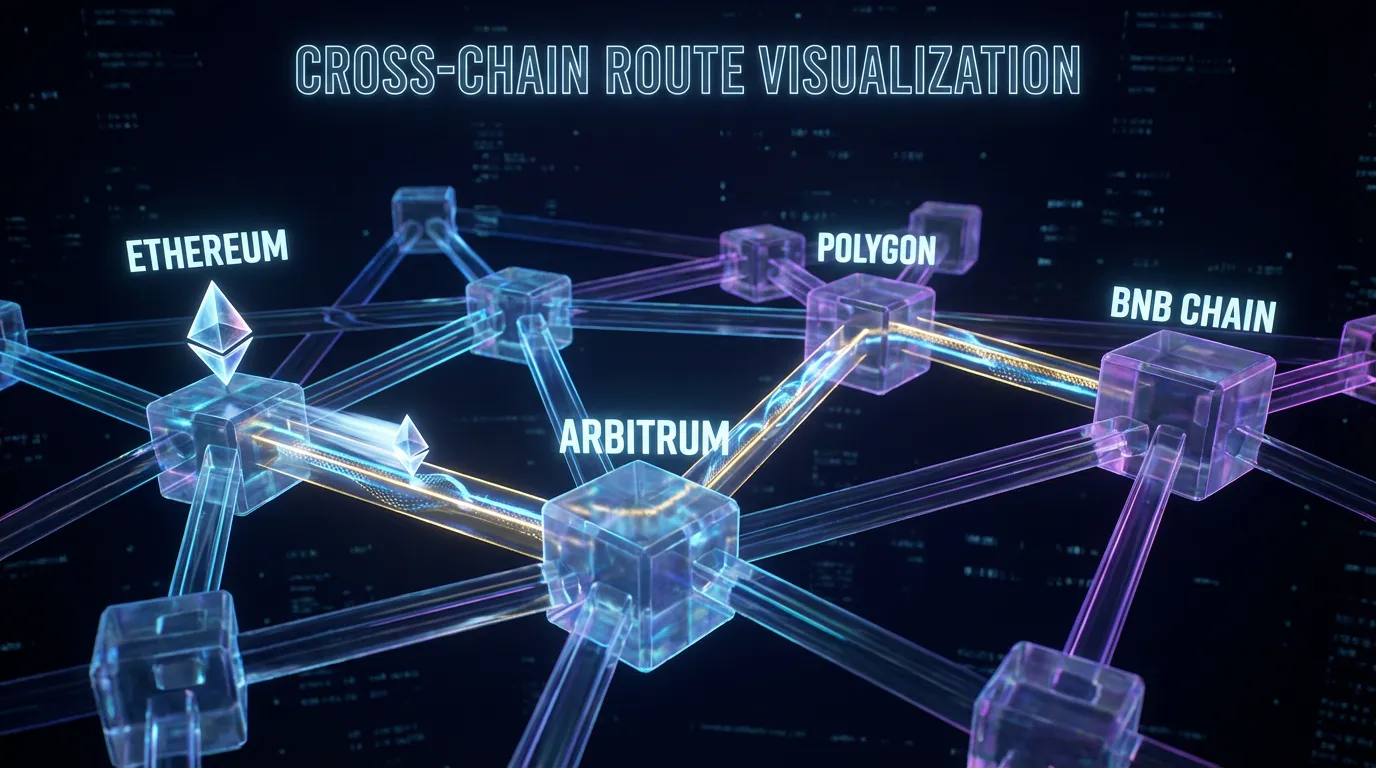
- Cross-chain swap: You move ETH value from one network to another and end with ETH (or an ETH-equivalent) or a different token on the destination chain. Under the hood, this is typically a bridge step plus a swap step, abstracted into one flow by good wallets and aggregators (background on bridges is covered in Chainlink's cross-chain bridge vulnerabilities guide).
Three common misunderstandings to avoid:
- Sending is not swapping: Sending ETH only moves ETH. It does not convert ETH into another token.
- Cross-chain sending is not bridging: Sending ETH to an address on another chain without a bridge flow can result in lost or unrecoverable funds, even if addresses look similar on EVM networks.
- ETH is not identical across chains: ETH on Ethereum and ETH-representations on L2s or other chains can differ technically (often wrapped or bridged forms).
How swaps work under the hood: pools, routing, gas, and slippage
Most on-chain swaps are powered by AMMs and liquidity pools, where the price is determined by a formula and pool balances rather than a traditional order book. The trade-offs are convenience and composability, but you need to understand the costs and execution variables.
The main costs you will see during an ETH swap
| Cost type | What it is | Where it appears | What you can control |
|---|---|---|---|
| Network gas fee | Fee paid to the network for executing your transaction | Every on-chain swap | Timing, network choice, transaction settings |
| Liquidity provider (LP) / DEX fee | Fee embedded in the pool or route | Included in the quote | Route selection (often handled by an aggregator) |
| Wallet or aggregator service fee | Extra fee some swap UIs add on top | Shown in wallet swap UI (varies) | Choice of wallet/aggregator |
Slippage and "minimum received" (why swaps sometimes disappoint)
- Slippage is the difference between the expected price and the executed price. It can increase when liquidity is thin or markets move quickly.
- Minimum received is the safety line that prevents a swap from completing if the execution price worsens beyond your tolerance.
If you set slippage too high, you may accept a much worse rate than intended. If you set it too low, the swap may fail during volatility.
Cross-chain ETH swap vs bridge: benefits and real risks
A clean way to think about it:
| Action | Goal | Example outcome | Typical complexity |
|---|---|---|---|
| Same-chain swap | Exchange assets on one chain | ETH on Ethereum to USDC on Ethereum | Low |
| Bridge | Move value to another chain (same asset representation) | ETH on Ethereum to ETH-representation on Arbitrum | Medium |
| Cross-chain swap | Move value and change asset across chains | ETH on Ethereum to USDT on another chain | Higher |
Why people do cross-chain swaps
- Lower fees and faster confirmations by moving from congested mainnet to L2s or other networks (Ethereum fee dynamics are discussed in the OECD DeFi liquidity and fee report (PDF)).
- Access to different DeFi ecosystems that are chain-specific.
- Portfolio rebalancing across multiple networks without juggling multiple apps and tabs.
The hard truth: cross-chain is a larger risk surface
Bridges and cross-chain messaging have historically been a major source of losses. Chainlink summarizes bridge risk patterns and notes that bridge hacks exceeded $2.8B as of 2024 in aggregate (see Chainlink's bridge vulnerability overview). Additional incident summaries and lessons learned are compiled in CertiK's 2022 bridge exploit report and DeFi Prime's bridge hack history.
Key user-side risk points to watch:
- Picking the wrong source or destination chain.
- Approving tokens to unknown contracts (especially unlimited approvals).
- Using a spoofed or phishing interface.
- Ignoring fees and slippage on the destination chain when a swap is bundled into a cross-chain route.
Tutorial: how to do an ETH swap in FoxWallet (same-chain and cross-chain)
FoxWallet is a multi-chain, non-custodial wallet built with cross-chain usage in mind. You control your keys (self-custody), and the wallet focuses on multi-chain asset management, integrated swap aggregation, and risk-aware confirmations.
Before you start (quick prep checklist)
- Confirm you are on the correct network for your starting asset (for example, ETH on Ethereum vs an ETH-equivalent on an L2).
- Keep enough native gas token for the chain you are transacting on.
- If you are swapping into a token with many lookalikes, verify you selected the correct token contract using an appropriate block explorer.
A. Same-chain swap (example: ETH to an ERC-20 token on the same network)
- Open FoxWallet and go to the Swap feature.
- Select "From": choose ETH on your current chain (for example, Ethereum mainnet).
- Select "To": choose the token you want to receive.
- Enter the amount of ETH to swap.
- Review the quote details:
- Expected rate and estimated fees.
- Slippage or minimum received.
- Any risk prompts based on contract recognition.
- Confirm and sign the transaction. Wait for on-chain confirmation.
- Verify your updated balance in your asset list. FoxWallet is designed to auto-detect assets across supported networks, reducing manual token-add steps.
B. Cross-chain swap (one flow: choose source chain and destination chain)
- In Swap, choose ETH on the source chain as the asset you are spending.
- Choose the destination chain and the asset you want to receive on that chain.
- Review the route summary. In a unified cross-chain experience, the wallet may abstract a bridge plus a destination swap into a single guided flow.
- Pay close attention to:
- Total fees (source chain gas plus any routing costs).
- Minimum received on the destination.
- Risk alerts and smart contract recognition prompts.
- Confirm the transaction and track status in history until final settlement on the destination chain.
- Confirm the received asset appears under the destination chain in your unified multi-chain view.

Best practices for safer ETH swaps (plus quick FAQs)
Safety checklist (works for both same-chain and cross-chain)
- Start small on new routes: test with a small amount first, especially cross-chain.
- Read the confirmation screen: confirm chain, token, fee estimate, and minimum received.
- Be strict with approvals: avoid unlimited approvals unless you fully trust the contract and understand the risk.
- Treat cross-chain as higher risk: bridge-style operations have a longer history of major incidents than same-chain swaps (see the incident analysis in DeFi Prime's bridge hack history).
- Avoid copycat tokens: verify the token contract address using an explorer rather than relying on a name match.
FAQ
Is it safe to swap ETH in a wallet?
It can be, but safety depends on smart contract risk, route quality, and user checks (correct chain, correct token, reasonable slippage). Cross-chain swaps add additional bridge-related risk layers (summarized in Chainlink's bridge vulnerability guide).
Why did my swap fail?
Common causes include insufficient gas, slippage too tight during volatility, or selecting the wrong network. Cross-chain routes can also fail due to bridge liquidity, finality delays, or routing constraints.
What is the difference between swapping ETH and bridging ETH?
Swapping changes one asset into another on the same chain. Bridging moves value across chains, usually keeping an ETH representation on the destination. A cross-chain swap combines both into one user-facing action.
How do I reduce hidden costs over time?
Compare fee breakdowns (gas, DEX fee, any wallet service fee), use deeper-liquidity routes when possible, and avoid unnecessarily high slippage. FoxWallet is positioned around lower swap fees and reduced hidden costs for users who swap and move assets frequently.
If you want a streamlined, self-custody workflow for same-chain and cross-chain ETH swaps, try using FoxWallet as your unified multi-chain hub and make a habit of reviewing route, fees, and risk prompts before every confirmation.